
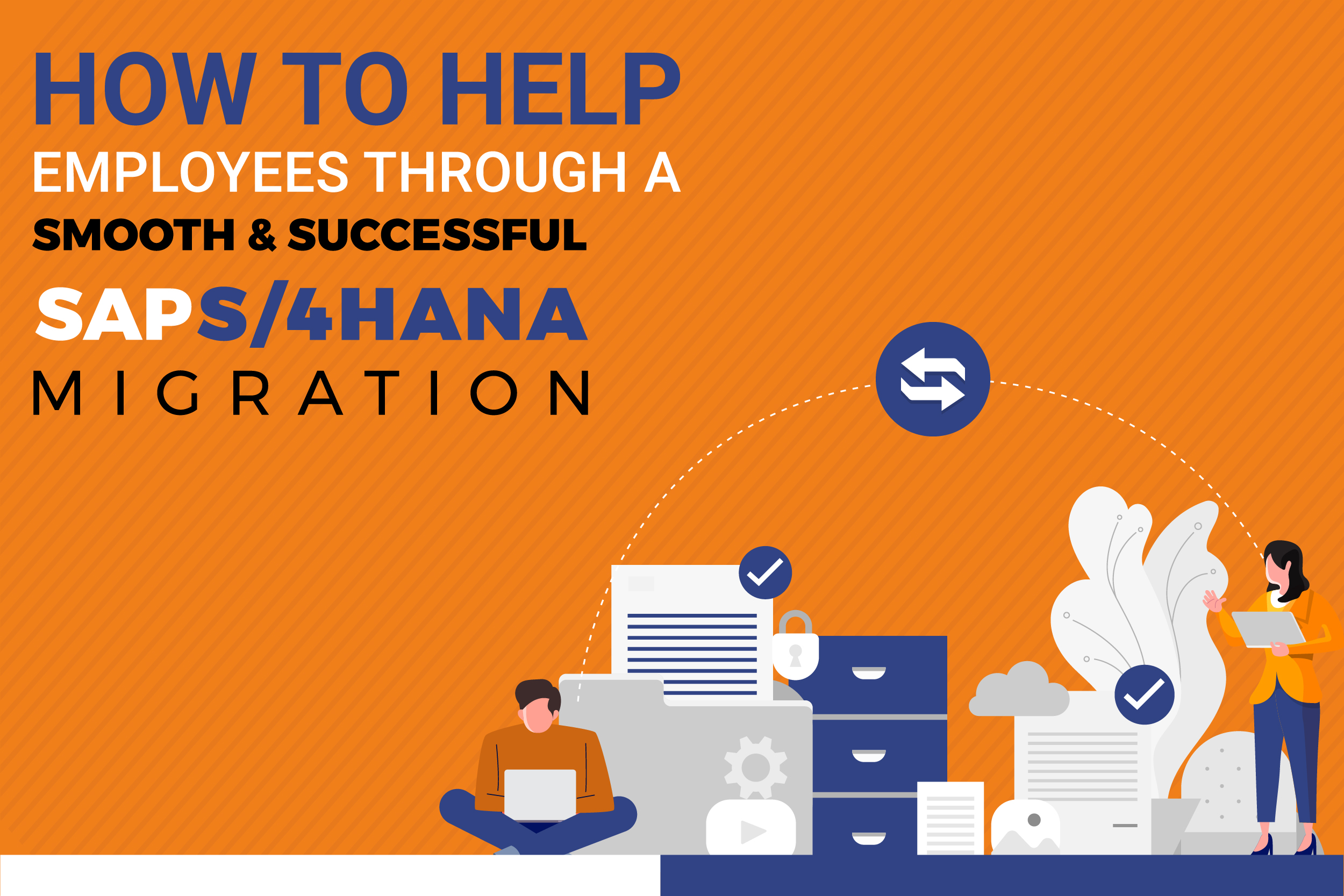
Migration to SAP S4/HANA is no longer an option but a necessity and the successful transition of employees to SAP S4/HANA requires a lot of hassle and planning. This article will help you with the strategy of planning to migrate to SAP S4/HANA.
The switch to SAP S/4HANA has become necessary ever since SAP declared that it will no longer maintain its SAP ERP business suite beyond 2027.
It’s never too early to start your trip, despite the fact that you might believe you have plenty of time to make the changeover. For increased performance, agility, and innovation, SAP data migration is necessary. SAP S/4HANA had 17,500 subscribers as of the third quarter of 2021, and the number is still rising.
Even while this number might appear low, it’s important to remember that each subscriber is a sizable company that has a license for SAP S/4HANA. Its user base is made up of a sizable number of employees who have previously activated its software and taken advantage of the features it provides.
For instance, SAP S/4HANA provides real-time data access from every department of the business. The cloud is used by the software to enhance performance and spur innovation. Furthermore, crucial assets like global SAP S/4HANA group reporting are an essential component of every business plan.
Adopting SAP S/4HANA can enhance your technical foundation by transforming your business interface into one that is intuitive, useful, and transformative. The interface can successfully manage a hybrid workforce with ease because of its improved performance.
The decision boils down to software requirements since businesses can select from three versions to operate SAP S/4HANA. You can select the best platform to continue once you have determined your needs.
SAP S/4HANA can be deployed on-premises, on the cloud, or as a hybrid of the two. Although each choice has advantages, they all depend on your needs and requirements.
Your data is kept locally during on-premise implementation. It is less expensive than cloud integration, and because it is local, deployment setup is quicker. Additionally, it gives consumers total control.
Installation is a one-time activity, which is a big drawback of an on-premise deployment. Therefore, your team will need to manually install any SAP S/4HANA updates that your firm needs.
Cloud deployment turns your software into a service. It improves adaptability, scaling, and quicker time scaling. Users are always linked to SAP servers, and infrastructure costs are decreased.
With SAP implementation, SAP gains a devoted customer in your company. This implies that you will automatically get regular updates and data security.
Cloud communications connectivity is essential for the digital transition. Enabling simple communication between all sites.
The expense of cloud deployment is a drawback. As you can see, this could be expensive because you are paying for a subscription service with a complete revamp of your infrastructure.
The integration of premise-to-premise, cloud-to-cloud, and premise-to-cloud is possible with a hybrid deployment. It gives you the freedom to adapt and the chance to accept new application models.
Whether your company is small or large, establishing the foundation for SAP S/4HANA is crucial. You can create a rough roadmap for your transition process based on the vision of your company.
It’s crucial to account for major decision points in your timetable. Important details include your go-live date and critical work deadlines. Productivity will increase by making your team aware of the advantages that migration can provide. Your teams will feel more included and less kept in the dark if you involve them. Following a strategy reduces the likelihood of unexpected events happening. A step-by-step timeline can help you better organize your time and focus on the current activities.
You should also think about your IT environment and the SAP data migration architecture in this step. Before proceeding, consider the following:
You and your team are prepared to begin the implementation process once you have addressed these questions and established a timeline.
The endeavor of system migration is a difficult task to execute. Implementations of complex projects like SAP S/4HANA carry major risks in addition to high costs.
What if one of your clients inquired about a toll-free number? Your staff would be responsible for informing them in the most effective way feasible. The same is true for an SAP S/4HANA migration.
Many businesses have attempted to implement SAP S/4HANA within their organizations but have failed. However, there are ways to get rid of these obstacles so that your relocation is seamless and effective.
These unsuccessful integrations have a timing issue. Many businesses are compelled to adopt new software as a result of mergers or shifting business requirements. As a result, rather than being strategic, these adjustments are overbearing.
One of the major components of creating a successful team is having a solid understanding of why relocation is advantageous. Your integration will be more likely to be successful if everyone has a complete understanding of your process.
Your team members must be qualified to negotiate the work at hand when you assemble them.
Your team is responsible for the accomplishment of your implementation. Your entire team will need to stay up to date as SAP S/4HANA involves so many professionals.
Your level of preparation will determine how well your SAP implementation initiatives go. Your workforce needs specific timeframes with the expected workloads. After gathering this data, you will be able to suggest a date for the migration to begin.
At this point, your staff’s input is crucial. Business strategies like the BYOC (bring your own carrier) policy ensure that communication is possible everywhere in the world. So, it is possible to report and identify any potential alterations.
Making a transition plan is crucial. According to SAP, the migration from SAP ERP to SAP S/4HANA can take anywhere between twelve and eighteen months, and in rare circumstances, it may even take longer.
This expected time includes internal testing, but it does not account for unforeseen circumstances, such as delays. In order to avoid setbacks, it is best to begin your change as soon as feasible.
This is the time to refer to your action plan to figure out when you should start and what future goals need to be attained.
In terms of system upgrades, brownfield, greenfield, and selective data transition migrations are used. The relocation solution you select will rely on the resources and needs of your company.
The brownfield strategy makes use of some of your existing system’s functionality while also bringing new UI capabilities via SAP S/4HANA. With this strategy, you can preserve both the visual appeal and the historical data.
Given that your current infrastructure has probably been in place for some time, this solution carries a higher risk. Your system may have been modified during this period to incorporate any new business procedures.
When a SAP S/4HANA on-premises system is installed, some customizations might be difficult to implement.
The brownfield strategy’s main benefit is that it is economical. Additionally, it enables you to carry over your favorite features from your old system to your upgraded version.
The brownfield strategy builds on existing features, however, because of this, it might have additional functional problems.
The greenfield technique essentially restarts your current infrastructure from scratch. It creates a new SAP S/4HANA system and is the technique of choice for brand-new SAP clients.
Companies with non-customized systems should use this migration. Starting over completely means leaving old difficulties and issues behind.
The greenfield strategy works effectively and is simple to follow. The greenfield method saves time through its operational capabilities, just like an AI outline generator does through functionality.
This strategy’s drawback is that it necessitates a larger financial commitment than the others.
The ideal data transition scenario is selective data transition. It is a brand-new system created to integrate the advantages of the two prior architectures.
No data from the prior system is lost because of selective data transition. Its main objective is to guarantee the long-term viability of your SAP system.
It can be rewarding to implement a seamless and effective SAP S/4HANA migration. Your entire business may take advantage of the chance to advance digitally with enough time and planning. Even if software transfer is not simple, it should be viewed as an opportunity.
You may improve the agility and productivity of your firm by updating your software and choosing the optimal strategy. The future is enterprise migration, so it’s ideal if you and your team are prepared.
But to successfully implement SAP S/4HANA you need to hire the best sap data migration and sap consulting services in the USA. And IDTCS is the best sap consulting service provider in the USA that can help you migrate to SAP S4/HANA in a smooth and seamless manner.
Enterprise transformation is no longer a niche service—it has become a critical driver for organizations seeking growth, agility, and resilience. Businesses today face unprecedented challenges: rapidly evolving technologies, shifting customer expectations, and complex global markets. In response, transformation consulting has evolved from offering generic recommendations to delivering highly specialized, strategic guidance that helps enterprises navigate this dynamic landscape.
Understanding how consulting is changing provides insights into what the future of enterprise transformation consulting looks like, and why companies are increasingly relying on experts to guide their transformational journeys.
Read More
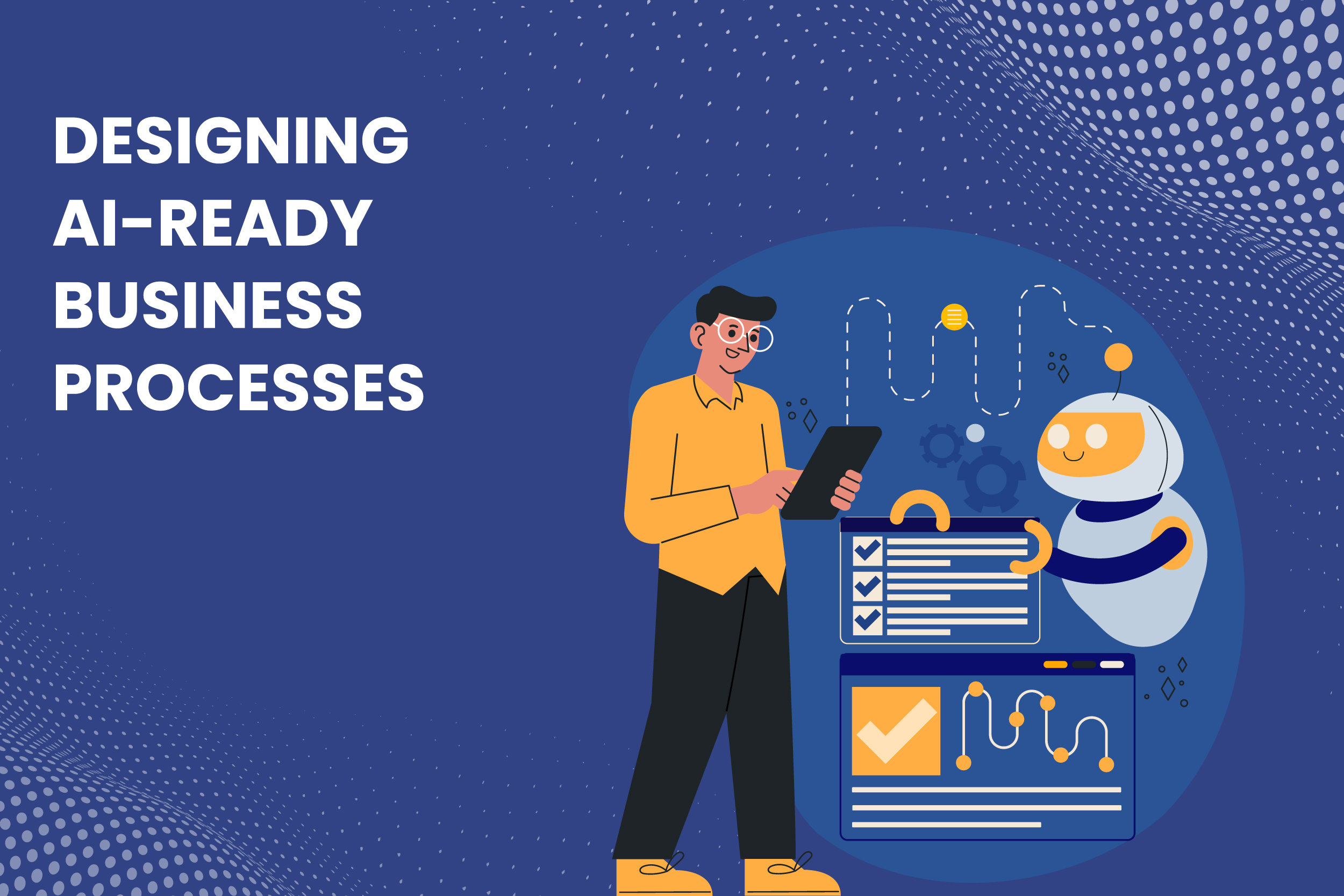
Artificial intelligence is quickly moving from experimentation to real business impact. Organizations are using AI to automate decisions, improve customer experiences, and extract insights from massive volumes of data. However, simply adopting AI tools does not guarantee success. Many companies discover that their existing workflows were never designed to support intelligent automation.
To unlock the full potential of AI, businesses must rethink how their processes are structured. This is where business process transformation becomes essential. Organizations need AI-ready processes that are structured, data-driven, and adaptable. Without these foundations, even the most advanced AI systems struggle to deliver value.
Understanding how to prepare processes for AI helps businesses build systems that are not only efficient today but also capable of evolving with future technologies.
Read More
Businesses today are under constant pressure to move faster, operate efficiently, and deliver better customer experiences. In response, many organizations invest in automation tools and digital technologies. However, a common misunderstanding arises when companies assume automation alone equals transformation.
In reality, automation vs transformation is not a comparison of competing strategies. Instead, automation is a component of digital transformation, not the transformation itself. Understanding this distinction is essential for organizations that want to achieve meaningful and lasting change.
When leaders realize that automation is not digital transformation, they can approach technology adoption more strategically and avoid investing in tools that produce only limited impact.
Read More
In today’s fast-paced business landscape, uncertainty is the only constant. From global economic shifts to rapid technological change, organizations face pressures that can disrupt operations, challenge growth, and threaten survival. In this environment, organizational resilience is no longer optional—it is essential. Companies that cultivate adaptability, foresight, and responsiveness are better equipped to thrive, even under the most challenging circumstances.
How companies stay resilient begins with a mindset that sees disruption not as a threat, but as an opportunity to learn, evolve, and innovate. Resilient organizations do more than recover from setbacks—they anticipate challenges, respond effectively, and emerge stronger.
Read More
In today’s fast-paced digital landscape, businesses must adapt to changing technologies and customer expectations to remain competitive. One of the most effective ways to achieve this adaptability is through digital transformation, which involves integrating digital technologies into all areas of a business. A critical component of this transformation is Enterprise Resource Planning (ERP) systems.
Read More
Implementing an SAP system can be a transformative step for organizations aiming to enhance their operational efficiency, streamline processes, and improve data visibility. However, success in an SAP implementation goes beyond simply completing the project on time and within budget. It involves measuring and analyzing key performance metrics that provide insight into how effectively the system is being utilized and whether it meets the organization’s objectives.
Read More
In today’s fast-paced business environment, efficient systems and processes are vital for success. Enterprise Resource Planning (ERP) systems like SAP are central to this, helping organizations streamline their operations, manage resources more effectively, and drive productivity.
However, ERP implementation is a complex and often challenging process that requires a skilled IT consulting partner to ensure success. Selecting the right IT consulting services for your ERP implementation, especially for SAP, can make the difference between seamless integration and costly disruptions.
Read More
ERP systems have become indispensable tools for businesses looking to streamline operations, improve efficiency, and maintain a competitive edge. However, implementing ERP solutions can be daunting, especially for small and medium-sized businesses (SMBs) with limited resources.
The complexity of the process, cost concerns, and the need for seamless integration across departments pose significant challenges. To overcome these, SMBs must adopt tailored ERP implementation strategies that align with their unique requirements.
Read More
In today’s fast-paced business environment, Enterprise Resource Planning (ERP) systems like SAP (Systems, Applications, and Products) are crucial to streamlining operations, improving efficiency, and supporting growth. However, the process of SAP implementation can be complex and time-consuming, often putting a strain on internal resources.
This is where IT consulting services come into play, providing the necessary expertise and support to accelerate your SAP implementation timeline. By leveraging specialized knowledge and proven strategies, IT consulting services can significantly shorten the time required for successful SAP deployment, helping organizations stay competitive and responsive to market demands.
Read More
As enterprises scale, managing resources, streamlining operations, and maintaining flexibility become crucial challenges. To address these challenges, businesses increasingly turn to cloud-based Enterprise Resource Planning (ERP) systems.
ERP solutions have long been vital in centralizing various business functions like finance, human resources, supply chain management, and customer relations into a unified system. In recent years, the shift to cloud-based ERP systems has offered even greater benefits, particularly for growing enterprises.
Read More
Leave a Reply