
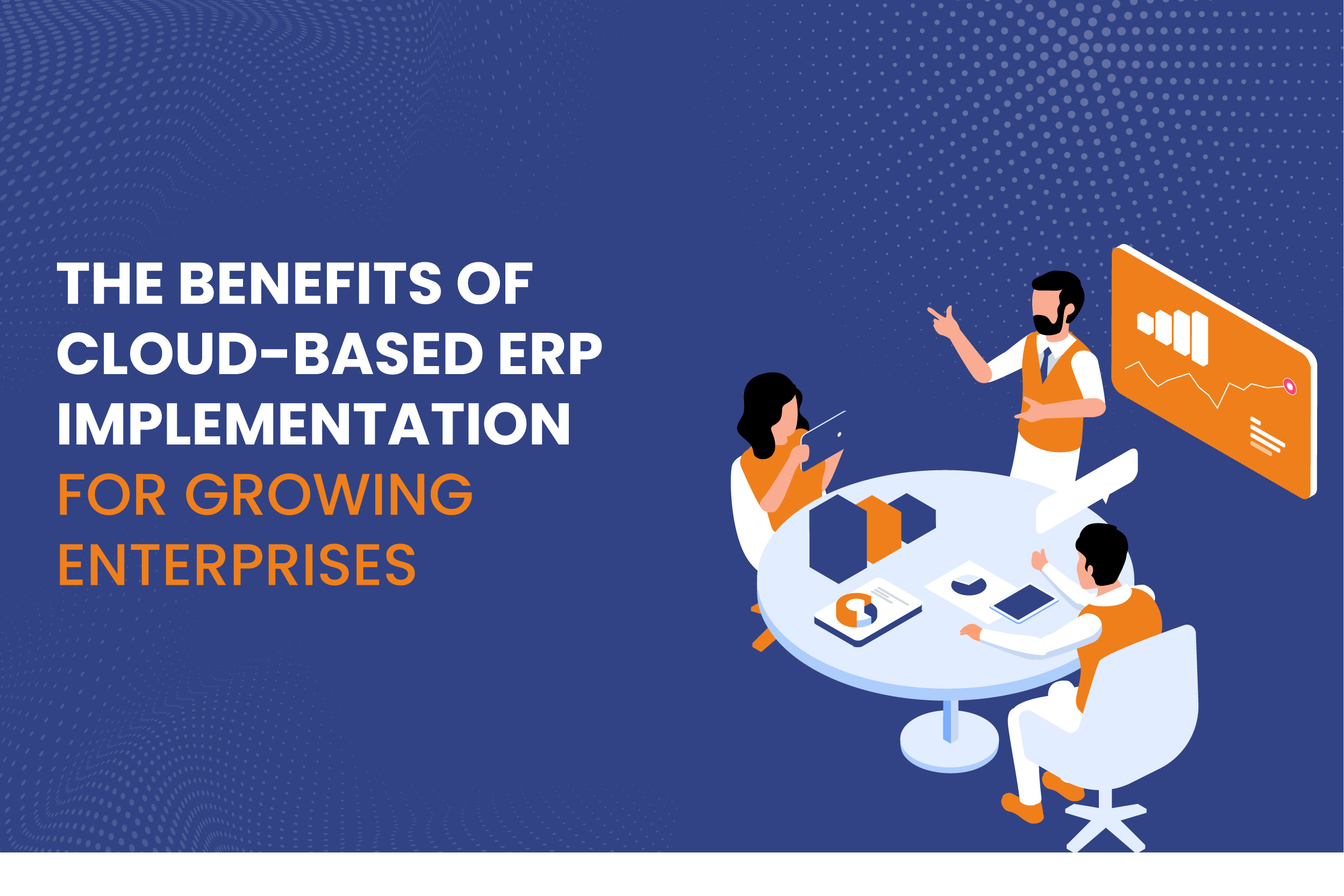
As enterprises scale, managing resources, streamlining operations, and maintaining flexibility become crucial challenges. To address these challenges, businesses increasingly turn to cloud-based Enterprise Resource Planning (ERP) systems.
ERP solutions have long been vital in centralizing various business functions like finance, human resources, supply chain management, and customer relations into a unified system. In recent years, the shift to cloud-based ERP systems has offered even greater benefits, particularly for growing enterprises.
One of the most significant benefits of adopting a cloud-based ERP system is scalability. Growing enterprises need systems that can evolve with their expansion. Traditional on-premise ERP systems often require hardware upgrades and expensive maintenance to accommodate growth. In contrast, cloud-based ERPs provide the flexibility to scale operations effortlessly.
As businesses grow, whether through increased customer demand, geographic expansion, or mergers and acquisitions, cloud-based ERPs can easily scale to support the new volume of operations. Cloud-based ERP solutions, such as SAP implementation, allow companies to add new users, features, and functionalities without the need for major infrastructure overhauls. This eliminates the need for IT staff to manually manage server loads, upgrades, or patches, ensuring that enterprises can focus on their core business.
Furthermore, cloud-based systems enable easy integration with third-party applications, enhancing flexibility. This makes it simpler for growing enterprises to align their ERP system with other tools and systems they use for customer relationship management (CRM), e-commerce, or supply chain management.
One of the key reasons growing enterprises are opting for cloud-based ERP implementation is the financial advantage. Traditional on-premise ERP systems typically come with heavy upfront costs for hardware, licensing, and installation. Additionally, ongoing costs for maintenance, upgrades, and IT staffing can further burden the company.
Cloud-based ERP, on the other hand, operates on a subscription-based model. This pay-as-you-go structure allows businesses to invest only in what they need, making it a more budget-friendly option for growing enterprises. Since the system is hosted in the cloud, there’s no need to maintain physical servers or hire a large in-house IT team to manage the system. This cost-saving benefit becomes even more apparent when businesses need to scale up, as they can simply adjust their subscription level instead of overhauling their entire infrastructure.
Companies can also reduce costs related to downtime and operational disruptions, as cloud-based ERP solutions often come with higher reliability and automatic backups, minimizing the risk of data loss or system outages.
In today’s fast-paced business environment, access to real-time data is essential for making informed decisions. Cloud-based ERP systems offer businesses real-time access to key metrics and performance data from anywhere in the world. This is particularly beneficial for enterprises with remote teams or multiple offices, as it ensures that all departments are working with the most current information.
For example, SAP implementation in the cloud enables enterprises to centralize their data, providing a single source of truth across all departments. This real-time visibility allows decision-makers to monitor performance, adjust strategies, and respond to market changes more effectively. Whether tracking inventory levels, financial forecasts, or customer data, cloud ERP systems empower businesses with the insights they need to drive growth.
Enhanced reporting capabilities are another benefit, allowing companies to generate detailed reports with just a few clicks. These comprehensive reports can include financial performance, sales analysis, and operational efficiency, helping leaders make data-driven decisions faster and with more accuracy.
Security is a major concern for any enterprise, especially as it grows and handles increasing amounts of sensitive data. Cloud-based ERP providers typically invest heavily in advanced security measures, including data encryption, multi-factor authentication, and continuous monitoring for potential threats.
Many cloud ERP vendors, including ERP implementation, adhere to the highest security standards and compliance regulations, such as GDPR or industry-specific certifications like ISO 27001. This allows growing enterprises to ensure that their data is protected without having to invest heavily in additional security infrastructure or specialized staff.
Moreover, with a cloud-based ERP, businesses don’t have to worry about manually managing security patches or updates. These are handled automatically by the vendor, ensuring the system is always up-to-date with the latest security enhancements.
Traditional ERP implementation can be a time-consuming process, often taking months or even years to fully install and customize. For growing enterprises, the long wait for full functionality can slow down business operations and delay critical growth initiatives.
Cloud-based ERP systems offer a significantly faster implementation process. Many cloud solutions are pre-configured with industry-specific best practices, which accelerates setup times. Since the infrastructure is already in place, businesses can get up and running quickly with minimal disruptions to their existing operations.
IT consulting services play a critical role in ensuring that cloud-based ERP implementation is smooth and efficient. Consultants work closely with businesses to understand their unique needs, helping to customize the system for optimal performance. They also assist with training, ensuring that staff can use the new ERP system effectively from day one.
As businesses expand, cross-departmental collaboration becomes more important than ever. Cloud-based ERP systems foster collaboration by offering centralized data access to all authorized personnel, regardless of location. Teams from different departments, whether they’re in finance, sales, or human resources, can work with the same data, avoiding silos and enhancing interdepartmental communication.
Additionally, cloud ERP systems often come with built-in tools for communication and collaboration, such as shared dashboards and workflow automation. These features ensure that teams can work together efficiently, making it easier to manage complex projects or daily tasks.
The integration capabilities of cloud-based ERP solutions are another major benefit. Growing enterprises often rely on multiple software tools for various functions—CRM systems for sales, supply chain management tools, and financial software, for example. Cloud ERP systems can integrate with these tools seamlessly, creating a unified ecosystem that drives business efficiency.
Cloud ERP providers continuously improve their systems by releasing regular updates and adding new features. Unlike on-premise ERP solutions, which often require costly and time-consuming upgrades, cloud-based ERPs automatically receive updates from the vendor. This ensures that growing enterprises always have access to the latest technologies and functionalities.
By staying on the cutting edge, businesses can leverage new innovations—such as artificial intelligence (AI), machine learning (ML), and predictive analytics—without having to invest in separate solutions. This continual evolution makes cloud-based ERP systems an ideal choice for companies that want to remain competitive in a rapidly changing business environment.
For growing enterprises, cloud-based ERP implementation offers significant benefits, from scalability and cost efficiency to real-time data access and enhanced security. It’s a strategic investment that enables businesses to streamline operations, improve collaboration, and make more informed decisions.
Moreover, expert IT consulting services are essential for ensuring successful ERP implementation, tailoring the system to meet unique business needs and ensuring smooth transitions. With cloud-based ERP solutions like SAP implementation, enterprises can position themselves for sustained growth while staying agile and responsive to future challenges.
As more businesses recognize the advantages of cloud-based ERP systems, it’s clear that this technology will play a crucial role in shaping the future of enterprise operations.
Artificial intelligence is transforming how modern businesses operate. From automating workflows to generating insights from massive datasets, AI offers organizations unprecedented opportunities to innovate and scale. However, as AI capabilities grow, so do concerns around ethics, accountability, and transparency. This is why responsible AI has become a critical priority for large organizations.
Read More
Digital transformation has become a strategic priority for organizations across industries. Businesses are investing in advanced technologies, data platforms, and automation tools to improve efficiency and remain competitive in an increasingly digital world. However, transformation initiatives are rarely simple. Many organizations underestimate the complexity of change, leading to delays, wasted investments, or stalled projects.
Read More
For many organizations, legacy systems are both a foundation and a barrier. These older technologies once powered growth, managed operations, and supported critical business functions. Over time, however, they often become difficult to maintain, expensive to update, and incompatible with modern tools. As markets evolve and customer expectations rise, businesses increasingly recognize the need for legacy modernization.
Read More
Digital transformation promises speed, innovation, and competitive advantage. Yet, despite heavy investments in new technologies, many organizations struggle to achieve meaningful results. In fact, digital transformation failure is more common than most companies expect. Businesses launch ambitious initiatives to modernize systems, adopt AI, or improve customer experiences, but somewhere along the way, momentum fades.
Understanding why digital transformations fail requires looking beyond technology. The real problems often lie in strategy, culture, leadership, and execution. When these elements are misaligned, even the most advanced tools cannot deliver transformation.
Below are some of the most common enterprise transformation challenges that cause digital initiatives to stall or collapse.
Read More
Artificial intelligence is quickly moving from experimentation to enterprise-wide implementation. Many organizations have already tested AI through pilot projects, automation tools, or analytics platforms. The next step—scaling AI across the organization—promises greater efficiency, smarter decision-making, and new business opportunities.
However, expanding AI initiatives without the right structure can create confusion rather than progress. Disconnected tools, unclear governance, and untrained teams often turn promising projects into operational headaches. For companies pursuing enterprise AI adoption, the real challenge is learning how to scale AI safely while maintaining control, consistency, and trust.
Successfully scaling AI requires thoughtful planning, strong governance, and a focus on people as much as technology.
Read More
Businesses evolve constantly. Markets change, customer expectations rise, and new technologies reshape how companies operate. To keep up, organizations often need more than new tools or strategies—they need to rethink how the entire business functions. This is where operating model transformation comes in.
While the phrase may sound complex, the concept is actually quite simple. It is about redesigning how a company works so that it can deliver value more efficiently, adapt faster, and support long-term growth.
Understanding what is an operating model transformation helps leaders make better decisions about people, processes, and technology.
Read More
Enterprise transformations are complex, high-stakes initiatives that often promise operational efficiency, digital modernization, and competitive advantage. Yet, despite meticulous planning and substantial investments, many transformation programs stumble—not because of technology, but because of people.
This is where change management becomes critical. Understanding why people resist change and applying effective strategies in transformation leadership can make the difference between a stalled project and a successful enterprise-wide transformation.
Read More
Artificial Intelligence (AI) is no longer a futuristic concept; it has become a cornerstone of modern business strategy. From automating routine tasks to generating insights from vast datasets, AI promises efficiency, innovation, and competitive advantage.
Yet, the rapid pace of AI adoption also brings uncertainty. Many executives struggle with defining their role in AI strategy, leading to stalled projects or missed opportunities. Understanding how leaders should think about Artificial Intelligence is essential for turning technology into tangible business outcomes.
Read More
Digital transformation is no longer just a buzzword—it’s a necessity for businesses aiming to stay competitive in today’s fast-paced market. Organizations invest in cloud technologies, automation, AI, and customer-centric platforms to modernize operations and create value. But with so many initiatives underway, one pressing question arises: how to measure transformation success? Without clear metrics, companies risk investing heavily without knowing whether their efforts are truly paying off.
Measuring success in digital transformation goes beyond counting deployed tools or completed projects. It requires tracking meaningful indicators that reflect actual business outcomes, employee adoption, and customer impact. Defining transformation KPIs early in the journey ensures that initiatives stay aligned with strategic goals and deliver measurable value.
Read More
Enterprise transformation is no longer a niche service—it has become a critical driver for organizations seeking growth, agility, and resilience. Businesses today face unprecedented challenges: rapidly evolving technologies, shifting customer expectations, and complex global markets. In response, transformation consulting has evolved from offering generic recommendations to delivering highly specialized, strategic guidance that helps enterprises navigate this dynamic landscape.
Understanding how consulting is changing provides insights into what the future of enterprise transformation consulting looks like, and why companies are increasingly relying on experts to guide their transformational journeys.
Read More

Leave a Reply