
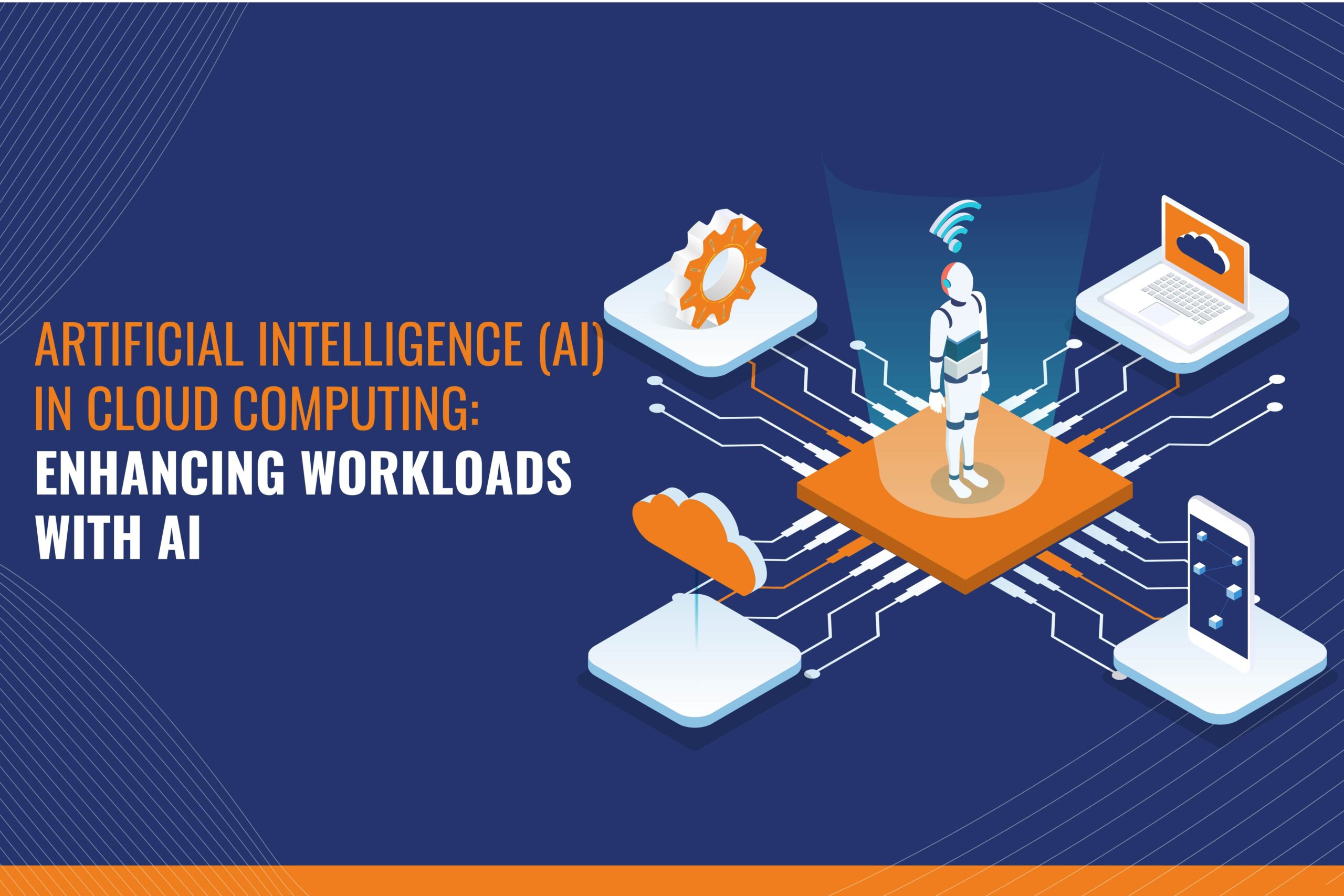
Workloads greatly benefit from combining cloud computing and artificial intelligence (AI). Businesses may achieve more intelligent automation, acquire real-time insights, and create game-changing solutions by using AI capabilities in the cloud.
The fusion of cloud computing and artificial intelligence (AI) holds immense potential for enhancing workloads across various industries. This synergy allows businesses to harness the power of AI to achieve more intelligent automation, gain real-time insights, and create innovative solutions that can revolutionize their operations.
One of the primary advantages of incorporating AI into cloud computing is the ability to achieve intelligent automation. Cloud platforms equipped with AI capabilities can automate routine tasks, enabling businesses to streamline their processes and allocate resources more efficiently. Whether it’s automating customer service inquiries, data analysis, or supply chain management, AI-driven automation reduces human intervention, minimizes errors, and increases productivity.
Real-time insights are another invaluable benefit of combining AI with cloud computing. AI algorithms can process vast amounts of data in real-time, providing businesses with actionable information at their fingertips. This empowers decision-makers to make informed choices promptly. For instance, in e-commerce, AI-driven analytics can offer personalized product recommendations to customers, improving their shopping experience and increasing sales.
Moreover, AI in cloud computing enables the development of groundbreaking solutions. Machine learning models can be trained on large datasets stored in the cloud, leading to the creation of innovative AI-powered applications. These applications can range from predictive maintenance in manufacturing to healthcare diagnostic tools that can detect diseases more accurately and at an earlier stage. The scalability and flexibility of cloud platforms make it easier to develop, deploy, and manage these AI-driven solutions.
In conclusion, the integration of AI into cloud computing is a game-changer for workloads in today’s digital age. It enhances automation, provides real-time insights, and fosters innovation across various sectors. As businesses continue to adopt these technologies, they gain a competitive edge by improving efficiency, making data-driven decisions, and offering cutting-edge solutions that meet the ever-evolving demands of their customers and markets.
A new era of technical possibilities has begun due to the fusion of artificial intelligence with cloud computing, revolutionizing how companies use digital tools and do business. This dynamic pair has tremendous potential to improve workloads in the cloud environment, resulting in increased productivity, creativity, and scalability.
The symbiotic link between AI and Cloud Computing will be explored in this blog article, along with how AI is raising workloads and changing current corporate operations. We will also explore the uses of AI in cloud computing to further develop the organization.
Artificial intelligence (AI) has significantly impacted cloud computing, which has changed how resources are managed, applications are created, and data is analyzed in cloud settings. The following are some significant ways that AI influences cloud computing:
Algorithms using artificial intelligence can analyze consumption trends and forecast resource needs. These predictive capabilities improve the allocation of resources and scalability within cloud systems. It can drive significant business transformation by improving efficiency, reducing costs, increasing productivity, and enabling organizations to focus on higher-value tasks.
AI enables automating several cloud administration functions, including provisioning, monitoring, and scaling. Automating regular procedures with the help of machine learning algorithms can result in more effective cloud operations and less need for human intervention since they can learn from past data and make educated judgments.
Using AI-driven security solutions, cloud infrastructure and application irregularities and possible risks may be found. AI can detect unauthorized activity and vulnerabilities by examining user behavior and data access patterns. It improves security and ensures compliance with data protection laws.
These two processes offer the perfect infrastructure. Organizations may use large datasets to train complicated models, which can be deployed for real-time forecasting and decision-making.
Within cloud computing systems, Artificial intelligence algorithms may examine consumption patterns, spot inefficiencies, and suggest cost-cutting measures. This involves choosing the appropriate pricing models, optimizing resource allocation, and spotting unused resources that may be turned off to cut expenses.
Cloud-based apps frequently use AI-driven recommendation systems. In order to these systems examine user behavior and preferences to provide personalized content, product suggestions, and user experiences that increase user engagement.
Adding artificial intelligence (AI) to cloud computing has many advantages that improve productivity, creativity, and general company operations. The following are some significant benefits of implementing AI in cloud environments:
Based on current demand, AI-driven resource management optimizes the distribution of computer resources. This dynamic resource allocation decreases waste, enhances performance, and saves operational costs by ensuring that resources are scaled up or down as necessary.
Faster machine learning model training is made possible by cloud environments with specialized hardware accelerators like GPUs and TPUs. As a result of this acceleration, AI-driven solutions may be deployed more quickly. Developing and deploying machine learning models more quickly may significantly affect business transformation.
Based on past data, predictive AI-driven analysis predicts future workload patterns, resource requirements, and potential problems. Since this foresight makes proactive planning possible, downtime decreases and enhances the user experience.
AI strengthens cloud security by spotting irregularities and possible attacks and fixing holes in real time. Machine learning algorithms can identify unauthorized access or odd activity by learning patterns and behavior that help improve data safety.
Cloud platforms and AI capabilities allow for quick examination of large datasets. Data-driven decision-making and business strategies can benefit from the insights, trends, and correlations that AI algorithms can find in data.
AI-driven recommendation engines analyze user behavior and preferences to personalize the user experience. For example, AI-powered suggestions in e-commerce boost user engagement and conversion rates by proposing goods based on personal preferences.
Cloud platforms offer AI-powered tools and services that hasten application development. Without beginning from scratch, developers may include AI functions in apps thanks to machine learning frameworks, APIs, and pre-trained models.
In cloud computing, AI automates various operational functions, including provisioning, monitoring, and scaling. Automation powered by AI algorithms increases productivity, reduces human error, and frees IT personnel to concentrate on more complex jobs that call for human knowledge.
AI applications that can be deployed at scale are made possible by cloud resources. The cloud’s scalability means that apps can manage increased workloads as demand develops, whether providing AI-powered chatbots or analyzing massive amounts of information.
A new era of opportunities is opened by the union of artificial intelligence (AI) with cloud computing, representing a significant technological paradigm shift. As a result of the fusion of these two dynamic domains, workloads in the cloud environment have been improved, resulting in a host of advantages that have completely changed how organizations operate, develop, and use data-driven intelligence. Addressing data privacy, latency issues, and potential vendor lock-in are crucial as organizations traverse this disruptive landscape. Businesses may fully utilize AI-enhanced cloud environments by adopting a strategic approach to these issues. To learn more, visit our websites.
Enterprise transformation is no longer a niche service—it has become a critical driver for organizations seeking growth, agility, and resilience. Businesses today face unprecedented challenges: rapidly evolving technologies, shifting customer expectations, and complex global markets. In response, transformation consulting has evolved from offering generic recommendations to delivering highly specialized, strategic guidance that helps enterprises navigate this dynamic landscape.
Understanding how consulting is changing provides insights into what the future of enterprise transformation consulting looks like, and why companies are increasingly relying on experts to guide their transformational journeys.
Read More
Artificial intelligence is quickly moving from experimentation to real business impact. Organizations are using AI to automate decisions, improve customer experiences, and extract insights from massive volumes of data. However, simply adopting AI tools does not guarantee success. Many companies discover that their existing workflows were never designed to support intelligent automation.
To unlock the full potential of AI, businesses must rethink how their processes are structured. This is where business process transformation becomes essential. Organizations need AI-ready processes that are structured, data-driven, and adaptable. Without these foundations, even the most advanced AI systems struggle to deliver value.
Understanding how to prepare processes for AI helps businesses build systems that are not only efficient today but also capable of evolving with future technologies.
Read More
Businesses today are under constant pressure to move faster, operate efficiently, and deliver better customer experiences. In response, many organizations invest in automation tools and digital technologies. However, a common misunderstanding arises when companies assume automation alone equals transformation.
In reality, automation vs transformation is not a comparison of competing strategies. Instead, automation is a component of digital transformation, not the transformation itself. Understanding this distinction is essential for organizations that want to achieve meaningful and lasting change.
When leaders realize that automation is not digital transformation, they can approach technology adoption more strategically and avoid investing in tools that produce only limited impact.
Read More
In today’s fast-paced business landscape, uncertainty is the only constant. From global economic shifts to rapid technological change, organizations face pressures that can disrupt operations, challenge growth, and threaten survival. In this environment, organizational resilience is no longer optional—it is essential. Companies that cultivate adaptability, foresight, and responsiveness are better equipped to thrive, even under the most challenging circumstances.
How companies stay resilient begins with a mindset that sees disruption not as a threat, but as an opportunity to learn, evolve, and innovate. Resilient organizations do more than recover from setbacks—they anticipate challenges, respond effectively, and emerge stronger.
Read More
In today’s fast-paced digital landscape, businesses must adapt to changing technologies and customer expectations to remain competitive. One of the most effective ways to achieve this adaptability is through digital transformation, which involves integrating digital technologies into all areas of a business. A critical component of this transformation is Enterprise Resource Planning (ERP) systems.
Read More
Implementing an SAP system can be a transformative step for organizations aiming to enhance their operational efficiency, streamline processes, and improve data visibility. However, success in an SAP implementation goes beyond simply completing the project on time and within budget. It involves measuring and analyzing key performance metrics that provide insight into how effectively the system is being utilized and whether it meets the organization’s objectives.
Read More
In today’s fast-paced business environment, efficient systems and processes are vital for success. Enterprise Resource Planning (ERP) systems like SAP are central to this, helping organizations streamline their operations, manage resources more effectively, and drive productivity.
However, ERP implementation is a complex and often challenging process that requires a skilled IT consulting partner to ensure success. Selecting the right IT consulting services for your ERP implementation, especially for SAP, can make the difference between seamless integration and costly disruptions.
Read More
ERP systems have become indispensable tools for businesses looking to streamline operations, improve efficiency, and maintain a competitive edge. However, implementing ERP solutions can be daunting, especially for small and medium-sized businesses (SMBs) with limited resources.
The complexity of the process, cost concerns, and the need for seamless integration across departments pose significant challenges. To overcome these, SMBs must adopt tailored ERP implementation strategies that align with their unique requirements.
Read More
In today’s fast-paced business environment, Enterprise Resource Planning (ERP) systems like SAP (Systems, Applications, and Products) are crucial to streamlining operations, improving efficiency, and supporting growth. However, the process of SAP implementation can be complex and time-consuming, often putting a strain on internal resources.
This is where IT consulting services come into play, providing the necessary expertise and support to accelerate your SAP implementation timeline. By leveraging specialized knowledge and proven strategies, IT consulting services can significantly shorten the time required for successful SAP deployment, helping organizations stay competitive and responsive to market demands.
Read More
As enterprises scale, managing resources, streamlining operations, and maintaining flexibility become crucial challenges. To address these challenges, businesses increasingly turn to cloud-based Enterprise Resource Planning (ERP) systems.
ERP solutions have long been vital in centralizing various business functions like finance, human resources, supply chain management, and customer relations into a unified system. In recent years, the shift to cloud-based ERP systems has offered even greater benefits, particularly for growing enterprises.
Read More
Leave a Reply