
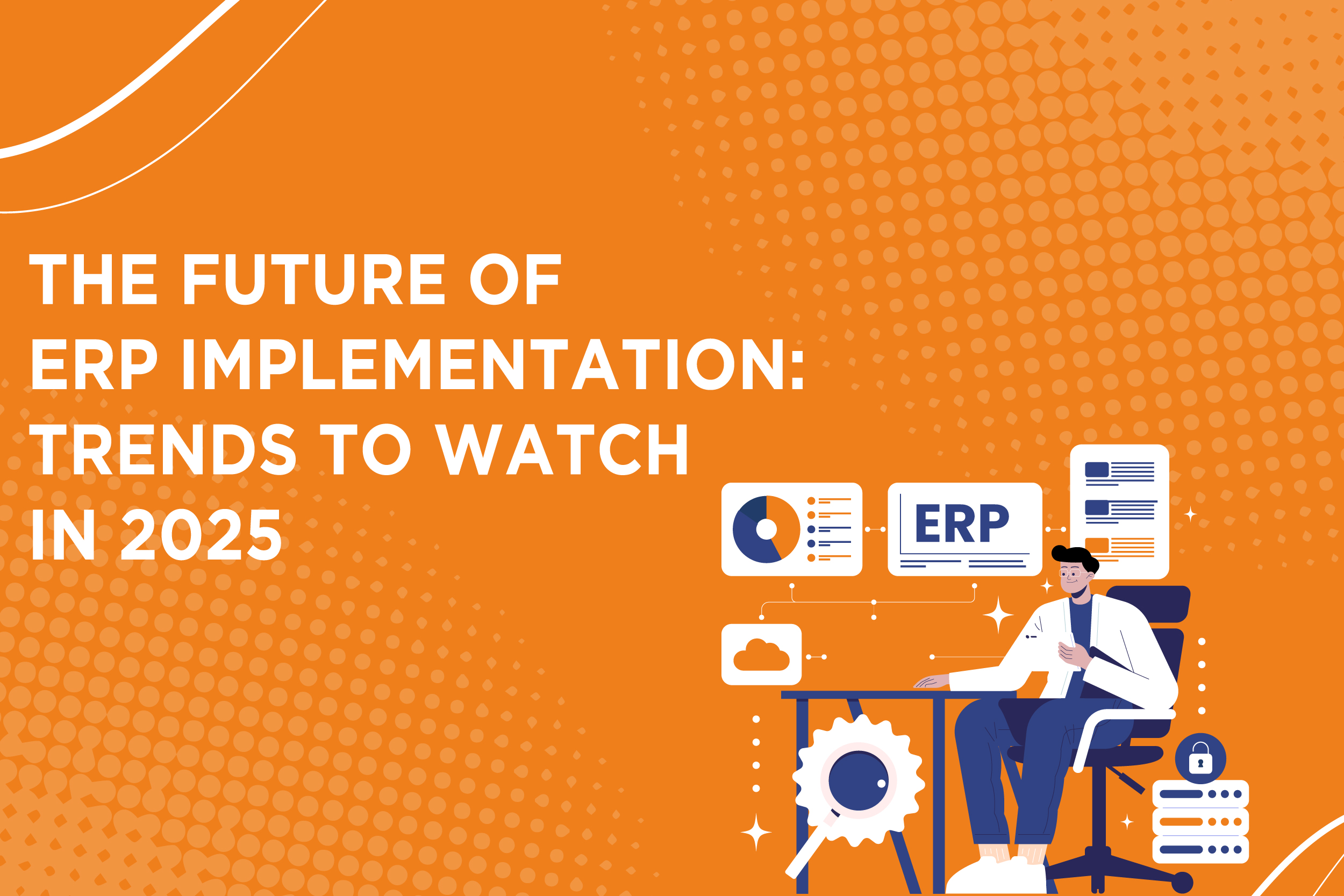
In the rapidly evolving business landscape, enterprise resource planning (ERP) systems are essential for companies looking to streamline operations, improve data accuracy, and enhance decision-making processes. As we look toward 2025, the future of ERP implementation is promising, with significant trends emerging that are reshaping how organizations deploy and manage their ERP systems. From advancements in SAP implementation to innovations in IT consulting services, businesses must keep a keen eye on these trends to remain competitive.
One of the most significant trends in ERP implementation is the continued rise of cloud-based ERP solutions. By 2025, it is expected that an increasing number of organizations will move away from traditional on-premise ERP systems in favor of cloud-based solutions. This shift offers several key advantages, including scalability, cost-effectiveness, and enhanced flexibility.
SAP implementation on the cloud, for example, provides companies with the ability to scale resources as needed and ensures that the system is accessible from virtually anywhere. Moreover, businesses no longer need to invest heavily in physical infrastructure or worry about maintaining costly hardware. The reduction in operational costs and the ability to quickly adapt to changing business needs make cloud-based ERP a leading trend for the future.
As AI and machine learning continue to mature, their integration into ERP systems is inevitable. By 2025, AI-driven ERP implementations will revolutionize how businesses operate. These technologies allow for automation of repetitive tasks, predictive analytics, and improved decision-making processes. AI can analyze massive amounts of data generated by ERP systems to provide valuable insights that can improve business outcomes.
For instance, AI-powered tools can automate the generation of financial reports, optimize supply chain management, and predict maintenance needs in manufacturing environments. Moreover, AI can enhance user experiences by personalizing interfaces based on user behavior and preferences. The potential to increase operational efficiency through AI and machine learning makes this trend a game-changer for ERP implementation.
A growing trend in ERP implementation is the development of industry-specific ERP solutions. These solutions are tailored to meet the unique needs and challenges of particular industries, such as manufacturing, healthcare, retail, and finance. By offering highly customized features and functionalities, industry-specific ERP systems help businesses gain a competitive advantage by addressing industry-specific regulations, workflows, and operational requirements.
For example, in the healthcare sector, ERP systems may integrate patient records, compliance tracking, and resource allocation into a single platform. In manufacturing, ERP solutions may offer advanced production planning, supply chain management, and equipment maintenance features. The adoption of industry-specific ERPs is expected to rise as companies seek more relevant and tailored solutions in their sectors.
As businesses continue to embrace mobile technologies, mobile ERP solutions are becoming increasingly important. By 2025, it is projected that mobile ERP will be a standard offering, providing employees with real-time access to critical business data from any location. This trend is particularly important for remote workforces and field service teams that require constant access to their ERP systems.
Mobile-friendly ERP implementations improve productivity by enabling workers to perform tasks such as checking inventory, managing orders, and tracking projects through smartphones or tablets. As mobile technology becomes more sophisticated, it will further integrate with ERP systems, making ERP tools more accessible and user-friendly.
In 2025, ERP implementation will increasingly focus on delivering a superior user experience (UX). Traditional ERP systems are often viewed as complex and difficult to navigate, which can lead to lower adoption rates and decreased employee productivity. To address this, ERP vendors are investing in designing intuitive interfaces that prioritize ease of use and streamline processes.
SAP, for example, is enhancing its interface with SAP Fiori, which offers a simplified, role-based, and responsive design. This modern interface makes it easier for users to access data and perform tasks quickly. By improving UX, ERP implementations in 2025 will see greater user engagement, faster onboarding processes, and ultimately, higher efficiency.
As ERP implementations become more complex, IT consulting services are set to play an even more critical role. By 2025, companies will increasingly rely on consulting partners to manage the end-to-end ERP implementation process. These IT consulting services will not only provide technical expertise but also help businesses align their ERP strategies with overall organizational goals.
Consultants will play a vital role in selecting the right ERP solution, configuring the system to meet business needs, and ensuring a seamless integration with other software platforms. Additionally, IT consulting services can help manage the change management process, which is crucial for successful ERP adoption. By partnering with skilled consultants, companies can mitigate risks, reduce implementation time, and ensure long-term ERP success.
The Internet of Things (IoT) is set to transform the landscape of ERP implementation by 2025. IoT devices generate vast amounts of data from various sources, such as manufacturing equipment, transportation vehicles, and smart devices. Integrating this data into ERP systems allows companies to gain real-time insights into their operations and optimize processes accordingly.
For instance, in the manufacturing industry, IoT sensors can provide real-time data on equipment performance, allowing the ERP system to schedule maintenance and reduce downtime automatically. Similarly, in retail, IoT-enabled ERP systems can track inventory levels and optimize supply chain management. The seamless integration of IoT and ERP is poised to become a major trend as businesses look to leverage data for improved decision-making and operational efficiency.
As more companies move their ERP systems to the cloud and integrate with IoT devices, cybersecurity will be a top concern in 2025. ERP systems are critical to a company’s operations, housing sensitive financial and operational data. A security breach can have devastating consequences, including financial loss, legal ramifications, and reputational damage.
To address these concerns, ERP vendors and IT consulting services will prioritize implementing robust cybersecurity measures. This includes advanced encryption, multi-factor authentication, and continuous monitoring for suspicious activity. As ERP systems become more connected, companies will need to invest heavily in securing their data and systems from cyber threats.
As businesses become more environmentally conscious, sustainability will be a key focus in ERP implementation by 2025. Companies are increasingly seeking ways to reduce their environmental impact, and ERP systems can help by tracking resource usage, reducing waste, and optimizing energy consumption.
Green ERP solutions will allow companies to measure their carbon footprint, monitor resource efficiency, and comply with environmental regulations. Additionally, these systems will provide insights into sustainable business practices, helping organizations make more eco-friendly decisions. As sustainability becomes a business imperative, green ERP systems will be an essential tool for companies striving to achieve their environmental goals.
The future of ERP implementation in 2025 is poised for transformative changes. From the growing adoption of cloud-based ERP solutions to the integration of AI, IoT, and mobile technologies, businesses must stay ahead of these trends to succeed in a competitive market. With SAP implementation, IT consulting services, and innovative ERP strategies, companies can harness the full potential of ERP systems to drive efficiency, optimize operations, and achieve their business objectives. By embracing these trends, organizations will be better equipped to navigate the challenges of the future while seizing new opportunities for growth.
Artificial intelligence is transforming how modern businesses operate. From automating workflows to generating insights from massive datasets, AI offers organizations unprecedented opportunities to innovate and scale. However, as AI capabilities grow, so do concerns around ethics, accountability, and transparency. This is why responsible AI has become a critical priority for large organizations.
Read More
Digital transformation has become a strategic priority for organizations across industries. Businesses are investing in advanced technologies, data platforms, and automation tools to improve efficiency and remain competitive in an increasingly digital world. However, transformation initiatives are rarely simple. Many organizations underestimate the complexity of change, leading to delays, wasted investments, or stalled projects.
Read More
For many organizations, legacy systems are both a foundation and a barrier. These older technologies once powered growth, managed operations, and supported critical business functions. Over time, however, they often become difficult to maintain, expensive to update, and incompatible with modern tools. As markets evolve and customer expectations rise, businesses increasingly recognize the need for legacy modernization.
Read More
Digital transformation promises speed, innovation, and competitive advantage. Yet, despite heavy investments in new technologies, many organizations struggle to achieve meaningful results. In fact, digital transformation failure is more common than most companies expect. Businesses launch ambitious initiatives to modernize systems, adopt AI, or improve customer experiences, but somewhere along the way, momentum fades.
Understanding why digital transformations fail requires looking beyond technology. The real problems often lie in strategy, culture, leadership, and execution. When these elements are misaligned, even the most advanced tools cannot deliver transformation.
Below are some of the most common enterprise transformation challenges that cause digital initiatives to stall or collapse.
Read More
Artificial intelligence is quickly moving from experimentation to enterprise-wide implementation. Many organizations have already tested AI through pilot projects, automation tools, or analytics platforms. The next step—scaling AI across the organization—promises greater efficiency, smarter decision-making, and new business opportunities.
However, expanding AI initiatives without the right structure can create confusion rather than progress. Disconnected tools, unclear governance, and untrained teams often turn promising projects into operational headaches. For companies pursuing enterprise AI adoption, the real challenge is learning how to scale AI safely while maintaining control, consistency, and trust.
Successfully scaling AI requires thoughtful planning, strong governance, and a focus on people as much as technology.
Read More
Businesses evolve constantly. Markets change, customer expectations rise, and new technologies reshape how companies operate. To keep up, organizations often need more than new tools or strategies—they need to rethink how the entire business functions. This is where operating model transformation comes in.
While the phrase may sound complex, the concept is actually quite simple. It is about redesigning how a company works so that it can deliver value more efficiently, adapt faster, and support long-term growth.
Understanding what is an operating model transformation helps leaders make better decisions about people, processes, and technology.
Read More
Enterprise transformations are complex, high-stakes initiatives that often promise operational efficiency, digital modernization, and competitive advantage. Yet, despite meticulous planning and substantial investments, many transformation programs stumble—not because of technology, but because of people.
This is where change management becomes critical. Understanding why people resist change and applying effective strategies in transformation leadership can make the difference between a stalled project and a successful enterprise-wide transformation.
Read More
Artificial Intelligence (AI) is no longer a futuristic concept; it has become a cornerstone of modern business strategy. From automating routine tasks to generating insights from vast datasets, AI promises efficiency, innovation, and competitive advantage.
Yet, the rapid pace of AI adoption also brings uncertainty. Many executives struggle with defining their role in AI strategy, leading to stalled projects or missed opportunities. Understanding how leaders should think about Artificial Intelligence is essential for turning technology into tangible business outcomes.
Read More
Digital transformation is no longer just a buzzword—it’s a necessity for businesses aiming to stay competitive in today’s fast-paced market. Organizations invest in cloud technologies, automation, AI, and customer-centric platforms to modernize operations and create value. But with so many initiatives underway, one pressing question arises: how to measure transformation success? Without clear metrics, companies risk investing heavily without knowing whether their efforts are truly paying off.
Measuring success in digital transformation goes beyond counting deployed tools or completed projects. It requires tracking meaningful indicators that reflect actual business outcomes, employee adoption, and customer impact. Defining transformation KPIs early in the journey ensures that initiatives stay aligned with strategic goals and deliver measurable value.
Read More
Enterprise transformation is no longer a niche service—it has become a critical driver for organizations seeking growth, agility, and resilience. Businesses today face unprecedented challenges: rapidly evolving technologies, shifting customer expectations, and complex global markets. In response, transformation consulting has evolved from offering generic recommendations to delivering highly specialized, strategic guidance that helps enterprises navigate this dynamic landscape.
Understanding how consulting is changing provides insights into what the future of enterprise transformation consulting looks like, and why companies are increasingly relying on experts to guide their transformational journeys.
Read More

Leave a Reply