
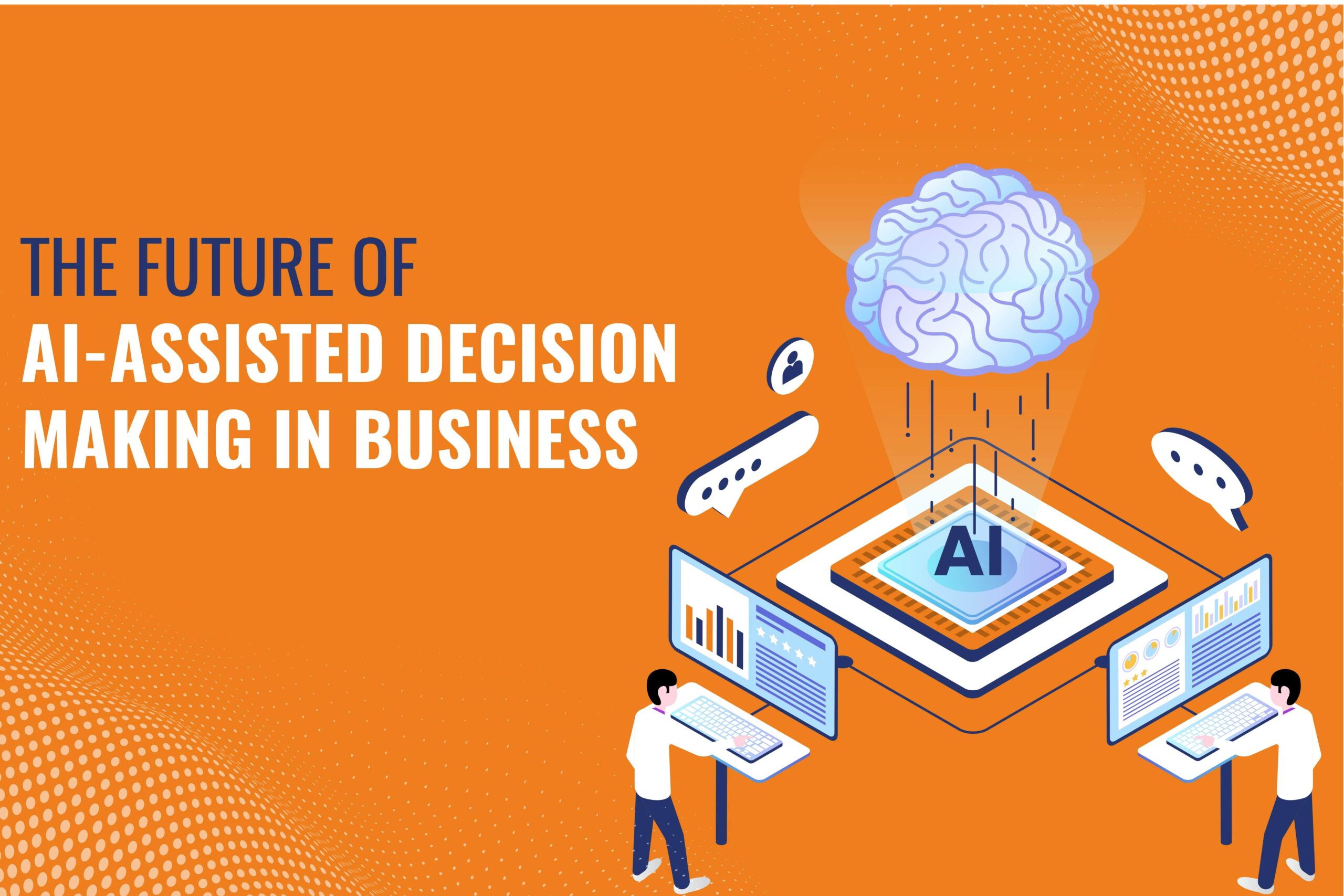
In the rapidly evolving landscape of modern business, integrating artificial intelligence (AI) is increasingly becoming a cornerstone of decision-making processes. This transformation promises to redefine how businesses operate, strategize, and compete in the global marketplace. As we peer into the future of AI-assisted decision-making, several key trends emerge, shaping how organizations harness AI’s power to drive success.
AI is set to transform decision-making by enhancing human intelligence with its unmatched capacity to swiftly process extensive data. AI systems use advanced algorithms and machine learning to analyze complex data, uncover patterns, and reveal hidden insights.
Furthermore, AI-powered decision-making holds the potential to optimize resource allocation and mitigate risks in an increasingly volatile and uncertain business environment. By leveraging predictive analytics and scenario modeling, AI systems can anticipate market trends, identify potential threats, and recommend proactive strategies to mitigate risks and capitalize on opportunities.
Moreover, AI-driven decision-making democratizes access to insights and expertise, empowering businesses of all sizes to compete on a level playing field. With the proliferation of AI tools and platforms, even small and medium-sized enterprises. So, it can harness the power of AI to streamline operations, optimize processes, and drive innovation.
The future of AI in business will see continuous advancements, integrating AI into every aspect of organizational operations. AI is set to impact all business areas, from customer service to financial forecasting, boosting efficiency, agility, and innovation.
So, the future of AI-assisted decision-making in business is bright and promising. It offers unprecedented opportunities for organizations to drive growth, innovation, and success. By harnessing the power of Artificial Intelligence to augment human intelligence, optimize resource allocation, and democratize access to insights. In addition, it embraces ongoing advancements in AI technology, and businesses can position themselves for long-term success.
In an era defined by data abundance and technological innovation, artificial intelligence (AI) has become increasingly prominent in assisting decision-making processes across various industries. Businesses are harnessing AI’s power to gain actionable insights, optimize operations, and drive strategic initiatives. As we navigate the ever-evolving landscape of AI, it’s essential to explore the future trajectory of AI-assisted decision-making in business and its transformative potential.
Looking ahead, several trends and developments are poised to shape the future of AI-assisted decision-making in business:
The future of AI in business decision-making is not about replacing human judgment but augmenting it. Augmented intelligence involves leveraging AI to enhance human decision-making by providing relevant insights, predictions, and recommendations. In addition, this symbiotic relationship between humans and machines can lead to more informed and effective decision-making processes.
As AI systems become more sophisticated, transparency and explainability become paramount. Explainable AI (XAI) techniques aim to demystify AI algorithms and make their decision-making processes understandable to humans. So, IT consulting services provide training and education to data scientists, developers, and other relevant stakeholders on the principles. So, This fosters trust, accountability, and ethical use of AI in business contexts.
AI-powered decision support systems will become increasingly personalized, catering to individual users’ unique needs and preferences. By leveraging data analytics and machine learning, these systems can deliver tailored recommendations, predictions, and insights. So, it enables users to make better-informed decisions aligned with their objectives.
AI systems may evolve to make autonomous decisions without human intervention in specific domains. This trend is particularly relevant in autonomous vehicles, robotic process automation, and algorithmic trading. However, ensuring the reliability, safety, and ethical integrity of autonomous AI decision-making will be paramount.
Advancements in edge computing, IoT (Internet of Things), and AI will enable real-time decision-making capabilities in business settings. This is particularly beneficial in dynamic and time-sensitive environments where timely responses are critical, such as financial trading, supply chain management, and cybersecurity.
AI algorithms will continue to enhance forecasting accuracy and prediction capabilities across various business functions. As an IT solution consultant, it would be instrumental in leveraging these AI advancements to drive client value. From sales forecasting to demand planning and risk management to inventory optimization, AI-driven predictive analytics will enable businesses to anticipate market trends and make proactive decisions.
AI systems will become more adaptive and capable of continuous learning from new data and feedback. This adaptability enables businesses to stay agile and responsive to changing market conditions, customer preferences, and competitive dynamics. By harnessing the power of AI-driven insights, organizations can iterate and refine their strategies in real time.
AI will facilitate collaborative decision-making processes by enabling seamless integration across teams, departments, and organizations. Collaborative AI platforms will streamline communication, information sharing, and stakeholder consensus-building, leading to more inclusive and effective decision-making outcomes.
Addressing ethical concerns and mitigating bias in AI algorithms will be paramount as AI becomes more integral to business decision-making. Businesses must ensure that AI systems are fair, transparent, and accountable, particularly in sensitive domains such as hiring, lending, and healthcare, by providing comprehensive IT consulting services prioritizing fairness, transparency, and accountability in AI systems. This requires robust governance frameworks, ethical guidelines, and ongoing monitoring to safeguard against unintended consequences.
The proliferation of AI in business decision-making will necessitate increased regulatory scrutiny and governance mechanisms. Businesses must comply with data protection regulations, industry standards, and ethical guidelines governing AI usage. So, organizations can build trust with stakeholders and mitigate compliance risks by prioritizing responsible AI deployment and adherence to regulatory requirements.
The future of AI-assisted decision-making in business holds immense potential to drive innovation, efficiency, and competitive advantage. As an IT solution consultant, you play a pivotal role in helping companies to harness this potential. By embracing augmented intelligence, explainable AI, personalized decision support systems, and other emerging trends. So, businesses can unlock new opportunities and confidently navigate complex challenges. However, realizing these benefits requires a holistic approach that balances technological advancements with ethical considerations, regulatory compliance, and human-centric values. As we embark on this journey into the future of AI, let us harness the transformative power of AI to create a more sustainable, inclusive, and prosperous world. For more information, visit our website.
Artificial intelligence is transforming how modern businesses operate. From automating workflows to generating insights from massive datasets, AI offers organizations unprecedented opportunities to innovate and scale. However, as AI capabilities grow, so do concerns around ethics, accountability, and transparency. This is why responsible AI has become a critical priority for large organizations.
Read More
Digital transformation has become a strategic priority for organizations across industries. Businesses are investing in advanced technologies, data platforms, and automation tools to improve efficiency and remain competitive in an increasingly digital world. However, transformation initiatives are rarely simple. Many organizations underestimate the complexity of change, leading to delays, wasted investments, or stalled projects.
Read More
For many organizations, legacy systems are both a foundation and a barrier. These older technologies once powered growth, managed operations, and supported critical business functions. Over time, however, they often become difficult to maintain, expensive to update, and incompatible with modern tools. As markets evolve and customer expectations rise, businesses increasingly recognize the need for legacy modernization.
Read More
Digital transformation promises speed, innovation, and competitive advantage. Yet, despite heavy investments in new technologies, many organizations struggle to achieve meaningful results. In fact, digital transformation failure is more common than most companies expect. Businesses launch ambitious initiatives to modernize systems, adopt AI, or improve customer experiences, but somewhere along the way, momentum fades.
Understanding why digital transformations fail requires looking beyond technology. The real problems often lie in strategy, culture, leadership, and execution. When these elements are misaligned, even the most advanced tools cannot deliver transformation.
Below are some of the most common enterprise transformation challenges that cause digital initiatives to stall or collapse.
Read More
Artificial intelligence is quickly moving from experimentation to enterprise-wide implementation. Many organizations have already tested AI through pilot projects, automation tools, or analytics platforms. The next step—scaling AI across the organization—promises greater efficiency, smarter decision-making, and new business opportunities.
However, expanding AI initiatives without the right structure can create confusion rather than progress. Disconnected tools, unclear governance, and untrained teams often turn promising projects into operational headaches. For companies pursuing enterprise AI adoption, the real challenge is learning how to scale AI safely while maintaining control, consistency, and trust.
Successfully scaling AI requires thoughtful planning, strong governance, and a focus on people as much as technology.
Read More
Businesses evolve constantly. Markets change, customer expectations rise, and new technologies reshape how companies operate. To keep up, organizations often need more than new tools or strategies—they need to rethink how the entire business functions. This is where operating model transformation comes in.
While the phrase may sound complex, the concept is actually quite simple. It is about redesigning how a company works so that it can deliver value more efficiently, adapt faster, and support long-term growth.
Understanding what is an operating model transformation helps leaders make better decisions about people, processes, and technology.
Read More
Enterprise transformations are complex, high-stakes initiatives that often promise operational efficiency, digital modernization, and competitive advantage. Yet, despite meticulous planning and substantial investments, many transformation programs stumble—not because of technology, but because of people.
This is where change management becomes critical. Understanding why people resist change and applying effective strategies in transformation leadership can make the difference between a stalled project and a successful enterprise-wide transformation.
Read More
Artificial Intelligence (AI) is no longer a futuristic concept; it has become a cornerstone of modern business strategy. From automating routine tasks to generating insights from vast datasets, AI promises efficiency, innovation, and competitive advantage.
Yet, the rapid pace of AI adoption also brings uncertainty. Many executives struggle with defining their role in AI strategy, leading to stalled projects or missed opportunities. Understanding how leaders should think about Artificial Intelligence is essential for turning technology into tangible business outcomes.
Read More
Digital transformation is no longer just a buzzword—it’s a necessity for businesses aiming to stay competitive in today’s fast-paced market. Organizations invest in cloud technologies, automation, AI, and customer-centric platforms to modernize operations and create value. But with so many initiatives underway, one pressing question arises: how to measure transformation success? Without clear metrics, companies risk investing heavily without knowing whether their efforts are truly paying off.
Measuring success in digital transformation goes beyond counting deployed tools or completed projects. It requires tracking meaningful indicators that reflect actual business outcomes, employee adoption, and customer impact. Defining transformation KPIs early in the journey ensures that initiatives stay aligned with strategic goals and deliver measurable value.
Read More
Enterprise transformation is no longer a niche service—it has become a critical driver for organizations seeking growth, agility, and resilience. Businesses today face unprecedented challenges: rapidly evolving technologies, shifting customer expectations, and complex global markets. In response, transformation consulting has evolved from offering generic recommendations to delivering highly specialized, strategic guidance that helps enterprises navigate this dynamic landscape.
Understanding how consulting is changing provides insights into what the future of enterprise transformation consulting looks like, and why companies are increasingly relying on experts to guide their transformational journeys.
Read More

Leave a Reply