
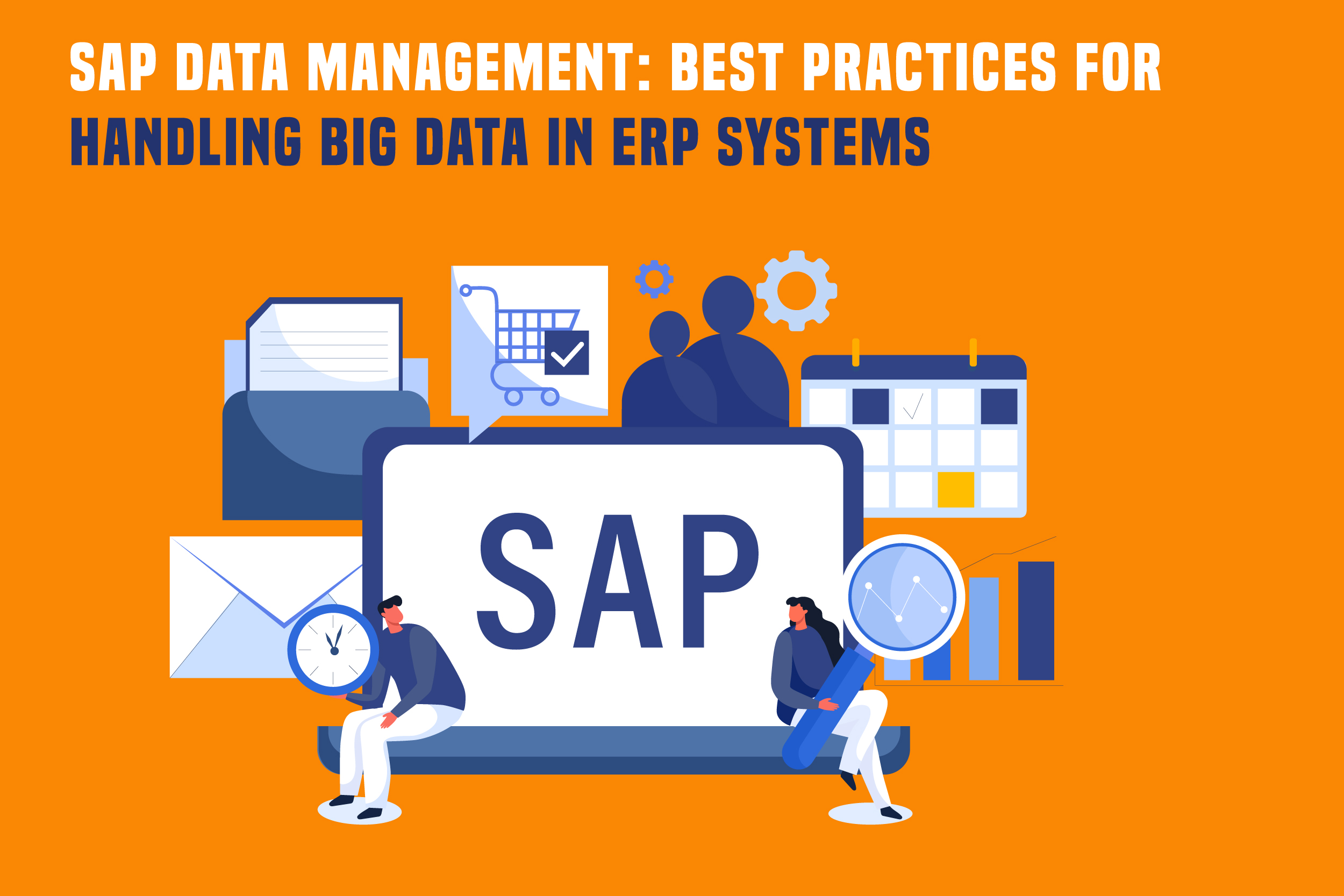
In enterprise resource planning (ERP), SAP systems are robust solutions that efficiently manage and integrate various business processes. As businesses accumulate massive volumes of data, effective SAP data management becomes crucial for optimal performance. This article delves into the best practices for handling big data within SAP ERP systems, emphasizing the role of SAP consulting services in achieving seamless operations.
SAP systems are renowned for their ability to streamline business operations, but as data grows exponentially, organizations face storage, processing, and analysis challenges. Implementing best practices for handling big data in SAP ERP systems requires a strategic approach, and engaging SAP consulting services proves instrumental in navigating this complex landscape.
One key aspect of efficient SAP data management involves data governance and quality. SAP consulting services are pivotal in establishing robust data governance frameworks and ensuring data accuracy, completeness, and consistency.
The SAP ERP systems often interact with various data sources within an organization. SAP consulting services assist in designing and implementing effective data integration strategies, enabling seamless data flow across different modules and departments. This ensures a holistic view of business operations and enhances overall efficiency.
Security is paramount when handling big data, and SAP consulting services address this aspect comprehensively. So, they assist in implementing robust security measures to safeguard sensitive information. This includes role-based access controls, encryption, and regular security audits to identify and mitigate potential vulnerabilities.
So, scalability is a key consideration for businesses experiencing growth of the organization. SAP consulting services help organizations design scalable architectures to accommodate increasing data volumes without compromising performance. This ensures that SAP ERP systems can adapt to the evolving needs of the business.
So, SAP consulting services provide the expertise to implement best practices, including data governance, integration, performance optimization, security, and scalability. By partnering with experienced consultants, organizations can unlock the full potential of their SAP ERP systems
In the realm of SAP consulting services, they are navigating the ever-evolving ERP landscape. It involves addressing the paramount concern of handling big data efficiently. As businesses generate and accumulate vast amounts of data, optimizing SAP ERP systems for effective data management becomes crucial for maintaining competitiveness and fostering innovation. In this blog post, we will explore the best practices for handling big data in SAP ERP systems, ensuring that organizations can harness the full potential of their data while maintaining system performance, integrity, and security.
Before delving into best practices, grasping the unique challenges big data poses within SAP ERP systems is essential. SAP ERP applications are pivotal in managing various business processes, including finance, supply chain, human resources, etc. So, as data volumes surge, ERP systems face challenges related to data storage, processing speed, and real-time analytics.
So, one of the primary strategies for handling big data in SAP ERP systems is data segmentation and archiving. This involves categorizing data based on relevance and importance to ongoing business processes. In addition, historical or less frequently accessed data can be archived, reducing the load on the live system.
Define a comprehensive data retention policy that outlines the criteria for archiving data. Consider factors such as legal requirements, business relevance, and performance impact. Regularly review and update this policy to adapt to changing business needs.
This comprehensive guide wouldn’t be complete without a dedicated exploration of the crucial role played by SAP consulting services. Understand how these specialized services bring expertise, experience, and tailored solutions to the table, guiding businesses through the intricacies of SAP data management.
SAP HANA, an in-memory data platform, has revolutionized how ERP systems handle big data. SAP HANA enables faster data access and real-time analytics by storing data in RAM instead of traditional disk storage. So, organizations should leverage the capabilities of SAP HANA to enhance the performance of their ERP implementation systems.
Work closely with SAP HANA experts to optimize data models for efficient in-memory processing. So, utilize features such as columnar storage and data compression to maximize the benefits of in-memory computing.
Moreover, the cloud offers a scalable and flexible infrastructure for handling big data. Integrating SAP ERP systems with cloud platforms allows organizations to scale resources dynamically based on demand, ensuring optimal performance during peak times.
Choose a reliable and secure cloud service provider that aligns with the specific requirements of your SAP ERP system. So, IT consulting services are crucial in guiding organizations through this decision-making process. When selecting a cloud provider, consider data residency, compliance, and integration capabilities.
Additionally, in the era of data-driven decision-making, real-time analytics have become indispensable. SAP ERP systems should be configured to provide actionable insights in real-time, enabling organizations to respond promptly to market changes and opportunities.
SAP Fiori, a user experience (UX) design approach, can be leveraged to create intuitive, responsive dashboards for real-time reporting. So, customize Fiori apps to suit your organization’s and end-users specific analytics needs.
As data volumes increase, ensuring data security and compliance becomes more challenging. In addition, organizations must implement robust security measures to protect sensitive information and comply with regulatory requirements.
Implement RBAC to restrict access to sensitive data based on user roles and responsibilities. So, regularly audit user access and permissions to ensure compliance with data protection regulations.
Additionally, maintaining data quality is critical for the success of any ERP implementation system. Big data often comes with increased complexity, and organizations must establish data cleansing, validation, and enrichment processes.
Develop a comprehensive data governance framework that includes data quality standards, data stewardship roles, and data cleansing procedures. So, regularly monitor and address data quality issues to prevent inaccurate or incomplete information accumulation.
Scalable architectures are critical for creating systems that can manage rising workloads and evolve over time. The ability of a system to accommodate additional users, data, or transactions without losing speed is referred to as scalability. Here are two fundamental ideas and factors to consider while creating scalable architectures:
Scalability is a key consideration for organizations anticipating growth. SAP consulting services collaborate with businesses to design scalable architectures that accommodate increasing data volumes without sacrificing performance. This proactive approach ensures that SAP ERP systems remain flexible and adaptive to the evolving needs of the business.
Cloud computing provides a scalable and flexible infrastructure for SAP ERP systems. SAP consulting services assist organizations in seamlessly integrating their SAP environments with cloud platforms, allowing for dynamic resource allocation and scalability. In addition, cloud integration enhances scalability and provides opportunities for cost optimization and improved disaster recovery capabilities.
Effectively handling big data in SAP ERP systems requires a holistic approach encompassing data segmentation, in-memory computing, cloud integration, real-time analytics, data security, and data quality management. By adhering to these best practices, IT consulting services can guide organizations in optimizing SAP data management. So, it ensures that big data within ERP systems is handled efficiently, securely, and in a manner that supports strategic business goals. By adopting these best practices, organizations can unlock the full potential of their data, drive informed decision-making, and maintain a competitive edge in today’s dynamic business environment. For more information, visit our website.
Artificial intelligence is transforming how modern businesses operate. From automating workflows to generating insights from massive datasets, AI offers organizations unprecedented opportunities to innovate and scale. However, as AI capabilities grow, so do concerns around ethics, accountability, and transparency. This is why responsible AI has become a critical priority for large organizations.
Read More
Digital transformation has become a strategic priority for organizations across industries. Businesses are investing in advanced technologies, data platforms, and automation tools to improve efficiency and remain competitive in an increasingly digital world. However, transformation initiatives are rarely simple. Many organizations underestimate the complexity of change, leading to delays, wasted investments, or stalled projects.
Read More
For many organizations, legacy systems are both a foundation and a barrier. These older technologies once powered growth, managed operations, and supported critical business functions. Over time, however, they often become difficult to maintain, expensive to update, and incompatible with modern tools. As markets evolve and customer expectations rise, businesses increasingly recognize the need for legacy modernization.
Read More
Digital transformation promises speed, innovation, and competitive advantage. Yet, despite heavy investments in new technologies, many organizations struggle to achieve meaningful results. In fact, digital transformation failure is more common than most companies expect. Businesses launch ambitious initiatives to modernize systems, adopt AI, or improve customer experiences, but somewhere along the way, momentum fades.
Understanding why digital transformations fail requires looking beyond technology. The real problems often lie in strategy, culture, leadership, and execution. When these elements are misaligned, even the most advanced tools cannot deliver transformation.
Below are some of the most common enterprise transformation challenges that cause digital initiatives to stall or collapse.
Read More
Artificial intelligence is quickly moving from experimentation to enterprise-wide implementation. Many organizations have already tested AI through pilot projects, automation tools, or analytics platforms. The next step—scaling AI across the organization—promises greater efficiency, smarter decision-making, and new business opportunities.
However, expanding AI initiatives without the right structure can create confusion rather than progress. Disconnected tools, unclear governance, and untrained teams often turn promising projects into operational headaches. For companies pursuing enterprise AI adoption, the real challenge is learning how to scale AI safely while maintaining control, consistency, and trust.
Successfully scaling AI requires thoughtful planning, strong governance, and a focus on people as much as technology.
Read More
Businesses evolve constantly. Markets change, customer expectations rise, and new technologies reshape how companies operate. To keep up, organizations often need more than new tools or strategies—they need to rethink how the entire business functions. This is where operating model transformation comes in.
While the phrase may sound complex, the concept is actually quite simple. It is about redesigning how a company works so that it can deliver value more efficiently, adapt faster, and support long-term growth.
Understanding what is an operating model transformation helps leaders make better decisions about people, processes, and technology.
Read More
Enterprise transformations are complex, high-stakes initiatives that often promise operational efficiency, digital modernization, and competitive advantage. Yet, despite meticulous planning and substantial investments, many transformation programs stumble—not because of technology, but because of people.
This is where change management becomes critical. Understanding why people resist change and applying effective strategies in transformation leadership can make the difference between a stalled project and a successful enterprise-wide transformation.
Read More
Artificial Intelligence (AI) is no longer a futuristic concept; it has become a cornerstone of modern business strategy. From automating routine tasks to generating insights from vast datasets, AI promises efficiency, innovation, and competitive advantage.
Yet, the rapid pace of AI adoption also brings uncertainty. Many executives struggle with defining their role in AI strategy, leading to stalled projects or missed opportunities. Understanding how leaders should think about Artificial Intelligence is essential for turning technology into tangible business outcomes.
Read More
Digital transformation is no longer just a buzzword—it’s a necessity for businesses aiming to stay competitive in today’s fast-paced market. Organizations invest in cloud technologies, automation, AI, and customer-centric platforms to modernize operations and create value. But with so many initiatives underway, one pressing question arises: how to measure transformation success? Without clear metrics, companies risk investing heavily without knowing whether their efforts are truly paying off.
Measuring success in digital transformation goes beyond counting deployed tools or completed projects. It requires tracking meaningful indicators that reflect actual business outcomes, employee adoption, and customer impact. Defining transformation KPIs early in the journey ensures that initiatives stay aligned with strategic goals and deliver measurable value.
Read More
Enterprise transformation is no longer a niche service—it has become a critical driver for organizations seeking growth, agility, and resilience. Businesses today face unprecedented challenges: rapidly evolving technologies, shifting customer expectations, and complex global markets. In response, transformation consulting has evolved from offering generic recommendations to delivering highly specialized, strategic guidance that helps enterprises navigate this dynamic landscape.
Understanding how consulting is changing provides insights into what the future of enterprise transformation consulting looks like, and why companies are increasingly relying on experts to guide their transformational journeys.
Read More

Leave a Reply