
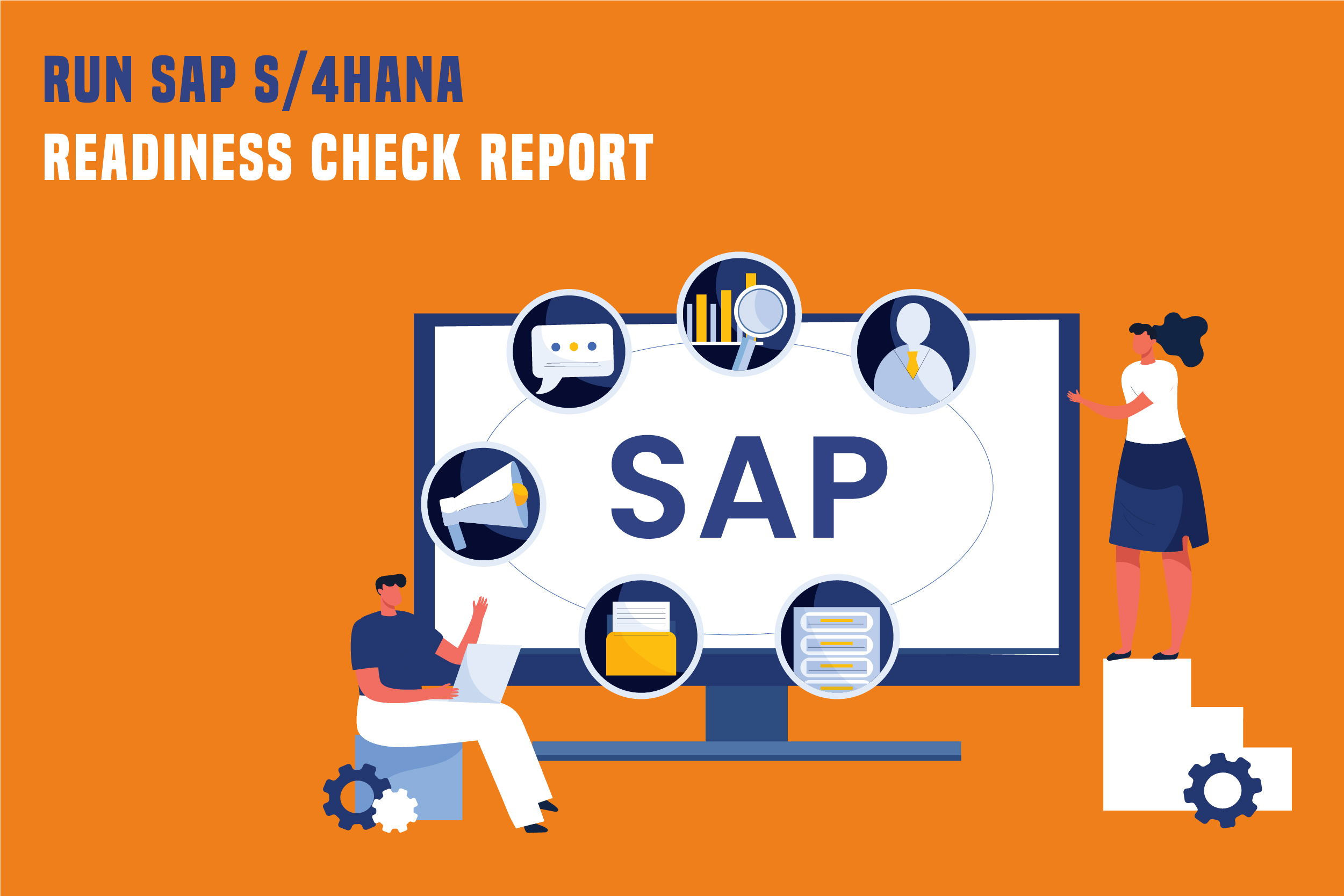
Embarking toward SAP S/4HANA is a transformative step for any organization, promising enhanced efficiency, agility, and innovation. However, a smooth transition requires meticulous planning, thorough evaluation, and strategic guidance. This is where SAP consulting services play a pivotal role, offering expertise and support . So, it helps to navigate the complexities of migration and maximize the benefits of the new platform.
So, at the heart of the readiness assessment lies the SAP S/4HANA Readiness. Check Report, a comprehensive tool designed to analyze your current SAP landscape and determine the readiness for migration to S/4HANA. This report serves as a roadmap, guiding organizations through the various stages of preparation, from evaluating system compatibility to identifying potential challenges and opportunities.
One of the primary objectives of the readiness check is to assess the technical readiness of your existing SAP environment for migration to S/4HANA. This involves analyzing system components, customizations, and integrations to identify potential roadblocks or compatibility issues. The readiness check provides actionable insights into custom code optimization, data volume management, and infrastructure requirements.
In addition to technical readiness, the assessment also evaluates business processes and functionalities. This involves analyzing key business processes, dependencies, and user requirements to ensure alignment with S/4HANA capabilities.
Furthermore, the readiness check facilitates strategic decision-making by providing recommendations and best practices based on industry standards and SAP’s vast experience. Whether choosing the optimal deployment option or selecting the right migration approach. So, SAP consulting services offer invaluable guidance every step of the way.
Ultimately, the SAP S/4HANA Readiness Check Report serves as a cornerstone in the migration journey, empowering organizations to make informed decisions, mitigate risks, and unlock the full potential of SAP S/4HANA. With the support of SAP consulting services, organizations can confidently navigate the complexities of migration. So it ensures a seamless transition to the next generation of enterprise software.
In today’s rapidly evolving business landscape, organizations constantly seek ways to optimize their operations and stay ahead of the competition. SAP consulting services encompass various offerings that help organizations leverage SAP technologies effectively. ERP suite designed to drive innovation, streamline processes, and enable digital transformation. However, migrating to SAP S/4HANA requires careful planning and preparation to ensure a smooth transition and maximize the benefits of the new platform.
One essential tool in this process is the SAP S/4HANA Readiness Check Report. So, it provides valuable insights and recommendations to assess an organization’s readiness for migration. This comprehensive guide will delve into the details of the SAP S/4HANA Readiness Check Report, its significance, and how organizations can leverage it to facilitate a successful migration to SAP S/4HANA.
The SAP S/4HANA Readiness Check Report is a diagnostic tool offered by SAP to assess an organization’s readiness to migrate to SAP S/4HANA. It analyzes various aspects of the current SAP landscape, including system configuration, custom code, data volume, and business processes. So, it helps to identify potential challenges and recommend actions for a smooth migration. The report is generated based on data collected from the existing SAP system using the Readiness Check content package. So, it can be installed via the SAP Solution Manager or downloaded from the SAP Support Portal.
The SAP S/4HANA Readiness Check Report comprises several critical components for evaluating an organization’s migration readiness. So, these components provide insights into various aspects of the existing SAP landscape and help identify potential challenges and opportunities for optimization. The key features of the SAP S/4HANA Readiness Report are discussed below.
Now that we have explored the key components of the SAP S/4HANA Readiness Check Report. So, let’s discuss how organizations can leverage this valuable tool to facilitate a successful migration to SAP S/4HANA:
So, the SAP S/4HANA Readiness Check Report is a valuable tool for organizations embarking on the journey to SAP S/4HANA migration. An IT consulting services company specializing in SAP solutions can offer invaluable assistance in navigating the complexities of systems. The Readiness Check Report empowers organizations. So, it helps to assess their readiness for migration and develop a well-informed migration strategy. By leveraging the recommendations and insights in the Readiness Check Report. So, organizations can streamline the migration process, minimize risks, and maximize the benefits of transitioning to SAP S/4HANA. For more information, visit our website.
Artificial intelligence is transforming how modern businesses operate. From automating workflows to generating insights from massive datasets, AI offers organizations unprecedented opportunities to innovate and scale. However, as AI capabilities grow, so do concerns around ethics, accountability, and transparency. This is why responsible AI has become a critical priority for large organizations.
Read More
Digital transformation has become a strategic priority for organizations across industries. Businesses are investing in advanced technologies, data platforms, and automation tools to improve efficiency and remain competitive in an increasingly digital world. However, transformation initiatives are rarely simple. Many organizations underestimate the complexity of change, leading to delays, wasted investments, or stalled projects.
Read More
For many organizations, legacy systems are both a foundation and a barrier. These older technologies once powered growth, managed operations, and supported critical business functions. Over time, however, they often become difficult to maintain, expensive to update, and incompatible with modern tools. As markets evolve and customer expectations rise, businesses increasingly recognize the need for legacy modernization.
Read More
Digital transformation promises speed, innovation, and competitive advantage. Yet, despite heavy investments in new technologies, many organizations struggle to achieve meaningful results. In fact, digital transformation failure is more common than most companies expect. Businesses launch ambitious initiatives to modernize systems, adopt AI, or improve customer experiences, but somewhere along the way, momentum fades.
Understanding why digital transformations fail requires looking beyond technology. The real problems often lie in strategy, culture, leadership, and execution. When these elements are misaligned, even the most advanced tools cannot deliver transformation.
Below are some of the most common enterprise transformation challenges that cause digital initiatives to stall or collapse.
Read More
Artificial intelligence is quickly moving from experimentation to enterprise-wide implementation. Many organizations have already tested AI through pilot projects, automation tools, or analytics platforms. The next step—scaling AI across the organization—promises greater efficiency, smarter decision-making, and new business opportunities.
However, expanding AI initiatives without the right structure can create confusion rather than progress. Disconnected tools, unclear governance, and untrained teams often turn promising projects into operational headaches. For companies pursuing enterprise AI adoption, the real challenge is learning how to scale AI safely while maintaining control, consistency, and trust.
Successfully scaling AI requires thoughtful planning, strong governance, and a focus on people as much as technology.
Read More
Businesses evolve constantly. Markets change, customer expectations rise, and new technologies reshape how companies operate. To keep up, organizations often need more than new tools or strategies—they need to rethink how the entire business functions. This is where operating model transformation comes in.
While the phrase may sound complex, the concept is actually quite simple. It is about redesigning how a company works so that it can deliver value more efficiently, adapt faster, and support long-term growth.
Understanding what is an operating model transformation helps leaders make better decisions about people, processes, and technology.
Read More
Enterprise transformations are complex, high-stakes initiatives that often promise operational efficiency, digital modernization, and competitive advantage. Yet, despite meticulous planning and substantial investments, many transformation programs stumble—not because of technology, but because of people.
This is where change management becomes critical. Understanding why people resist change and applying effective strategies in transformation leadership can make the difference between a stalled project and a successful enterprise-wide transformation.
Read More
Artificial Intelligence (AI) is no longer a futuristic concept; it has become a cornerstone of modern business strategy. From automating routine tasks to generating insights from vast datasets, AI promises efficiency, innovation, and competitive advantage.
Yet, the rapid pace of AI adoption also brings uncertainty. Many executives struggle with defining their role in AI strategy, leading to stalled projects or missed opportunities. Understanding how leaders should think about Artificial Intelligence is essential for turning technology into tangible business outcomes.
Read More
Digital transformation is no longer just a buzzword—it’s a necessity for businesses aiming to stay competitive in today’s fast-paced market. Organizations invest in cloud technologies, automation, AI, and customer-centric platforms to modernize operations and create value. But with so many initiatives underway, one pressing question arises: how to measure transformation success? Without clear metrics, companies risk investing heavily without knowing whether their efforts are truly paying off.
Measuring success in digital transformation goes beyond counting deployed tools or completed projects. It requires tracking meaningful indicators that reflect actual business outcomes, employee adoption, and customer impact. Defining transformation KPIs early in the journey ensures that initiatives stay aligned with strategic goals and deliver measurable value.
Read More
Enterprise transformation is no longer a niche service—it has become a critical driver for organizations seeking growth, agility, and resilience. Businesses today face unprecedented challenges: rapidly evolving technologies, shifting customer expectations, and complex global markets. In response, transformation consulting has evolved from offering generic recommendations to delivering highly specialized, strategic guidance that helps enterprises navigate this dynamic landscape.
Understanding how consulting is changing provides insights into what the future of enterprise transformation consulting looks like, and why companies are increasingly relying on experts to guide their transformational journeys.
Read More

Leave a Reply