
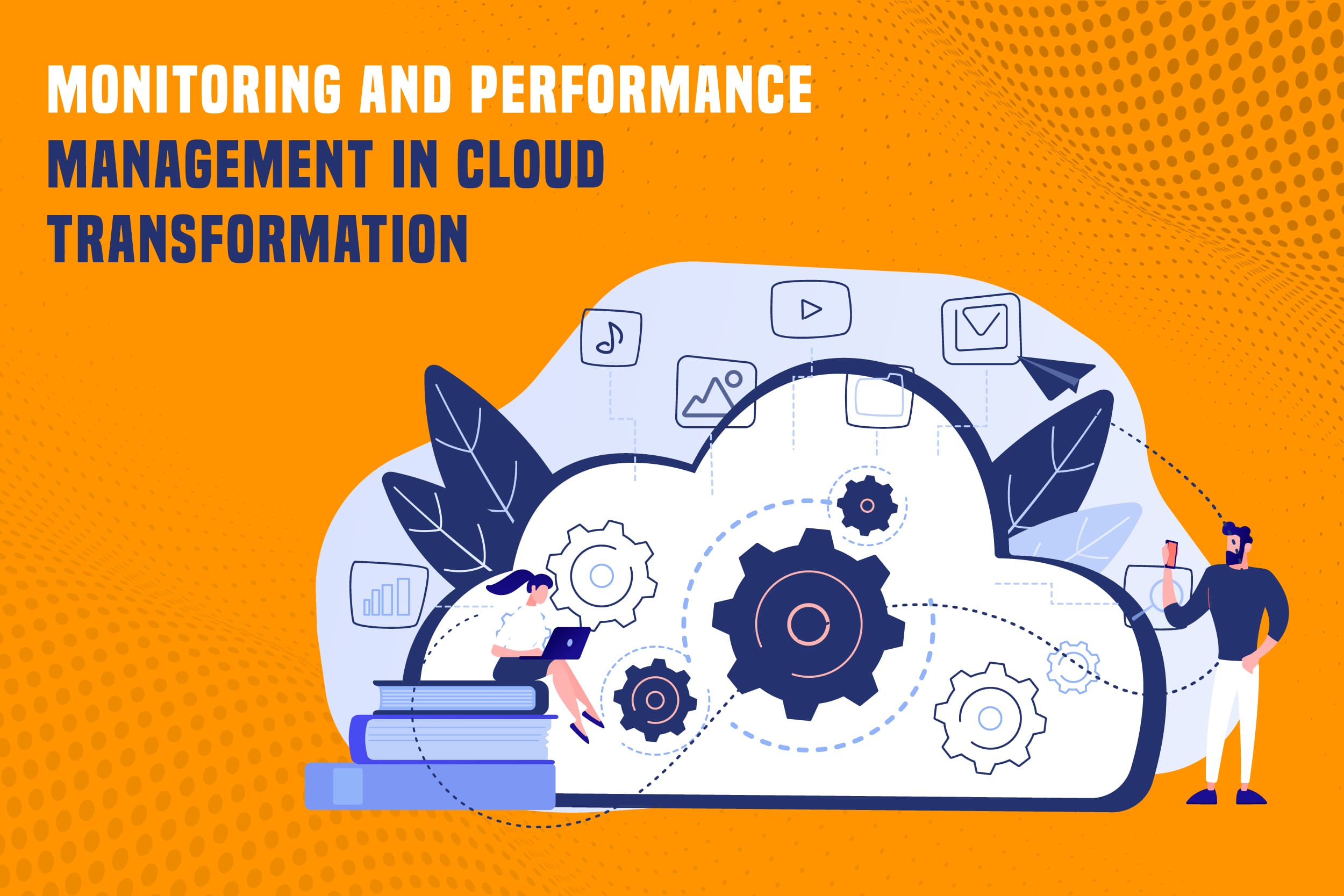
Monitoring and Performance Management play pivotal roles in the success of Cloud Transformation initiatives, ensuring organizations can fully harness the benefits of migrating to the cloud. Cloud Transformation involves adopting cloud computing services and technologies to enhance operational efficiency, scalability, and innovation. Effective monitoring and performance management are essential components for achieving optimal results in this dynamic process.
Cloud Transformation introduces a paradigm shift in how IT resources are provisioned, deployed, and managed. It brings flexibility, cost-efficiency, and scalability, but these advantages come with the challenge of ensuring seamless operations and performance. Monitoring becomes critical as it involves continuously tracking various metrics related to cloud infrastructure, applications, and services. This real-time observation allows organizations to identify potential issues, assess performance bottlenecks, and respond promptly to ensure uninterrupted services.
Additionally, performance Management in the context of Cloud Transformation involves optimizing the efficiency and effectiveness of the cloud environment. So, this includes fine-tuning resource allocation, managing workloads, and optimizing configurations for optimal performance. It’s about aligning the cloud infrastructure with organizational goals and user expectations. So, performance management also includes capacity planning, ensuring adequate resource provisioning to handle current and future workloads.
So, one of the primary challenges in Cloud Transformation is the dynamic nature of cloud environments. Traditional monitoring tools might require improvement to effectively handle the scalability and elasticity of cloud resources. Therefore, organizations need specialized cloud monitoring solutions that can adapt to the ever-changing nature of cloud infrastructure.
Moreover, monitoring performance management is important in cloud environments. Organizations can identify underutilized or over-provisioned resources through continuous resource utilization analysis, allowing for adjustments that optimize costs without compromising performance.
So, organizations must invest in robust tools and practices that align with the dynamic nature of cloud environments. So, ensuring reliability, efficiency, and cost-effectiveness in cloud infrastructure drives digital transformation success for organizations.
In today’s rapidly evolving digital landscape, organizations increasingly embrace cloud transformation to drive innovation, achieve scalability, and streamline operations. Cloud adoption offers numerous benefits, including cost efficiency, flexibility, and the ability to respond quickly to market changes. So, the transition to the cloud also presents unique challenges, with one of the most critical being the need for robust monitoring and performance management.
In this blog, we’ll explore monitoring and performance management’s essential role in the success of cloud transformation initiatives. We’ll discuss the key aspects of each and provide practical insights into best practices and tools to ensure your cloud migration journey is smooth and successful.
Cloud services can scale resources up or down as needed, allowing organizations to handle varying workloads efficiently.
Cloud computing often reduces infrastructure costs through pay-as-you-go models and shared resources, eliminating the need for large upfront investments.
Cloud platforms offer various services and tools, enabling organizations to experiment with new technologies and quickly adapt to changing business needs.
Cloud providers operate data centers in multiple regions worldwide, making it easier to serve customers globally.
This involves tracking the health and performance of cloud infrastructure components such as virtual machines, storage, and networking. Most cloud providers offer native tools for infrastructure monitoring. For example, Amazon Web Services (AWS) provides Amazon CloudWatch, while Microsoft Azure offers Azure Monitor. Google Cloud also has its monitoring solutions.
In the cloud, monitoring applications is crucial to ensure they perform well. So, application monitoring includes tracking metrics like response times, error rates, and resource utilization. Dedicated tools like New Relic, AppDynamics, and Datadog can help you monitor the performance of your applications.
To truly understand how your customers are experiencing your services, you need to monitor their interactions with your applications. So, this can include real-user monitoring (RUM) and synthetic transaction monitoring, which simulate user interactions to identify performance issues.
In the era of cloud computing, continuous security monitoring is vital. Cloud providers offer security services like AWS GuardDuty and Azure Security Center to detect and respond to security incidents. So, security Information and Event Management (SIEM) solutions can provide a holistic view of security events.
One often overlooked aspect of cloud management is cost monitoring. So, cloud costs can quickly spiral out of control if not properly managed. Most cloud providers offer cost management tools, and third-party solutions like Cloud-Health and Right-Scale provide in-depth insights into cost allocation.
Clearly define your organization’s KPIs that matter most. These could include response times, error rates, or resource utilization thresholds. So, setting up alerts for these KPIs is essential. So, this ensures that you can respond quickly to any issues that arise.
When it comes to user experience monitoring, it’s essential to monitor from different geographic locations. So this device types to ensure a comprehensive view of how users are experiencing your applications.
Don’t set up monitoring and forget about it. So, periodically review your monitoring configurations and adjust them as your applications and infrastructure evolve.
Establish a culture of collaboration between development, operations, and security teams. So, cross-team partnerships can help in quickly identifying and addressing performance issues.
Efficient cloud performance is crucial for an IT consulting services company that effectively meets its diverse needs. So, this includes resource optimization, workload balancing, capacity planning, application tuning, security, compliance, and SLA management.
One of the main benefits of cloud computing is the ability to scale resources as needed. However, it’s crucial to continuously optimize your help to ensure you’re using them efficiently. This might involve resizing instances, auto-scaling, and adopting serverless computing for cost-effective scaling.
Distributing workloads across cloud regions or availability zones is crucial for redundancy and improved performance. So, load balancers play a key role in this aspect, ensuring that traffic is evenly distributed.
So, forecast your resource requirements and plan for scaling to ensure that performance is not compromised during traffic spikes. Effective capacity planning can help you avoid unexpected resource shortages.
So, regularly review and fine-tune your applications to ensure they are optimized for cloud environments. This might involve optimizing code, databases, and configuration settings to improve performance.
Implement best practices for securing cloud resources and data. Regularly update your security policies and controls based on the evolving threat landscape. Performance management must include security considerations to ensure your cloud environment remains resilient against threats.
Test and optimize your cloud computing environment to ensure it performs well under varying workloads and conditions. So, traditional load testing, security testing, and performance tuning are essential.
Take full advantage of auto-scaling capabilities offered by cloud providers. This ensures that your resources are allocated efficiently based on demand.
Implement failover mechanisms and redundancy to ensure high availability and performance. Load balancing and multi-region deployments can help achieve this.
So, conduct stable performance and security audits to identify areas for improvement. These audits should encompass all aspects of performance management, including capacity planning and security compliance.
In the age of transformation, adept monitoring and performance management are crucial for ensuring optimal operations in an IT consulting services company. Monitoring provides visibility into the health and performance of your cloud infrastructure and applications, enabling you to detect and respond to issues in real-time. So, performance management optimizes your cloud resources, workloads, and applications for the highest efficiency and service quality. For more information, visit our website.
Artificial intelligence is transforming how modern businesses operate. From automating workflows to generating insights from massive datasets, AI offers organizations unprecedented opportunities to innovate and scale. However, as AI capabilities grow, so do concerns around ethics, accountability, and transparency. This is why responsible AI has become a critical priority for large organizations.
Read More
Digital transformation has become a strategic priority for organizations across industries. Businesses are investing in advanced technologies, data platforms, and automation tools to improve efficiency and remain competitive in an increasingly digital world. However, transformation initiatives are rarely simple. Many organizations underestimate the complexity of change, leading to delays, wasted investments, or stalled projects.
Read More
For many organizations, legacy systems are both a foundation and a barrier. These older technologies once powered growth, managed operations, and supported critical business functions. Over time, however, they often become difficult to maintain, expensive to update, and incompatible with modern tools. As markets evolve and customer expectations rise, businesses increasingly recognize the need for legacy modernization.
Read More
Digital transformation promises speed, innovation, and competitive advantage. Yet, despite heavy investments in new technologies, many organizations struggle to achieve meaningful results. In fact, digital transformation failure is more common than most companies expect. Businesses launch ambitious initiatives to modernize systems, adopt AI, or improve customer experiences, but somewhere along the way, momentum fades.
Understanding why digital transformations fail requires looking beyond technology. The real problems often lie in strategy, culture, leadership, and execution. When these elements are misaligned, even the most advanced tools cannot deliver transformation.
Below are some of the most common enterprise transformation challenges that cause digital initiatives to stall or collapse.
Read More
Artificial intelligence is quickly moving from experimentation to enterprise-wide implementation. Many organizations have already tested AI through pilot projects, automation tools, or analytics platforms. The next step—scaling AI across the organization—promises greater efficiency, smarter decision-making, and new business opportunities.
However, expanding AI initiatives without the right structure can create confusion rather than progress. Disconnected tools, unclear governance, and untrained teams often turn promising projects into operational headaches. For companies pursuing enterprise AI adoption, the real challenge is learning how to scale AI safely while maintaining control, consistency, and trust.
Successfully scaling AI requires thoughtful planning, strong governance, and a focus on people as much as technology.
Read More
Businesses evolve constantly. Markets change, customer expectations rise, and new technologies reshape how companies operate. To keep up, organizations often need more than new tools or strategies—they need to rethink how the entire business functions. This is where operating model transformation comes in.
While the phrase may sound complex, the concept is actually quite simple. It is about redesigning how a company works so that it can deliver value more efficiently, adapt faster, and support long-term growth.
Understanding what is an operating model transformation helps leaders make better decisions about people, processes, and technology.
Read More
Enterprise transformations are complex, high-stakes initiatives that often promise operational efficiency, digital modernization, and competitive advantage. Yet, despite meticulous planning and substantial investments, many transformation programs stumble—not because of technology, but because of people.
This is where change management becomes critical. Understanding why people resist change and applying effective strategies in transformation leadership can make the difference between a stalled project and a successful enterprise-wide transformation.
Read More
Artificial Intelligence (AI) is no longer a futuristic concept; it has become a cornerstone of modern business strategy. From automating routine tasks to generating insights from vast datasets, AI promises efficiency, innovation, and competitive advantage.
Yet, the rapid pace of AI adoption also brings uncertainty. Many executives struggle with defining their role in AI strategy, leading to stalled projects or missed opportunities. Understanding how leaders should think about Artificial Intelligence is essential for turning technology into tangible business outcomes.
Read More
Digital transformation is no longer just a buzzword—it’s a necessity for businesses aiming to stay competitive in today’s fast-paced market. Organizations invest in cloud technologies, automation, AI, and customer-centric platforms to modernize operations and create value. But with so many initiatives underway, one pressing question arises: how to measure transformation success? Without clear metrics, companies risk investing heavily without knowing whether their efforts are truly paying off.
Measuring success in digital transformation goes beyond counting deployed tools or completed projects. It requires tracking meaningful indicators that reflect actual business outcomes, employee adoption, and customer impact. Defining transformation KPIs early in the journey ensures that initiatives stay aligned with strategic goals and deliver measurable value.
Read More
Enterprise transformation is no longer a niche service—it has become a critical driver for organizations seeking growth, agility, and resilience. Businesses today face unprecedented challenges: rapidly evolving technologies, shifting customer expectations, and complex global markets. In response, transformation consulting has evolved from offering generic recommendations to delivering highly specialized, strategic guidance that helps enterprises navigate this dynamic landscape.
Understanding how consulting is changing provides insights into what the future of enterprise transformation consulting looks like, and why companies are increasingly relying on experts to guide their transformational journeys.
Read More

Leave a Reply