
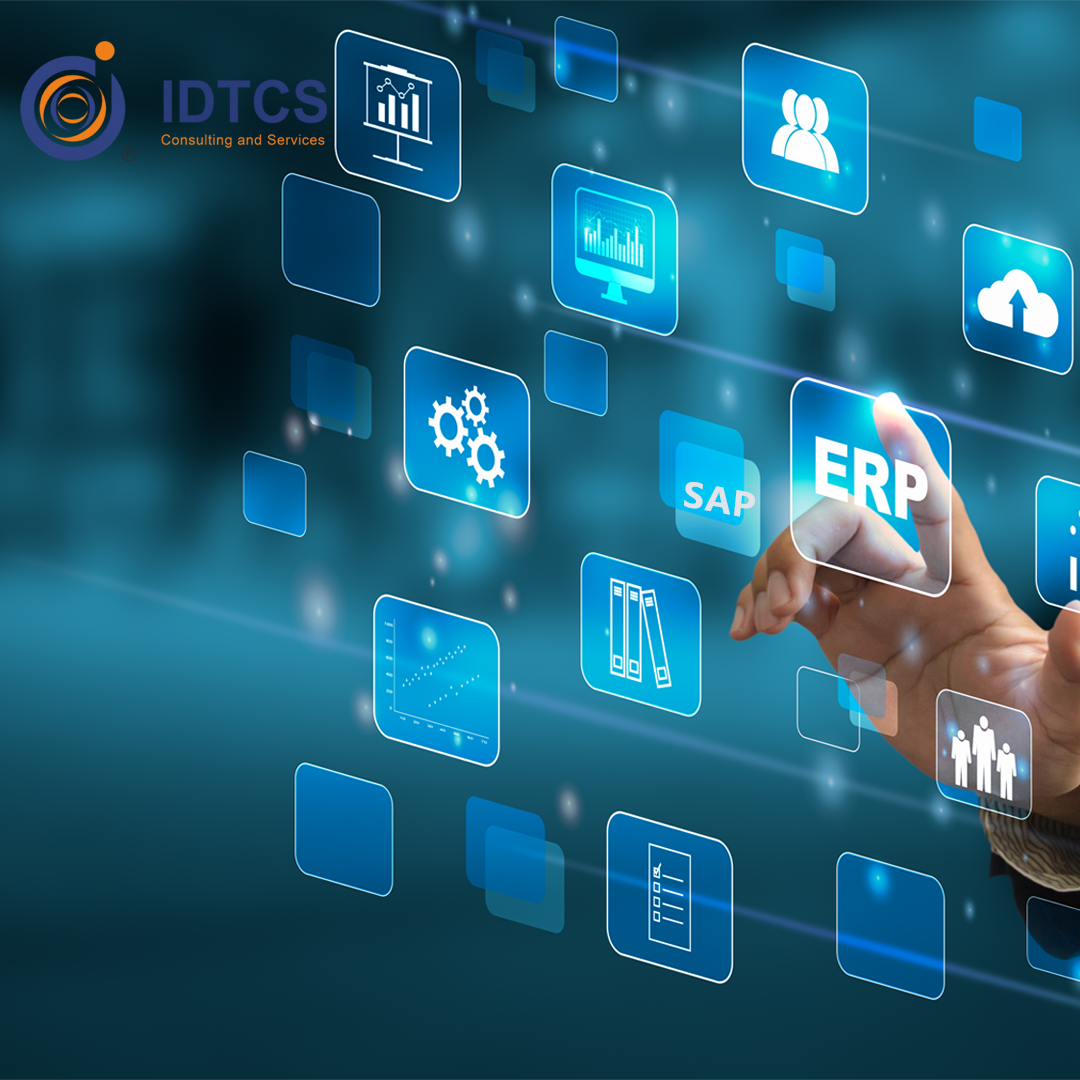
SAP ERP has become the go-to solution for businesses aiming automation of business operations. Success of ERP system is due to its ability to unify data from differing business operations & departments.
SAP ERP has become the go-to solution for businesses aiming towards automating their business operations. The success of the ERP system is due to its ability to unify data from differing business operations spread across multiple business departments in a centralized manner. This ensures that the flow of information can be accelerated within the business in order to make the decision-making process simple and straightforward. SAP ERP deployment or SAP data implementation is a lengthy and complicated process that has to be done following the best practices.
Here are some of the ways to migrate SAP ERP to the cloud and make it fool proof for the business.
First, note down the reasons why you wanted to integrate the SAP ERP system within your business. Before a business moves away from the existing on-premise system to a hybrid ERP system it is advisable to understand its purpose of it. Define the purpose for the ultimate move towards cloud whether it is for scalability, flexibility, better performance or control, or simply for enhanced data accessibility. Once a business is clear about its system then it can pick the right components and strategies for a successful and on-point data migration to the cloud.
If any business has recently invested in the hardware to improve its business operations then it is necessary to gauge its lifecycle before making the move to the cloud. Such new hardware is likely to possess a lifespan of at least 5 years before it starts underperforming. SAP consulting services point out that after making an initial investment in the latest hardware it isn’t advisable to move to the cloud. Therefore, always plan out the move to the cloud or SAP data implementation when existing hardware is nearing the end of its lifecycle.
The urge to migrate to the cloud for added business advantage is supreme to overcome for any business. But it has to be done in a carefully calculated manner by following these rules.
SAP data implementation on a new ERP system or data migration to the cloud is a very critical task for any business. Therefore, it has to be done after carefully understanding the SAP requirements in terms of investment in different solutions and their components. Make sure these investments are directly relevant to their business immediate needs and offer an opportunity for higher scalability.
Once you had set aside a budget for investment in the activities related to migration to the cloud then come up with a plan that best suits your business needs. Usually, the SAP system makes use of existing business internal systems and databases for effective business operations. When moving to the cloud a business might have to do away with some outdated or non-linear databases that can’t be integrated into a cloud setting.
If your business relies heavily on such databases then cloud migration will require more time, testing along with cost which can seriously undermine your budget allocation. SAP consulting services play a major role here in helping businesses frame the right plan that stays true to their budget and expectations.
Certain databases can’t be integrated with a cloud system therefore you have to carefully analyse all the existing databases beforehand. A business might have to change multiple databases prior to the SAP data migration in order to generate best outcome in upcoming days.
SAP ERP system can only be handled by the experts and even having a highly skilled employee isn’t going to help here. Therefore, hire an SAP ERP consultant beforehand who can play a decisive role in migration efforts. A consultant can be procured by undertaking SAP consulting services. These consultants are adept at handling migration activities, resolving issues, work with parallel workstreams and different kinds of databases. Their expertise is also helpful in creating virtual machines to run and manage SAP systems in the cloud landscape.
It is advisable to make use of the cleansing software to ensure there are no anomalies present within the data. SAP data migration can have a disastrous impact in such cases where data quality is of poor equivalent and isn’t in sync with the ERP system needs. Such corrupted and inconsistent data would be of no use for the business and can’t help in improving the business operations at all. Such data couldn’t be read in an intelligent manner by the system or by the users and if such data is migrated to the cloud then could easily jeopardize the whole migration exercise.

Artificial intelligence has quickly moved from experimentation to strategic priority. Across industries, organizations are exploring how AI can improve decision-making, automate processes, and unlock new business opportunities. However, many companies struggle with one critical question: where should they begin?
Read More
Artificial intelligence is transforming how modern businesses operate. From automating workflows to generating insights from massive datasets, AI offers organizations unprecedented opportunities to innovate and scale. However, as AI capabilities grow, so do concerns around ethics, accountability, and transparency. This is why responsible AI has become a critical priority for large organizations.
Read More
Digital transformation has become a strategic priority for organizations across industries. Businesses are investing in advanced technologies, data platforms, and automation tools to improve efficiency and remain competitive in an increasingly digital world. However, transformation initiatives are rarely simple. Many organizations underestimate the complexity of change, leading to delays, wasted investments, or stalled projects.
Read More
For many organizations, legacy systems are both a foundation and a barrier. These older technologies once powered growth, managed operations, and supported critical business functions. Over time, however, they often become difficult to maintain, expensive to update, and incompatible with modern tools. As markets evolve and customer expectations rise, businesses increasingly recognize the need for legacy modernization.
Read More
Digital transformation promises speed, innovation, and competitive advantage. Yet, despite heavy investments in new technologies, many organizations struggle to achieve meaningful results. In fact, digital transformation failure is more common than most companies expect. Businesses launch ambitious initiatives to modernize systems, adopt AI, or improve customer experiences, but somewhere along the way, momentum fades.
Understanding why digital transformations fail requires looking beyond technology. The real problems often lie in strategy, culture, leadership, and execution. When these elements are misaligned, even the most advanced tools cannot deliver transformation.
Below are some of the most common enterprise transformation challenges that cause digital initiatives to stall or collapse.
Read More
Artificial intelligence is quickly moving from experimentation to enterprise-wide implementation. Many organizations have already tested AI through pilot projects, automation tools, or analytics platforms. The next step—scaling AI across the organization—promises greater efficiency, smarter decision-making, and new business opportunities.
However, expanding AI initiatives without the right structure can create confusion rather than progress. Disconnected tools, unclear governance, and untrained teams often turn promising projects into operational headaches. For companies pursuing enterprise AI adoption, the real challenge is learning how to scale AI safely while maintaining control, consistency, and trust.
Successfully scaling AI requires thoughtful planning, strong governance, and a focus on people as much as technology.
Read More
Businesses evolve constantly. Markets change, customer expectations rise, and new technologies reshape how companies operate. To keep up, organizations often need more than new tools or strategies—they need to rethink how the entire business functions. This is where operating model transformation comes in.
While the phrase may sound complex, the concept is actually quite simple. It is about redesigning how a company works so that it can deliver value more efficiently, adapt faster, and support long-term growth.
Understanding what is an operating model transformation helps leaders make better decisions about people, processes, and technology.
Read More
Enterprise transformations are complex, high-stakes initiatives that often promise operational efficiency, digital modernization, and competitive advantage. Yet, despite meticulous planning and substantial investments, many transformation programs stumble—not because of technology, but because of people.
This is where change management becomes critical. Understanding why people resist change and applying effective strategies in transformation leadership can make the difference between a stalled project and a successful enterprise-wide transformation.
Read More
Artificial Intelligence (AI) is no longer a futuristic concept; it has become a cornerstone of modern business strategy. From automating routine tasks to generating insights from vast datasets, AI promises efficiency, innovation, and competitive advantage.
Yet, the rapid pace of AI adoption also brings uncertainty. Many executives struggle with defining their role in AI strategy, leading to stalled projects or missed opportunities. Understanding how leaders should think about Artificial Intelligence is essential for turning technology into tangible business outcomes.
Read More
Digital transformation is no longer just a buzzword—it’s a necessity for businesses aiming to stay competitive in today’s fast-paced market. Organizations invest in cloud technologies, automation, AI, and customer-centric platforms to modernize operations and create value. But with so many initiatives underway, one pressing question arises: how to measure transformation success? Without clear metrics, companies risk investing heavily without knowing whether their efforts are truly paying off.
Measuring success in digital transformation goes beyond counting deployed tools or completed projects. It requires tracking meaningful indicators that reflect actual business outcomes, employee adoption, and customer impact. Defining transformation KPIs early in the journey ensures that initiatives stay aligned with strategic goals and deliver measurable value.
Read More
Leave a Reply