
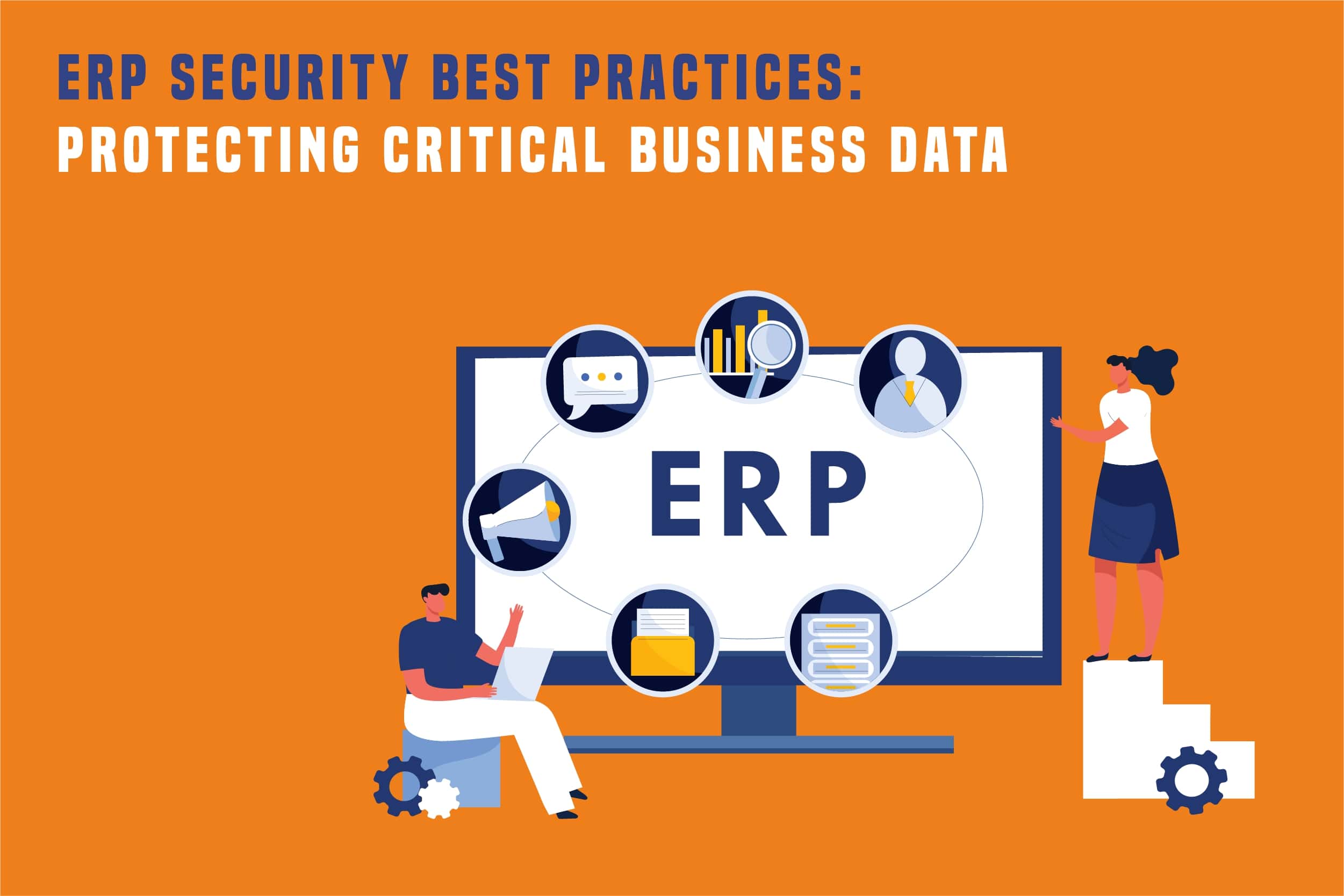
In the dynamic landscape of modern business operations, securing critical data within Enterprise Resource Planning (ERP) systems has become a paramount concern. This summary delves into ERP security best practices, emphasizing the pivotal role that IT consulting services play in fortifying defenses and protecting essential business data.
Enterprise Resource Planning (ERP) systems, centralizing diverse business processes, are the backbone of organizational efficiency. However, the wealth of sensitive information they handle makes them prime targets for cyber threats. So, businesses need to adopt robust ERP security practices to safeguard against potential breaches.
IT consulting services emerge as crucial partners in navigating the complex realm of ERP security. These services bring specialized knowledge and insights, guiding organizations in implementing effective measures. From encrypting sensitive data during transmission and storage to establishing stringent access controls, IT consulting services tailor strategies to address unique organizational needs.
The comprehensive approach to ERP security involves safeguarding data both in transit and at rest. Encryption protocols, crafted by skilled IT consultants, safeguard data from unauthorized access, reducing the threat of breaches during transmission and storage.
So, access controls, another key facet of ERP security, are vital for limiting user permissions and preventing unauthorized access. IT consulting services assist in fine-tuning access policies, ensuring that only authorized personnel have the required level of system access. This proactive approach enhances security and reduces the risk of internal threats. Furthermore, the role of IT consulting services extends to addressing compliance requirements. Industries handling sensitive data must adhere to stringent regulations.
As the threat landscape continually evolves, IT consulting services help organizations stay ahead by implementing cutting-edge technologies. AI and ML improve predictive analytics, helping organizations detect security threats early, preventing potential escalation by identifying them beforehand. IT consulting services offer expertise for navigating complexities, implementing security measures, and fostering proactive security culture within organizations.
Enterprise Resource Planning (ERP) solutions have become the backbone of organizations. in an era driven by digital transformation, seamlessly integrating multiple business activities. However, the increased dependence on ERP systems creates a greater requirement for sophisticated security measures to protect important corporate data.
This blog explores the crucial topic of ERP security and emphasizes the role of expert IT consulting services in safeguarding the integrity, confidentiality, and availability of critical business data.
Organizations must prioritize and invest in robust security measures to safeguard their ERP systems and the valuable data they contain. ERP (Enterprise Resource Planning) data security is crucial for several reasons:
So, implement strict access controls and user permissions in the organization. Only authorized personnel should have access to sensitive ERP data, and licenses should be granted based on job roles and responsibilities. At its core, access control is the strategic practice of allowing or denying entry to resources found on the identity and authorization level of individuals or entities. Moreover, it encompasses both physical and digital environments, offering a comprehensive approach to security.
So, conduct regular security audits to identify vulnerabilities, assess risks, and ensure compliance with security policies. Regular assessments help in proactively addressing potential issues before they escalate.
An IT consulting services company can guide organizations in selecting and implementing robust encryption protocols for securing data. So, encryption adds an extra layer of protection, making it difficult for unauthorized parties to access or interpret the data. It involves the transformation of plain, readable data (plaintext) into an encoded, unreadable format (ciphertext) using mathematical algorithms and cryptographic keys.
Enforce strong authentication methods, such as multi-factor authentication (MFA), to enhance user verification and prevent unauthorized access to the ERP system. As digital interactions become more prevalent, the need for robust authentication measures has intensified. In addition, strong authentication involves the use of multiple factors to verify the identity of a user, significantly enhancing security.
Keep ERP software, operating systems, and all related components up-to-date with the latest security patches. So, regular updates help address known vulnerabilities and strengthen the overall security posture.
Provide comprehensive training to employees on security best practices and potential threats. So, creating a culture of security awareness helps employees recognize and report security issues promptly.
Ensure secure integration protocols between the ERP implementation system and other applications or databases. Use secure APIs and implement proper authentication mechanisms to protect data during exchanges. Secure integration protocols are standardized sets of rules and conventions that dictate how different software systems or components communicate, exchange data, and collaborate securely.
Establish robust backup and disaster recovery plans to mitigate the impact of data loss or system failures. So, regularly test these plans to ensure a quick and effective response in case of an emergency. The broader strategy encompasses backup and focuses on the restoration of IT infrastructure and operations after a disruptive event. So, it involves a systematic approach to minimize downtime and ensure business continuity.
If using a third-party ERP solution or service, conduct thorough security assessments of the vendor’s infrastructure and practices. So, ensure that the vendor follows security best practices and complies with relevant standards. The primary goal of a Vendor Security Assessment is to ensure that the vendors with whom an organization interacts maintain a level of security that aligns with the organization’s security standards and complies with regulatory requirements.
Develop and regularly update an incident response plan for the organization. This plan should outline the steps to be taken in the event of a security incident, including communication protocols, containment measures, and recovery processes.
In the dynamic landscape of consulting services, where clients entrust sensitive data and business processes to service providers, securing the ERP system is paramount. The implementation of ERP security best practices, ranging from access controls and encryption to employee training and disaster recovery planning, establishes a robust defense against potential threats. By adopting a comprehensive security strategy, an IT consulting services company not only protects critical business data but also enhances client trust, maintains regulatory compliance, and fortifies its resilience in an ever-evolving threat landscape. For more information, visit our website.
Artificial intelligence is transforming how modern businesses operate. From automating workflows to generating insights from massive datasets, AI offers organizations unprecedented opportunities to innovate and scale. However, as AI capabilities grow, so do concerns around ethics, accountability, and transparency. This is why responsible AI has become a critical priority for large organizations.
Read More
Digital transformation has become a strategic priority for organizations across industries. Businesses are investing in advanced technologies, data platforms, and automation tools to improve efficiency and remain competitive in an increasingly digital world. However, transformation initiatives are rarely simple. Many organizations underestimate the complexity of change, leading to delays, wasted investments, or stalled projects.
Read More
For many organizations, legacy systems are both a foundation and a barrier. These older technologies once powered growth, managed operations, and supported critical business functions. Over time, however, they often become difficult to maintain, expensive to update, and incompatible with modern tools. As markets evolve and customer expectations rise, businesses increasingly recognize the need for legacy modernization.
Read More
Digital transformation promises speed, innovation, and competitive advantage. Yet, despite heavy investments in new technologies, many organizations struggle to achieve meaningful results. In fact, digital transformation failure is more common than most companies expect. Businesses launch ambitious initiatives to modernize systems, adopt AI, or improve customer experiences, but somewhere along the way, momentum fades.
Understanding why digital transformations fail requires looking beyond technology. The real problems often lie in strategy, culture, leadership, and execution. When these elements are misaligned, even the most advanced tools cannot deliver transformation.
Below are some of the most common enterprise transformation challenges that cause digital initiatives to stall or collapse.
Read More
Artificial intelligence is quickly moving from experimentation to enterprise-wide implementation. Many organizations have already tested AI through pilot projects, automation tools, or analytics platforms. The next step—scaling AI across the organization—promises greater efficiency, smarter decision-making, and new business opportunities.
However, expanding AI initiatives without the right structure can create confusion rather than progress. Disconnected tools, unclear governance, and untrained teams often turn promising projects into operational headaches. For companies pursuing enterprise AI adoption, the real challenge is learning how to scale AI safely while maintaining control, consistency, and trust.
Successfully scaling AI requires thoughtful planning, strong governance, and a focus on people as much as technology.
Read More
Businesses evolve constantly. Markets change, customer expectations rise, and new technologies reshape how companies operate. To keep up, organizations often need more than new tools or strategies—they need to rethink how the entire business functions. This is where operating model transformation comes in.
While the phrase may sound complex, the concept is actually quite simple. It is about redesigning how a company works so that it can deliver value more efficiently, adapt faster, and support long-term growth.
Understanding what is an operating model transformation helps leaders make better decisions about people, processes, and technology.
Read More
Enterprise transformations are complex, high-stakes initiatives that often promise operational efficiency, digital modernization, and competitive advantage. Yet, despite meticulous planning and substantial investments, many transformation programs stumble—not because of technology, but because of people.
This is where change management becomes critical. Understanding why people resist change and applying effective strategies in transformation leadership can make the difference between a stalled project and a successful enterprise-wide transformation.
Read More
Artificial Intelligence (AI) is no longer a futuristic concept; it has become a cornerstone of modern business strategy. From automating routine tasks to generating insights from vast datasets, AI promises efficiency, innovation, and competitive advantage.
Yet, the rapid pace of AI adoption also brings uncertainty. Many executives struggle with defining their role in AI strategy, leading to stalled projects or missed opportunities. Understanding how leaders should think about Artificial Intelligence is essential for turning technology into tangible business outcomes.
Read More
Digital transformation is no longer just a buzzword—it’s a necessity for businesses aiming to stay competitive in today’s fast-paced market. Organizations invest in cloud technologies, automation, AI, and customer-centric platforms to modernize operations and create value. But with so many initiatives underway, one pressing question arises: how to measure transformation success? Without clear metrics, companies risk investing heavily without knowing whether their efforts are truly paying off.
Measuring success in digital transformation goes beyond counting deployed tools or completed projects. It requires tracking meaningful indicators that reflect actual business outcomes, employee adoption, and customer impact. Defining transformation KPIs early in the journey ensures that initiatives stay aligned with strategic goals and deliver measurable value.
Read More
Enterprise transformation is no longer a niche service—it has become a critical driver for organizations seeking growth, agility, and resilience. Businesses today face unprecedented challenges: rapidly evolving technologies, shifting customer expectations, and complex global markets. In response, transformation consulting has evolved from offering generic recommendations to delivering highly specialized, strategic guidance that helps enterprises navigate this dynamic landscape.
Understanding how consulting is changing provides insights into what the future of enterprise transformation consulting looks like, and why companies are increasingly relying on experts to guide their transformational journeys.
Read More

Leave a Reply