
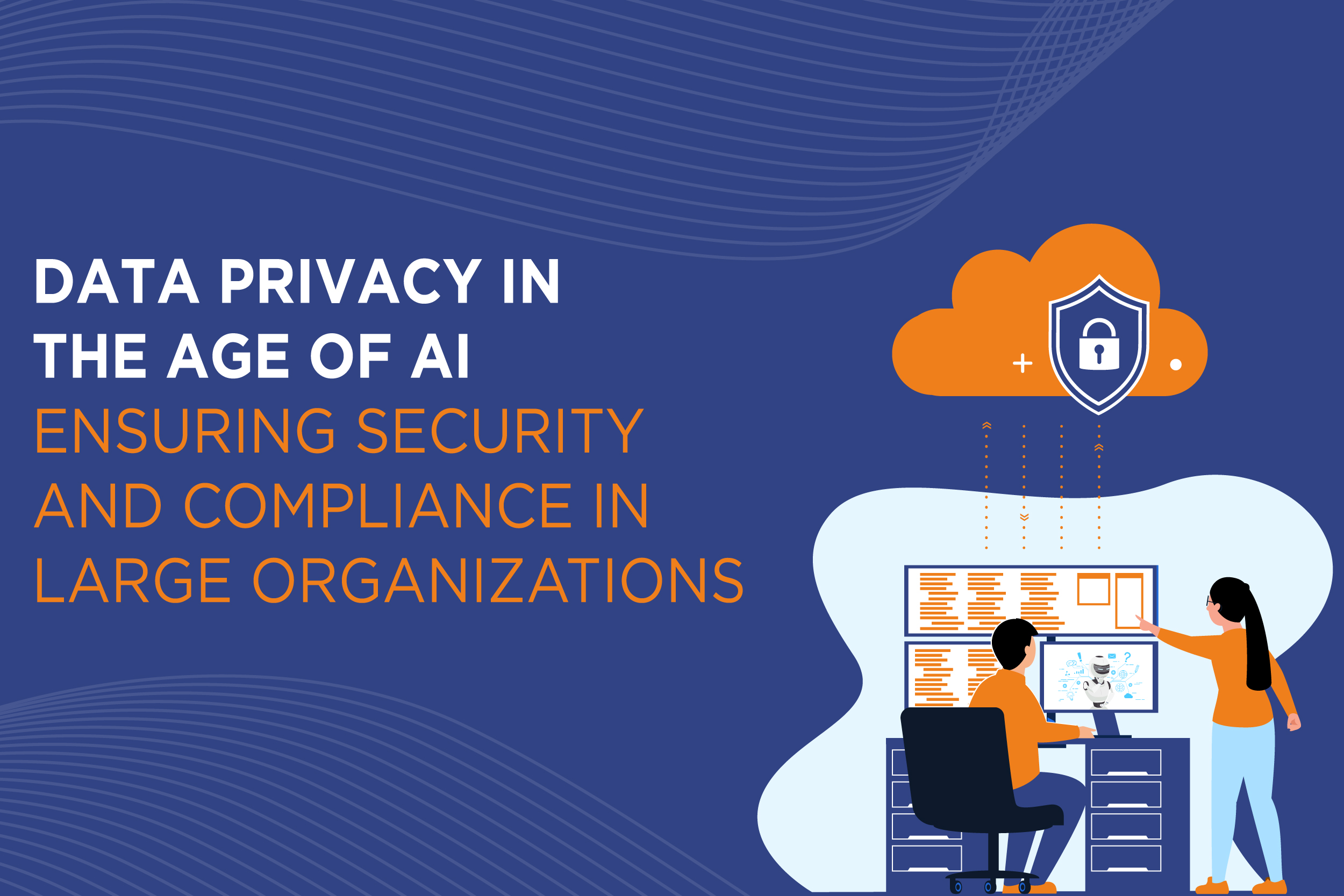
In the era of artificial intelligence (AI), ensuring data privacy is paramount for large organizations to maintain security and compliance with regulations. This challenge is accentuated by the vast amounts of data collected and processed by AI systems, heightening concerns about potential breaches and misuse.
Organizations must implement robust data privacy measures across the entire data lifecycle to address these concerns, from collection to disposal. This begins with implementing stringent access controls to limit who can interact with sensitive data and encryption to protect data both at rest and in transit. Additionally, this technique can remove personally identifiable information from datasets, reducing the risk of accidental exposure.
Furthermore, organizations must establish clear policies and procedures for data governance and compliance. This includes conducting regular audits to ensure adherence to data privacy regulations such as the General Data Protection Regulation (GDPR) and the California Consumer Privacy Act (CCPA). Moreover, employees should receive comprehensive training on data privacy best practices to foster a culture of compliance throughout the organization.
In parallel, organizations should invest in AI-specific security measures to safeguard AI models and algorithms. Additionally, deploying robust intrusion detection systems can help identify and mitigate potential threats to AI systems in real-time.
Collaboration with external stakeholders is also crucial for ensuring data privacy in the age of AI. This includes partnering with third-party vendors who adhere to stringent data privacy standards and regularly assessing compliance with these standards. Furthermore, engaging with regulatory bodies and industry groups can provide valuable insights into evolving data privacy requirements and best practices.
Despite these measures, the evolving nature of AI and data privacy regulations necessitates ongoing vigilance and adaptation. Organizations must continuously monitor Artificial intelligence and data privacy developments, updating their policies and technologies accordingly. By prioritizing data privacy and security, organizations can mitigate risks, build trust with stakeholders, and ensure long-term success in AI.
Data is the new currency in today’s digital landscape, fueling innovation and driving business growth. However, with the proliferation of artificial intelligence (AI) technologies, protecting sensitive information and ensuring compliance with data privacy regulations has become more complex, especially for large organizations. As AI continues to revolutionize industries, businesses must prioritize data privacy to maintain trust with their customers and mitigate the risk of regulatory penalties. This blog explores the intersection of data privacy and AI in large organizations, examining strategies. These strategies help to enhance security and compliance in this evolving landscape.
Large organizations possess vast amounts of data, including customer information, intellectual property, and operational insights. While AI offers unprecedented opportunities to derive value from this data, it also introduces new risks and vulnerabilities. The inherent complexity of AI algorithms and the interconnected nature of data ecosystems increase the likelihood of privacy breaches and unauthorized access. Moreover, using AI-driven analytics and machine learning models raises concerns about algorithmic bias and discrimination, further complicating data privacy efforts.
Several challenges confront large organizations seeking to ensure data privacy in the age of AI:
To address these challenges, large organizations can implement a comprehensive approach to data privacy that encompasses the following strategies:
IT consulting services establish continuous compliance monitoring and auditing processes to ensure adherence to data privacy regulations and internal policies. They also conduct regular risk assessments and impact analyses to identify and mitigate emerging threats and vulnerabilities.
Evaluating third-party vendors’ and service providers’ privacy and security practices before engaging with them. Conduct thorough due diligence assessments to ensure vendors comply with applicable data protection regulations and industry standards. Include data privacy requirements and contractual clauses in vendor agreements to establish clear expectations and responsibilities regarding data handling and protection.
An IT solution consultant helps large organizations prioritize data privacy during AI-driven innovation to maintain trust and integrity. By adopting a proactive approach to data governance, transparency, and security, organizations can navigate complexities of the evolving regulatory landscape. Through collaboration with stakeholders, including regulators, industry partners, and consumers. The organizations can build a culture of privacy and accountability that safeguards sensitive information and promotes responsible AI innovation in the digital age. For more information, visit our website.
Artificial intelligence is transforming how modern businesses operate. From automating workflows to generating insights from massive datasets, AI offers organizations unprecedented opportunities to innovate and scale. However, as AI capabilities grow, so do concerns around ethics, accountability, and transparency. This is why responsible AI has become a critical priority for large organizations.
Read More
Digital transformation has become a strategic priority for organizations across industries. Businesses are investing in advanced technologies, data platforms, and automation tools to improve efficiency and remain competitive in an increasingly digital world. However, transformation initiatives are rarely simple. Many organizations underestimate the complexity of change, leading to delays, wasted investments, or stalled projects.
Read More
For many organizations, legacy systems are both a foundation and a barrier. These older technologies once powered growth, managed operations, and supported critical business functions. Over time, however, they often become difficult to maintain, expensive to update, and incompatible with modern tools. As markets evolve and customer expectations rise, businesses increasingly recognize the need for legacy modernization.
Read More
Digital transformation promises speed, innovation, and competitive advantage. Yet, despite heavy investments in new technologies, many organizations struggle to achieve meaningful results. In fact, digital transformation failure is more common than most companies expect. Businesses launch ambitious initiatives to modernize systems, adopt AI, or improve customer experiences, but somewhere along the way, momentum fades.
Understanding why digital transformations fail requires looking beyond technology. The real problems often lie in strategy, culture, leadership, and execution. When these elements are misaligned, even the most advanced tools cannot deliver transformation.
Below are some of the most common enterprise transformation challenges that cause digital initiatives to stall or collapse.
Read More
Artificial intelligence is quickly moving from experimentation to enterprise-wide implementation. Many organizations have already tested AI through pilot projects, automation tools, or analytics platforms. The next step—scaling AI across the organization—promises greater efficiency, smarter decision-making, and new business opportunities.
However, expanding AI initiatives without the right structure can create confusion rather than progress. Disconnected tools, unclear governance, and untrained teams often turn promising projects into operational headaches. For companies pursuing enterprise AI adoption, the real challenge is learning how to scale AI safely while maintaining control, consistency, and trust.
Successfully scaling AI requires thoughtful planning, strong governance, and a focus on people as much as technology.
Read More
Businesses evolve constantly. Markets change, customer expectations rise, and new technologies reshape how companies operate. To keep up, organizations often need more than new tools or strategies—they need to rethink how the entire business functions. This is where operating model transformation comes in.
While the phrase may sound complex, the concept is actually quite simple. It is about redesigning how a company works so that it can deliver value more efficiently, adapt faster, and support long-term growth.
Understanding what is an operating model transformation helps leaders make better decisions about people, processes, and technology.
Read More
Enterprise transformations are complex, high-stakes initiatives that often promise operational efficiency, digital modernization, and competitive advantage. Yet, despite meticulous planning and substantial investments, many transformation programs stumble—not because of technology, but because of people.
This is where change management becomes critical. Understanding why people resist change and applying effective strategies in transformation leadership can make the difference between a stalled project and a successful enterprise-wide transformation.
Read More
Artificial Intelligence (AI) is no longer a futuristic concept; it has become a cornerstone of modern business strategy. From automating routine tasks to generating insights from vast datasets, AI promises efficiency, innovation, and competitive advantage.
Yet, the rapid pace of AI adoption also brings uncertainty. Many executives struggle with defining their role in AI strategy, leading to stalled projects or missed opportunities. Understanding how leaders should think about Artificial Intelligence is essential for turning technology into tangible business outcomes.
Read More
Digital transformation is no longer just a buzzword—it’s a necessity for businesses aiming to stay competitive in today’s fast-paced market. Organizations invest in cloud technologies, automation, AI, and customer-centric platforms to modernize operations and create value. But with so many initiatives underway, one pressing question arises: how to measure transformation success? Without clear metrics, companies risk investing heavily without knowing whether their efforts are truly paying off.
Measuring success in digital transformation goes beyond counting deployed tools or completed projects. It requires tracking meaningful indicators that reflect actual business outcomes, employee adoption, and customer impact. Defining transformation KPIs early in the journey ensures that initiatives stay aligned with strategic goals and deliver measurable value.
Read More
Enterprise transformation is no longer a niche service—it has become a critical driver for organizations seeking growth, agility, and resilience. Businesses today face unprecedented challenges: rapidly evolving technologies, shifting customer expectations, and complex global markets. In response, transformation consulting has evolved from offering generic recommendations to delivering highly specialized, strategic guidance that helps enterprises navigate this dynamic landscape.
Understanding how consulting is changing provides insights into what the future of enterprise transformation consulting looks like, and why companies are increasingly relying on experts to guide their transformational journeys.
Read More

Leave a Reply