
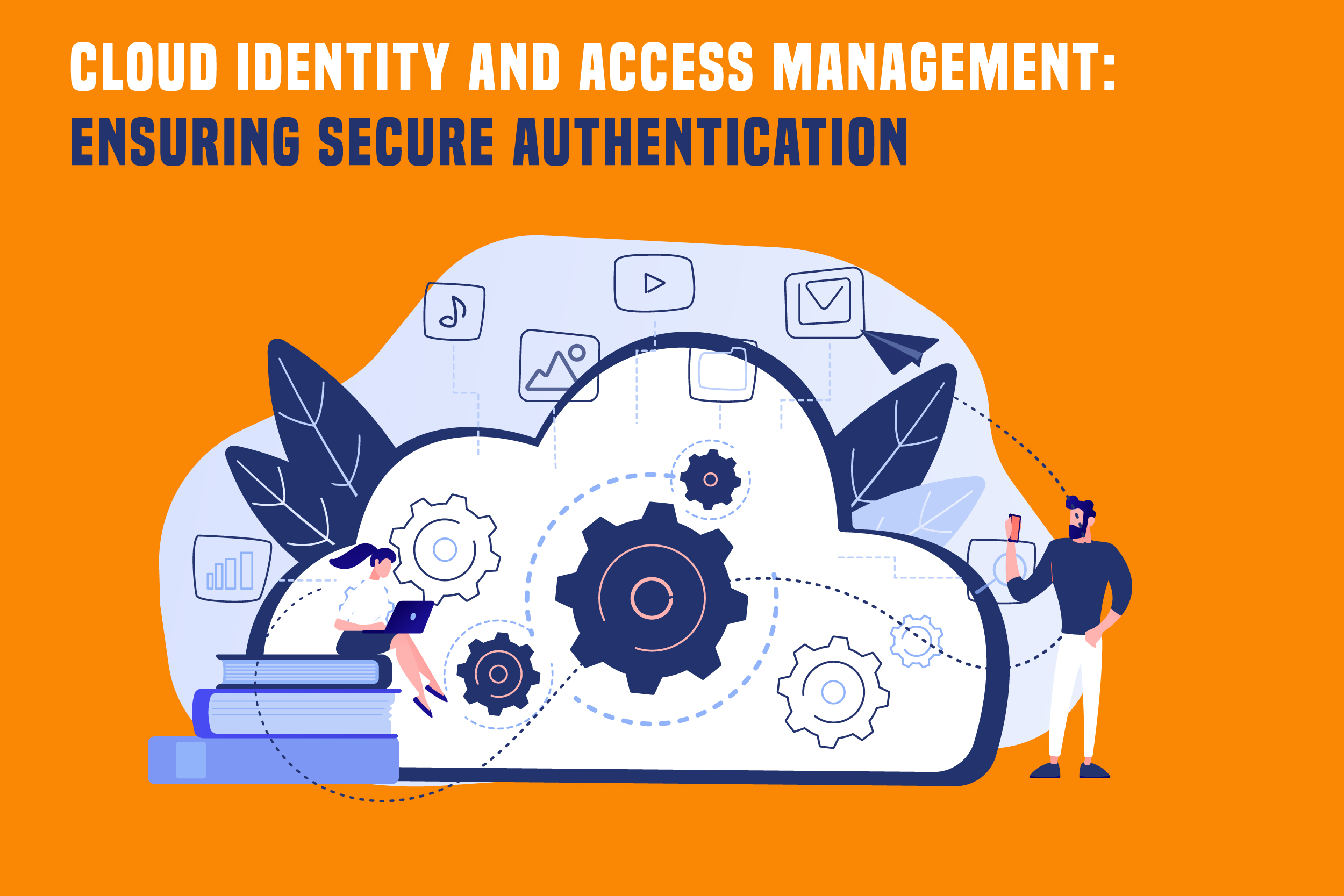
Cloud Identity and Access Management (IAM) stands at the forefront of ensuring secure authentication in the era of Cloud Transformation. As companies move to the cloud, old perimeter security is outdated. They need flexible identity and access management for protection. So, cloud IAM emerges as a critical component, addressing the challenges of securing digital assets, applications, and data in a dynamic and distributed landscape.
In Cloud Transformation, shifting business operations to cloud platforms emphasizes identity and access management for improved scalability, flexibility, and efficiency. Cloud IAM solutions provide a unified framework for managing user identities. So, access permissions, and authentication across cloud services, ensuring a seamless and secure user experience.
Additionally, a key feature of Cloud IAM is its ability to enable single sign-on (SSO) capabilities. This simplifies user access by allowing them to authenticate once and gain access to multiple cloud applications and services without repeatedly entering credentials. This enhances user convenience and strengthens security by reducing the likelihood of password-related vulnerabilities.
So, organizations undergoing Cloud Transformation often adopt a multi-cloud or hybrid cloud strategy. This adaptability is crucial for organizations navigating complex infrastructures while maintaining a unified and secure approach to authentication.
Security and compliance are paramount considerations in the Cloud Transformation journey. Cloud IAM facilitates the implementation of robust security policies, such as multifactor authentication (MFA), conditional access, and role-based access control (RBAC). These measures bolster the overall security posture, mitigating risks associated with unauthorized access, data breaches, and other cyber threats.
Cloud Identity and Access Management are integral to the broader Cloud Transformation strategy. As organizations embrace the cloud for its transformative potential, Cloud IAM ensures that secure authentication remains a top priority. By providing a flexible, centralized, and comprehensive approach to identity management, Cloud IAM empowers organizations to navigate the complexities of the cloud securely, fostering a dynamic yet protected digital ecosystem.
In the ever-expanding realm of cloud transformation, organizations face the critical challenge of safeguarding their data and applications against various cyber threats. Central to this challenge is the need for a robust identity and access management (IAM) system to ensure secure authentication. This blog explores the intricacies of Cloud Identity and Access Management, shedding light on its significance, features, and best practices in fostering a safe cloud computing environment.
Cloud IAM serves as the foundation of security in cloud computing. It addresses the fundamental question of who has access to what resources within the cloud infrastructure. So, organizations can mitigate the risks associated with unauthorized access and data breaches by establishing and enforcing access policies.
Cloud IAM operates as a multi-layered security mechanism, encompassing authentication and authorization. Authentication verifies the identity of users or systems attempting to access resources, while a license defines the level of access granted to authenticated entities. So, this dual-layered approach forms a comprehensive security shield against external threats and insider risks.
Cloud environments are dynamic, with resources scaling up or down based on demand. Cloud IAM systems are designed to be agile, adapting to changes in real-time. Whether it’s onboarding new employees, modifying roles, or decommissioning outdated systems. In addition, cloud IAM ensures that access controls evolve with the dynamic nature of cloud infrastructure.
Identity management is the cornerstone of cloud computing and identity management. So, it involves the creation, maintenance, and deletion of user identities. Cloud IAM solutions provide centralized control over user identities, supporting single sign-on (SSO) and facilitating the integration of existing identity directories.
Strong authentication mechanisms are pivotal in ensuring that only authorized individuals or systems gain access to cloud resources. In addition, cloud IAM systems employ multi-factor authentication (MFA), biometrics, and other advanced methods to enhance the security of authentication processes.
These policies specify who can access what resources under what conditions. Fine-grained access control ensures that privileges are allocated based on the principle of least privilege. So, limiting access to only what is necessary for individuals to perform their roles.
RBAC is a key feature of Cloud IAM that simplifies access management in organization. Additionally, it sets the stage for the role of an IT consulting services company in overcoming these challenges. So, organizations can efficiently manage access for different job functions by associating roles with specific sets of permissions. This enhances security and streamlines administrative tasks related to access control.
Successful implementation of Cloud IAM begins with comprehensive training programs for staff. Building awareness about security protocols, the importance of strong passwords. So, the risks associated with unauthorized access is crucial in creating a security-conscious organizational culture.
In addition, continuous monitoring and regular audits of access logs are essential for identifying and addressing potential security threats. Cloud IAM solutions often include monitoring tools. So, that enable organizations to track user activities, detect anomalies, and respond promptly to security incidents.
So, seamless integration with existing identity systems and directories is vital for a smooth transition to Cloud IAM. Compatibility with commonly used protocols such as LDAP and integration with popular identity providers contribute to a cohesive identity management ecosystem.
In addition, robust encryption practices should complement Cloud IAM. Encrypting data in transit and at rest ensures that the data remains unreadable and secure even if unauthorised access occurs. So, cloud IAM solutions often provide encryption features as part of their security offerings.
A global e-commerce giant implemented Cloud IAM to manage access to its vast network of applications and databases. So, the organization witnessed a significant reduction in unauthorized access attempts, enhancing customer trust and improving regulatory compliance.
A leading financial services institution embraced Cloud computing to secure its critical financial data. Implementing multifactor authentication and granular access controls significantly reduced the risk of fraudulent activities, demonstrating the effectiveness of Cloud IAM in highly regulated sectors.
The Zero Trust security model is gaining prominence, emphasizing the principle of “never trust, always verify.” Cloud IAM is evolving to align with this model, requiring continuous verification of the identity. So, the security posture of users, devices, and systems attempting to access resources.
Moreover, the integration of artificial intelligence into Cloud IAM enables advanced anomaly detection. So, machine learning algorithms analyze user behavior patterns, identifying deviations that may indicate potential security threats. So, this proactive approach enhances the ability to prevent unauthorized access before it occurs.
In addition, as organizations increasingly rely on APIs for connectivity, securing API access becomes a focal point of Cloud IAM. So, identity federation, which allows users to access resources across multiple platforms with a single set of credentials. So, it is gaining traction to enhance user experience without compromising security.
So, IT consulting services company Cloud IAM, meeting organizational needs, ensuring ongoing optimization, and playing an indispensable role. By establishing a robust framework for identity management, authentication, and access control, Cloud IAM serves as a sentinel against the ever-evolving threats of cyber breaches. So, as technology advances, the continuous refinement of Cloud IAM practices and the adoption of emerging trends will be imperative for organizations seeking to secure their digital assets and thrive in an era defined by the seamless and secure integration of cloud technologies. For more information, visit our website.
Artificial intelligence is transforming how modern businesses operate. From automating workflows to generating insights from massive datasets, AI offers organizations unprecedented opportunities to innovate and scale. However, as AI capabilities grow, so do concerns around ethics, accountability, and transparency. This is why responsible AI has become a critical priority for large organizations.
Read More
Digital transformation has become a strategic priority for organizations across industries. Businesses are investing in advanced technologies, data platforms, and automation tools to improve efficiency and remain competitive in an increasingly digital world. However, transformation initiatives are rarely simple. Many organizations underestimate the complexity of change, leading to delays, wasted investments, or stalled projects.
Read More
For many organizations, legacy systems are both a foundation and a barrier. These older technologies once powered growth, managed operations, and supported critical business functions. Over time, however, they often become difficult to maintain, expensive to update, and incompatible with modern tools. As markets evolve and customer expectations rise, businesses increasingly recognize the need for legacy modernization.
Read More
Digital transformation promises speed, innovation, and competitive advantage. Yet, despite heavy investments in new technologies, many organizations struggle to achieve meaningful results. In fact, digital transformation failure is more common than most companies expect. Businesses launch ambitious initiatives to modernize systems, adopt AI, or improve customer experiences, but somewhere along the way, momentum fades.
Understanding why digital transformations fail requires looking beyond technology. The real problems often lie in strategy, culture, leadership, and execution. When these elements are misaligned, even the most advanced tools cannot deliver transformation.
Below are some of the most common enterprise transformation challenges that cause digital initiatives to stall or collapse.
Read More
Artificial intelligence is quickly moving from experimentation to enterprise-wide implementation. Many organizations have already tested AI through pilot projects, automation tools, or analytics platforms. The next step—scaling AI across the organization—promises greater efficiency, smarter decision-making, and new business opportunities.
However, expanding AI initiatives without the right structure can create confusion rather than progress. Disconnected tools, unclear governance, and untrained teams often turn promising projects into operational headaches. For companies pursuing enterprise AI adoption, the real challenge is learning how to scale AI safely while maintaining control, consistency, and trust.
Successfully scaling AI requires thoughtful planning, strong governance, and a focus on people as much as technology.
Read More
Businesses evolve constantly. Markets change, customer expectations rise, and new technologies reshape how companies operate. To keep up, organizations often need more than new tools or strategies—they need to rethink how the entire business functions. This is where operating model transformation comes in.
While the phrase may sound complex, the concept is actually quite simple. It is about redesigning how a company works so that it can deliver value more efficiently, adapt faster, and support long-term growth.
Understanding what is an operating model transformation helps leaders make better decisions about people, processes, and technology.
Read More
Enterprise transformations are complex, high-stakes initiatives that often promise operational efficiency, digital modernization, and competitive advantage. Yet, despite meticulous planning and substantial investments, many transformation programs stumble—not because of technology, but because of people.
This is where change management becomes critical. Understanding why people resist change and applying effective strategies in transformation leadership can make the difference between a stalled project and a successful enterprise-wide transformation.
Read More
Artificial Intelligence (AI) is no longer a futuristic concept; it has become a cornerstone of modern business strategy. From automating routine tasks to generating insights from vast datasets, AI promises efficiency, innovation, and competitive advantage.
Yet, the rapid pace of AI adoption also brings uncertainty. Many executives struggle with defining their role in AI strategy, leading to stalled projects or missed opportunities. Understanding how leaders should think about Artificial Intelligence is essential for turning technology into tangible business outcomes.
Read More
Digital transformation is no longer just a buzzword—it’s a necessity for businesses aiming to stay competitive in today’s fast-paced market. Organizations invest in cloud technologies, automation, AI, and customer-centric platforms to modernize operations and create value. But with so many initiatives underway, one pressing question arises: how to measure transformation success? Without clear metrics, companies risk investing heavily without knowing whether their efforts are truly paying off.
Measuring success in digital transformation goes beyond counting deployed tools or completed projects. It requires tracking meaningful indicators that reflect actual business outcomes, employee adoption, and customer impact. Defining transformation KPIs early in the journey ensures that initiatives stay aligned with strategic goals and deliver measurable value.
Read More
Enterprise transformation is no longer a niche service—it has become a critical driver for organizations seeking growth, agility, and resilience. Businesses today face unprecedented challenges: rapidly evolving technologies, shifting customer expectations, and complex global markets. In response, transformation consulting has evolved from offering generic recommendations to delivering highly specialized, strategic guidance that helps enterprises navigate this dynamic landscape.
Understanding how consulting is changing provides insights into what the future of enterprise transformation consulting looks like, and why companies are increasingly relying on experts to guide their transformational journeys.
Read More

Leave a Reply