
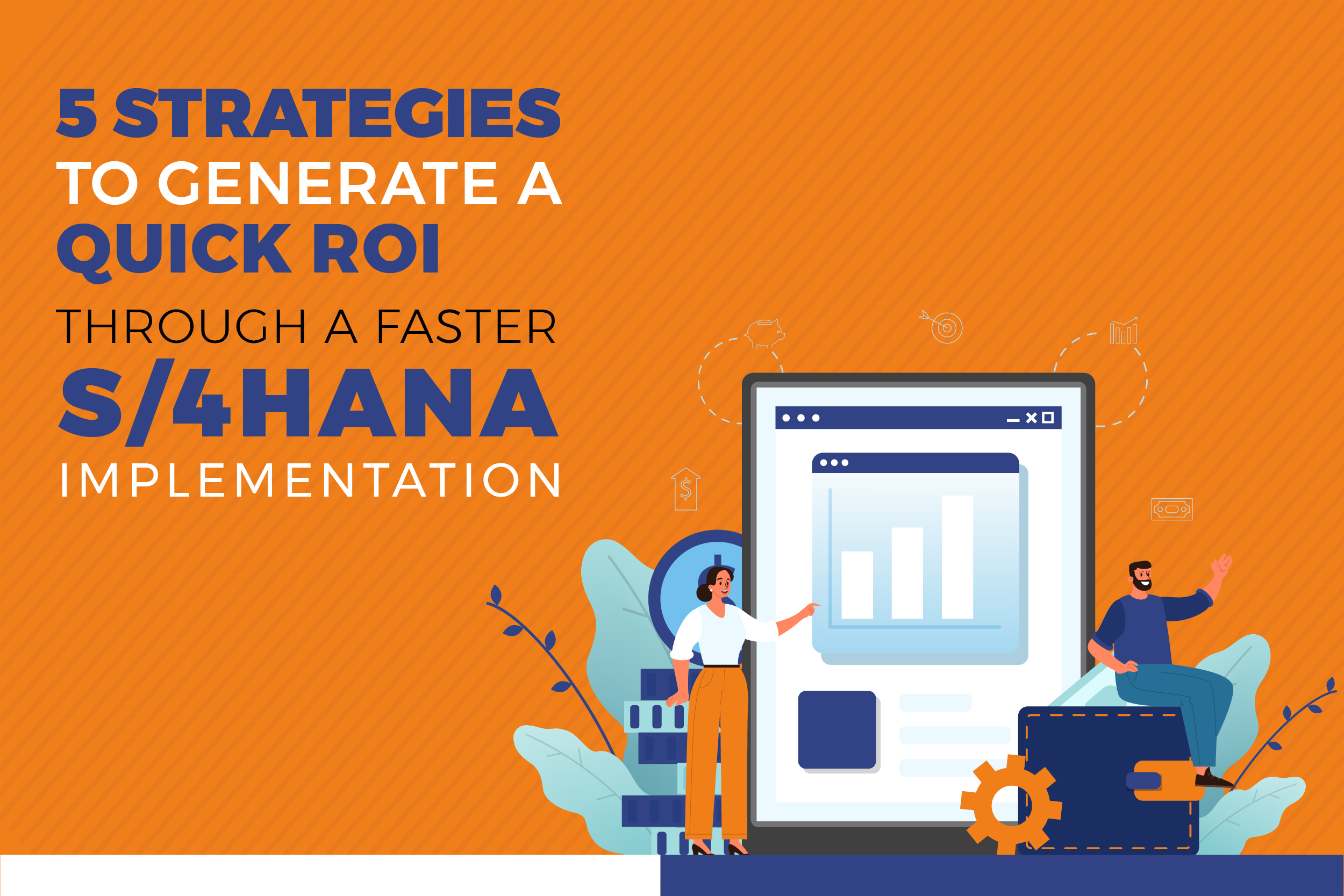
S/4HANA implementation in your business is a crucial and important process for the positive growth of your business and the best SAP consulting service in the USA can help you implement the S/4HANA in your business and see a positive ROI faster.
The latest ERP offering from SAP, SAP S/4HANA, has played a key role in accelerating digital transformation across industries and has the potential to propel businesses into the digital future. But making the transfer to a new ERP system is not an easy task. A successful SAP implementation that lowers risk, increases user engagement and produces quick wins calls for a strong business case, rigorous planning, and thorough execution.
When implementing S/4, one of the main worries a company has is whether they will see a quick return on their investment. Enterprise-wide SAP data migration is something that businesses want to quickly implement using S/4HANA in order to reap its benefits as soon as feasible. In such a situation, it is essential for businesses to collaborate closely with their S/4HANA implementation partners in order to reap these benefits.
And in this article let’s examine some of the crucial elements that guarantee a quick and effective S/4HANA implementation, as well as how IDTCS (a SAP consulting service in the USA) assists its clients in achieving a rapid return on investment during their S/4 transformation journey.
In comparison to earlier ERP solutions, SAP S/4HANA and S/4 HANA Cloud support a more fit-to-standard approach and agile delivery model thanks to often introduced substantial functionality and capabilities. Adopting SAP best practices business procedures ensures a quick installation, greater ROI, and a lower cost of ownership moving forward by staying as close to the standard solution (fit-to-standard) with minimal adaptations.
However, because they find it challenging to adhere to the industry-recognized best practices for business operations, customers frequently request specific tweaks and modifications to the core solution. By using what we refer to as a fit-to-business strategy, where adjustments are based on business value, we are able to address this issue. These modifications are segregated in the user experience layer of the solution, leaving the core S/4 solution unaffected, and are prioritized based on their importance to the brand and potential business value.
As little changes are required to the fundamental solution, this guarantees a quick deployment and a low total cost of ownership. It also offers a significant advantage in terms of agility, as it facilitates the addition of newly released SAP processes and enhancements much more quickly in the future because SAP has already completed the majority of the work for you, ensuring that the integrated process already functions, as opposed to the situation where custom developments would be involved.
Utilizing prebuilt materials and preconfigured solutions created by the SAP implementation partner helps to ensure a quicker installation in addition to utilizing SAP standard functions. Having a pre-built working solution allows the project to get off to a faster start than beginning from scratch and leads to a faster rollout. It would save a lot of time if the configurable solution came with the business processes, supporting materials, and tools necessary for the intended scope.
IDTCS has created pre-built Industry-focused S/4 solutions (IFS) for the retail, fashion, and consumer goods sectors using our extensive domain expertise in SAP deployments and industries. We provide our clients with pre-built demos that illustrate the solution in action. The areas in which the client may still require improvement are then identified using prebuilt user stories and workshop materials. Time is saved by reducing the need for bespoke development and testing.
While methods 1 and 2 above lay the groundwork for an agile programme, a tried-and-true agile methodology for the S/4 project’s Realize phase is also essential for speedy implementation. SAP consulting services install functionality in brief sprints or iterative cycles with strong cross-team cooperation and enhanced hands-on involvement from business users to provide results more quickly while closely tracking the development. The programme gains momentum when smaller functional increments are delivered often, which also helps firms understand and respond to changing business demands more quickly.
S/4 implementation projects can fail even with the best methodology, preconfigured solutions, and appropriate toolkits if change management challenges are not addressed in a proactive manner. Early on in the project, a focused change management engagement can enhance user involvement and participation in the design and development of the solution, resulting in greater excitement and adoption as well as a quicker and higher ROI.
When implementing S/4, IDTCS has a strong organizational change management approach that takes into account the various needs of a variety of stakeholders. We are fully aware of how an S/4 installation will affect company capabilities, personnel, and job responsibilities. Our OCM method makes it easier for customers to accept change and eliminates any inconvenience.
Similarly to this, involving the testing or quality engineering team from the Prepare phase helps maintain quality throughout the project, reducing the need for back-end testing and hastening project execution. IDTCS has a strong Quality Engineering practice that increases client trust in the solution over the course of the project. This guarantees that throughout their S/4 transformation journey, our customers will experience the genuine business and operational benefits. Both techniques help projects move along quickly while achieving these objectives.
While pre-configured technologies and a proprietary methodology can speed up deployment, an organization must prioritize the transformation as a business-critical initiative with business ownership.
Everyone involved in the project, from executive sponsors to regular team members, needs to understand how important the project is to the organization’s future and capacity to compete in a world that is becoming increasingly digital. To enable a quick SAP data migration, an organization’s commitment and willingness to adhere to standards as closely as whenever possible are equally important.
Given the strong solution offered by SAP S/4, the customer must be willing to let go of processes that may no longer be necessary. In order to eliminate needless debate over procedures that have rationale based on antiquated technology, this thinking needs to permeate the entire business with all stakeholders unified on the approach.
S/4HANA implementation will always give a positive ROI to your business. But to get those positive benefits you need to implement it strategically and in the right manner and IDTCS the best SAP implementation service in the USA can help with your SAP implementation and S/4HANA implementation which will provide you with a positive ROI faster.
For many organizations, legacy systems are both a foundation and a barrier. These older technologies once powered growth, managed operations, and supported critical business functions. Over time, however, they often become difficult to maintain, expensive to update, and incompatible with modern tools. As markets evolve and customer expectations rise, businesses increasingly recognize the need for legacy modernization.
Read More
Digital transformation promises speed, innovation, and competitive advantage. Yet, despite heavy investments in new technologies, many organizations struggle to achieve meaningful results. In fact, digital transformation failure is more common than most companies expect. Businesses launch ambitious initiatives to modernize systems, adopt AI, or improve customer experiences, but somewhere along the way, momentum fades.
Understanding why digital transformations fail requires looking beyond technology. The real problems often lie in strategy, culture, leadership, and execution. When these elements are misaligned, even the most advanced tools cannot deliver transformation.
Below are some of the most common enterprise transformation challenges that cause digital initiatives to stall or collapse.
Read More
Artificial intelligence is quickly moving from experimentation to enterprise-wide implementation. Many organizations have already tested AI through pilot projects, automation tools, or analytics platforms. The next step—scaling AI across the organization—promises greater efficiency, smarter decision-making, and new business opportunities.
However, expanding AI initiatives without the right structure can create confusion rather than progress. Disconnected tools, unclear governance, and untrained teams often turn promising projects into operational headaches. For companies pursuing enterprise AI adoption, the real challenge is learning how to scale AI safely while maintaining control, consistency, and trust.
Successfully scaling AI requires thoughtful planning, strong governance, and a focus on people as much as technology.
Read More
Businesses evolve constantly. Markets change, customer expectations rise, and new technologies reshape how companies operate. To keep up, organizations often need more than new tools or strategies—they need to rethink how the entire business functions. This is where operating model transformation comes in.
While the phrase may sound complex, the concept is actually quite simple. It is about redesigning how a company works so that it can deliver value more efficiently, adapt faster, and support long-term growth.
Understanding what is an operating model transformation helps leaders make better decisions about people, processes, and technology.
Read More
Enterprise transformations are complex, high-stakes initiatives that often promise operational efficiency, digital modernization, and competitive advantage. Yet, despite meticulous planning and substantial investments, many transformation programs stumble—not because of technology, but because of people.
This is where change management becomes critical. Understanding why people resist change and applying effective strategies in transformation leadership can make the difference between a stalled project and a successful enterprise-wide transformation.
Read More
Artificial Intelligence (AI) is no longer a futuristic concept; it has become a cornerstone of modern business strategy. From automating routine tasks to generating insights from vast datasets, AI promises efficiency, innovation, and competitive advantage.
Yet, the rapid pace of AI adoption also brings uncertainty. Many executives struggle with defining their role in AI strategy, leading to stalled projects or missed opportunities. Understanding how leaders should think about Artificial Intelligence is essential for turning technology into tangible business outcomes.
Read More
Digital transformation is no longer just a buzzword—it’s a necessity for businesses aiming to stay competitive in today’s fast-paced market. Organizations invest in cloud technologies, automation, AI, and customer-centric platforms to modernize operations and create value. But with so many initiatives underway, one pressing question arises: how to measure transformation success? Without clear metrics, companies risk investing heavily without knowing whether their efforts are truly paying off.
Measuring success in digital transformation goes beyond counting deployed tools or completed projects. It requires tracking meaningful indicators that reflect actual business outcomes, employee adoption, and customer impact. Defining transformation KPIs early in the journey ensures that initiatives stay aligned with strategic goals and deliver measurable value.
Read More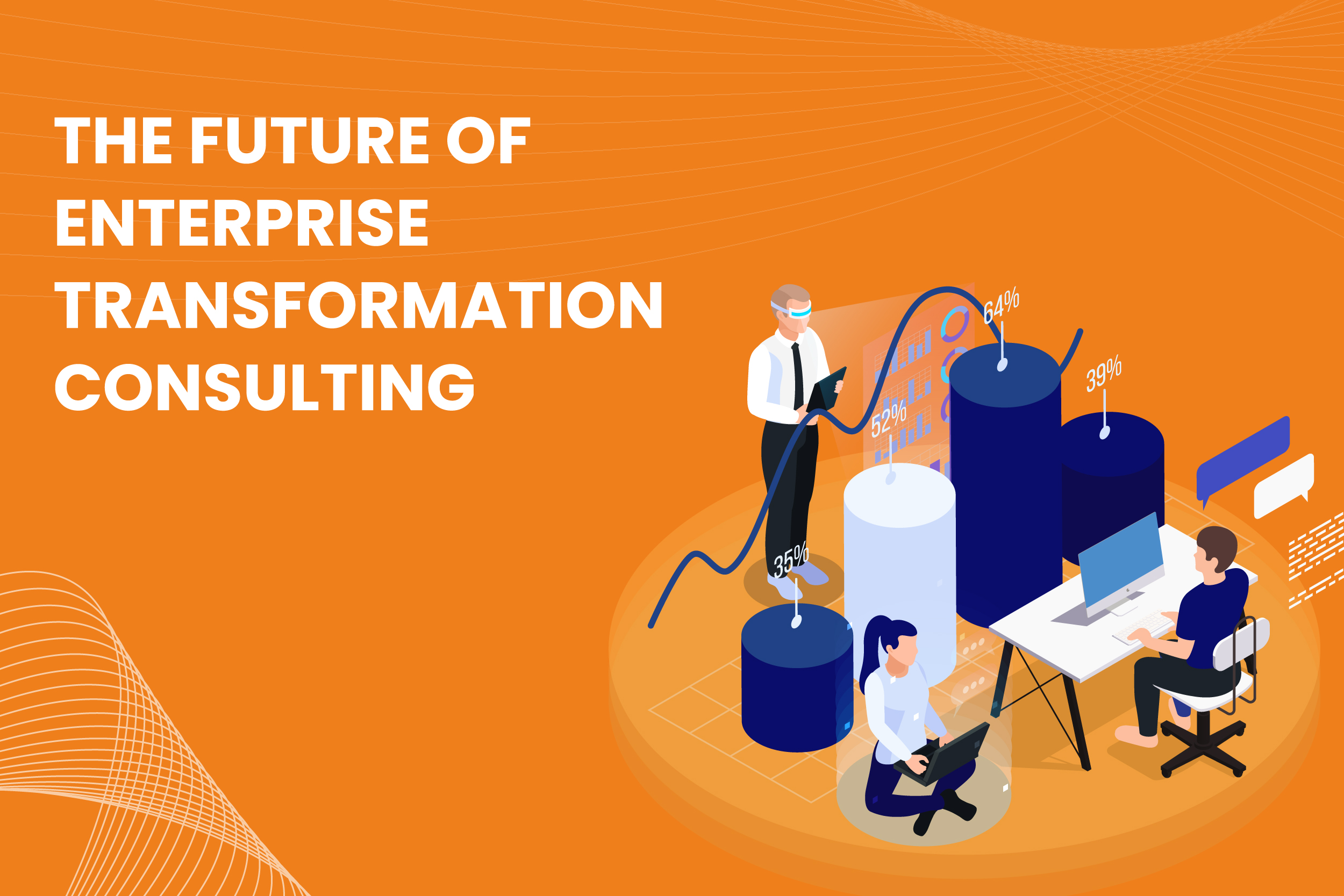
Enterprise transformation is no longer a niche service—it has become a critical driver for organizations seeking growth, agility, and resilience. Businesses today face unprecedented challenges: rapidly evolving technologies, shifting customer expectations, and complex global markets. In response, transformation consulting has evolved from offering generic recommendations to delivering highly specialized, strategic guidance that helps enterprises navigate this dynamic landscape.
Understanding how consulting is changing provides insights into what the future of enterprise transformation consulting looks like, and why companies are increasingly relying on experts to guide their transformational journeys.
Read More
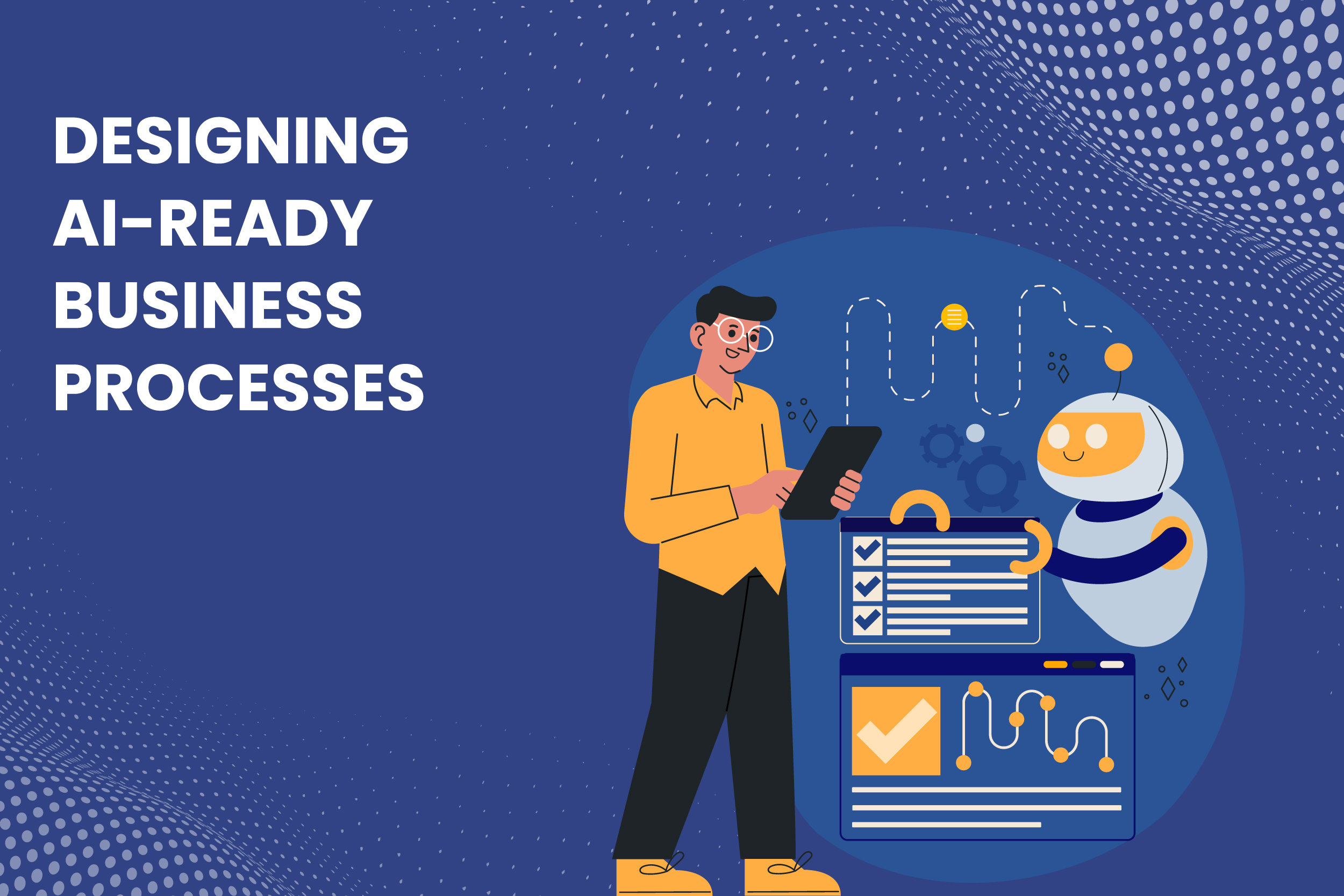
Artificial intelligence is quickly moving from experimentation to real business impact. Organizations are using AI to automate decisions, improve customer experiences, and extract insights from massive volumes of data. However, simply adopting AI tools does not guarantee success. Many companies discover that their existing workflows were never designed to support intelligent automation.
To unlock the full potential of AI, businesses must rethink how their processes are structured. This is where business process transformation becomes essential. Organizations need AI-ready processes that are structured, data-driven, and adaptable. Without these foundations, even the most advanced AI systems struggle to deliver value.
Understanding how to prepare processes for AI helps businesses build systems that are not only efficient today but also capable of evolving with future technologies.
Read More
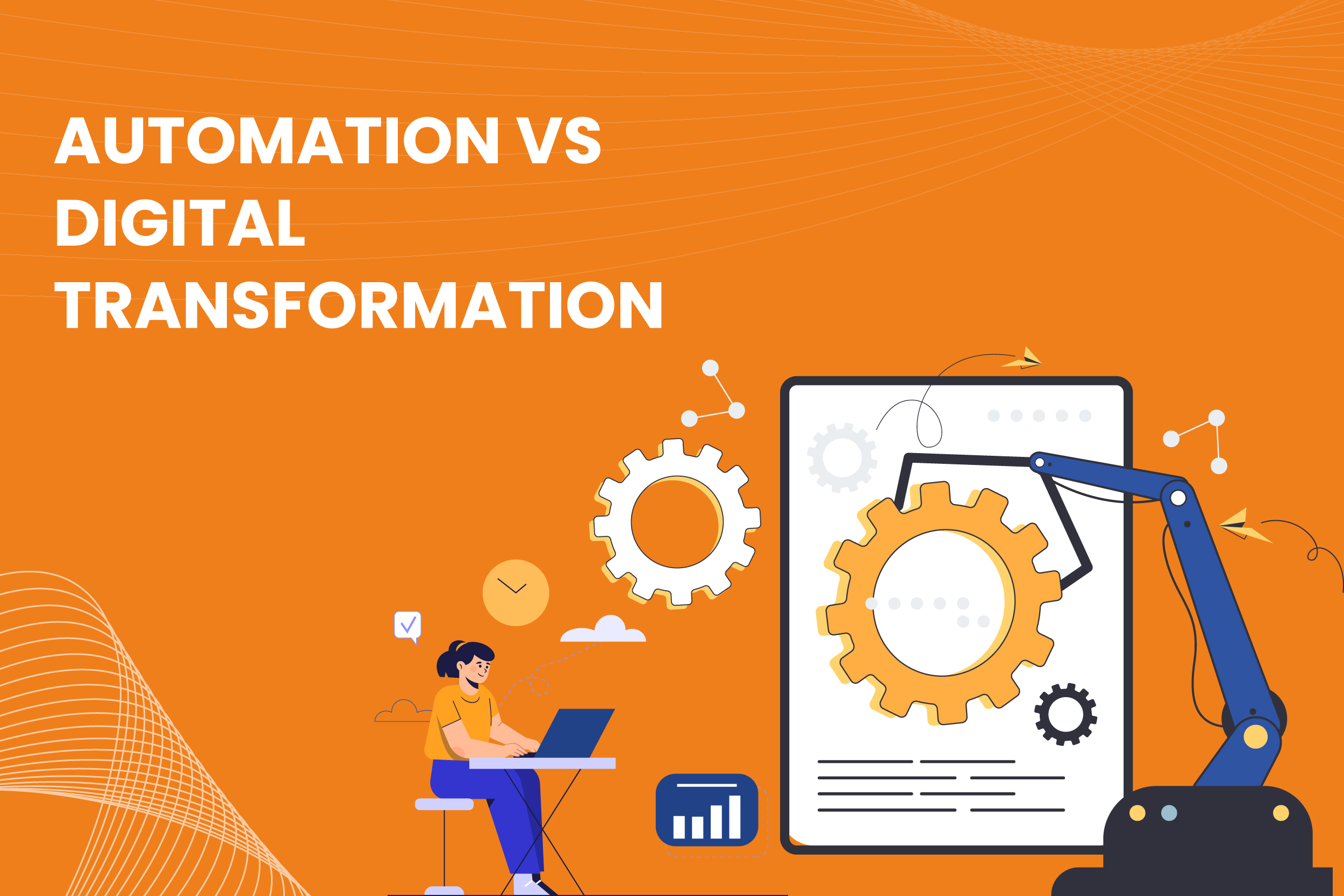
Businesses today are under constant pressure to move faster, operate efficiently, and deliver better customer experiences. In response, many organizations invest in automation tools and digital technologies. However, a common misunderstanding arises when companies assume automation alone equals transformation.
In reality, automation vs transformation is not a comparison of competing strategies. Instead, automation is a component of digital transformation, not the transformation itself. Understanding this distinction is essential for organizations that want to achieve meaningful and lasting change.
When leaders realize that automation is not digital transformation, they can approach technology adoption more strategically and avoid investing in tools that produce only limited impact.
Read More

Leave a Reply