
Businesses today are under constant pressure to move faster, operate efficiently, and deliver better customer experiences. In response, many organizations invest in automation tools and digital technologies. However, a common misunderstanding arises when companies assume automation alone equals transformation.
In reality, automation vs transformation is not a comparison of competing strategies. Instead, automation is a component of digital transformation, not the transformation itself. Understanding this distinction is essential for organizations that want to achieve meaningful and lasting change.
When leaders realize that automation is not digital transformation, they can approach technology adoption more strategically and avoid investing in tools that produce only limited impact.
Automation refers to using technology to perform repetitive tasks with minimal human intervention. These tasks may include data entry, report generation, workflow approvals, customer notifications, or routine service interactions.
Examples of automation include:
The primary goal of automation is efficiency. It helps organizations reduce manual work, minimize errors, and complete tasks faster.
Automation can significantly improve productivity within specific processes. However, its impact is often limited to optimizing existing workflows rather than reimagining how the organization operates.
Digital transformation is a broader and more strategic shift in how a business operates, delivers value, and competes in the market.
Instead of simply improving individual tasks, transformation focuses on redesigning entire processes, business models, and customer experiences through digital technology.
Digital transformation may involve:
While automation focuses on improving efficiency, digital transformation aims to fundamentally change how the business works.
This is why experts often emphasize that automation is not digital transformation. Automation improves existing processes, whereas transformation reimagines them.
The biggest distinction in the automation vs transformation conversation lies in their purpose.
Automation optimizes processes that already exist. It makes them faster, cheaper, or more accurate. For example, automating payroll processing can reduce manual errors and save time.
Digital transformation, on the other hand, asks a deeper question: Should the process exist in its current form at all?
Instead of simply automating an outdated workflow, transformation might redesign the entire employee experience, integrate systems across departments, and provide real-time insights to managers.
In other words, automation improves the present. Transformation reshapes the future.
Many companies mistakenly believe they are undergoing digital transformation simply because they have implemented automation tools. This confusion happens for several reasons.
First, automation projects are easier to implement and deliver faster results. Organizations can quickly see improvements in efficiency and cost savings, which creates the impression that major transformation is underway.
Second, technology vendors often market automation solutions as transformation tools, blurring the distinction between operational improvements and strategic change.
Finally, true digital transformation requires cultural and organizational change, which can be far more complex than deploying software.
As a result, companies may automate multiple processes while leaving the overall business model unchanged.
Automation can bring significant benefits, but relying on it alone has limitations.
For example, automating inefficient processes simply speeds up inefficiency. If the underlying workflow is outdated or poorly designed, automation will not solve the core problem.
Similarly, automation often focuses on internal operations rather than customer experiences. Organizations that prioritize efficiency without considering customer value may fail to achieve meaningful growth.
Without a broader transformation strategy, automation projects can also become isolated initiatives that do not integrate across the organization.
This is why many experts stress that automation is not digital transformation. It addresses symptoms rather than structural change.
Although automation and transformation are different, they are closely connected.
Automation plays an important role in enabling digital transformation when used strategically. By automating routine tasks, organizations can free employees to focus on higher-value work such as innovation, strategy, and customer engagement.
Automation can also provide the foundation for larger transformation initiatives by improving data accuracy, accelerating workflows, and supporting scalable digital operations.
For example, an automated data pipeline may enable advanced analytics, which in turn supports better decision-making and new digital services.
In this way, automation acts as a building block within a broader transformation journey.
To move beyond automation and achieve real digital transformation, organizations must adopt a holistic approach.
This means aligning technology investments with business goals, redesigning processes around customer needs, and encouraging collaboration across departments.
Leadership also plays a crucial role in driving transformation. Executives must ensure that digital initiatives are connected to long-term strategy rather than isolated efficiency projects.
Most importantly, organizations must view transformation as an ongoing evolution rather than a one-time technology upgrade.
The discussion around automation vs transformation highlights an important lesson for modern businesses. Technology alone cannot transform an organization.
Automation can make processes faster and more efficient, but transformation requires rethinking how the entire business operates and creates value.
When companies recognize that automation is not digital transformation, they are better positioned to invest in initiatives that drive real innovation, improve customer experiences, and create sustainable competitive advantage.
In the end, automation is a powerful tool—but transformation is the strategy that determines how that tool shapes the future of the organization.
Businesses today are under constant pressure to move faster, operate efficiently, and deliver better customer experiences. In response, many organizations invest in automation tools and digital technologies. However, a common misunderstanding arises when companies assume automation alone equals transformation.
In reality, automation vs transformation is not a comparison of competing strategies. Instead, automation is a component of digital transformation, not the transformation itself. Understanding this distinction is essential for organizations that want to achieve meaningful and lasting change.
When leaders realize that automation is not digital transformation, they can approach technology adoption more strategically and avoid investing in tools that produce only limited impact.
Read More
In today’s fast-paced business landscape, uncertainty is the only constant. From global economic shifts to rapid technological change, organizations face pressures that can disrupt operations, challenge growth, and threaten survival. In this environment, organizational resilience is no longer optional—it is essential. Companies that cultivate adaptability, foresight, and responsiveness are better equipped to thrive, even under the most challenging circumstances.
How companies stay resilient begins with a mindset that sees disruption not as a threat, but as an opportunity to learn, evolve, and innovate. Resilient organizations do more than recover from setbacks—they anticipate challenges, respond effectively, and emerge stronger.
Read More
In today’s fast-paced business environment, efficient systems and processes are vital for success. Enterprise Resource Planning (ERP) systems like SAP are central to this, helping organizations streamline their operations, manage resources more effectively, and drive productivity.
However, ERP implementation is a complex and often challenging process that requires a skilled IT consulting partner to ensure success. Selecting the right IT consulting services for your ERP implementation, especially for SAP, can make the difference between seamless integration and costly disruptions.
Read More
As enterprises scale, managing resources, streamlining operations, and maintaining flexibility become crucial challenges. To address these challenges, businesses increasingly turn to cloud-based Enterprise Resource Planning (ERP) systems.
ERP solutions have long been vital in centralizing various business functions like finance, human resources, supply chain management, and customer relations into a unified system. In recent years, the shift to cloud-based ERP systems has offered even greater benefits, particularly for growing enterprises.
Read More
In today’s fast-paced business environment, Enterprise Resource Planning (ERP) systems like SAP (Systems, Applications, and Products) are crucial to streamlining operations, improving efficiency, and supporting growth. However, the process of SAP implementation can be complex and time-consuming, often putting a strain on internal resources.
This is where IT consulting services come into play, providing the necessary expertise and support to accelerate your SAP implementation timeline. By leveraging specialized knowledge and proven strategies, IT consulting services can significantly shorten the time required for successful SAP deployment, helping organizations stay competitive and responsive to market demands.
Read More
ERP systems have become indispensable tools for businesses looking to streamline operations, improve efficiency, and maintain a competitive edge. However, implementing ERP solutions can be daunting, especially for small and medium-sized businesses (SMBs) with limited resources.
The complexity of the process, cost concerns, and the need for seamless integration across departments pose significant challenges. To overcome these, SMBs must adopt tailored ERP implementation strategies that align with their unique requirements.
Read More
In today’s fast-paced digital landscape, businesses must adapt to changing technologies and customer expectations to remain competitive. One of the most effective ways to achieve this adaptability is through digital transformation, which involves integrating digital technologies into all areas of a business. A critical component of this transformation is Enterprise Resource Planning (ERP) systems.
Read More
Implementing an SAP system can be a transformative step for organizations aiming to enhance their operational efficiency, streamline processes, and improve data visibility. However, success in an SAP implementation goes beyond simply completing the project on time and within budget. It involves measuring and analyzing key performance metrics that provide insight into how effectively the system is being utilized and whether it meets the organization’s objectives.
Read More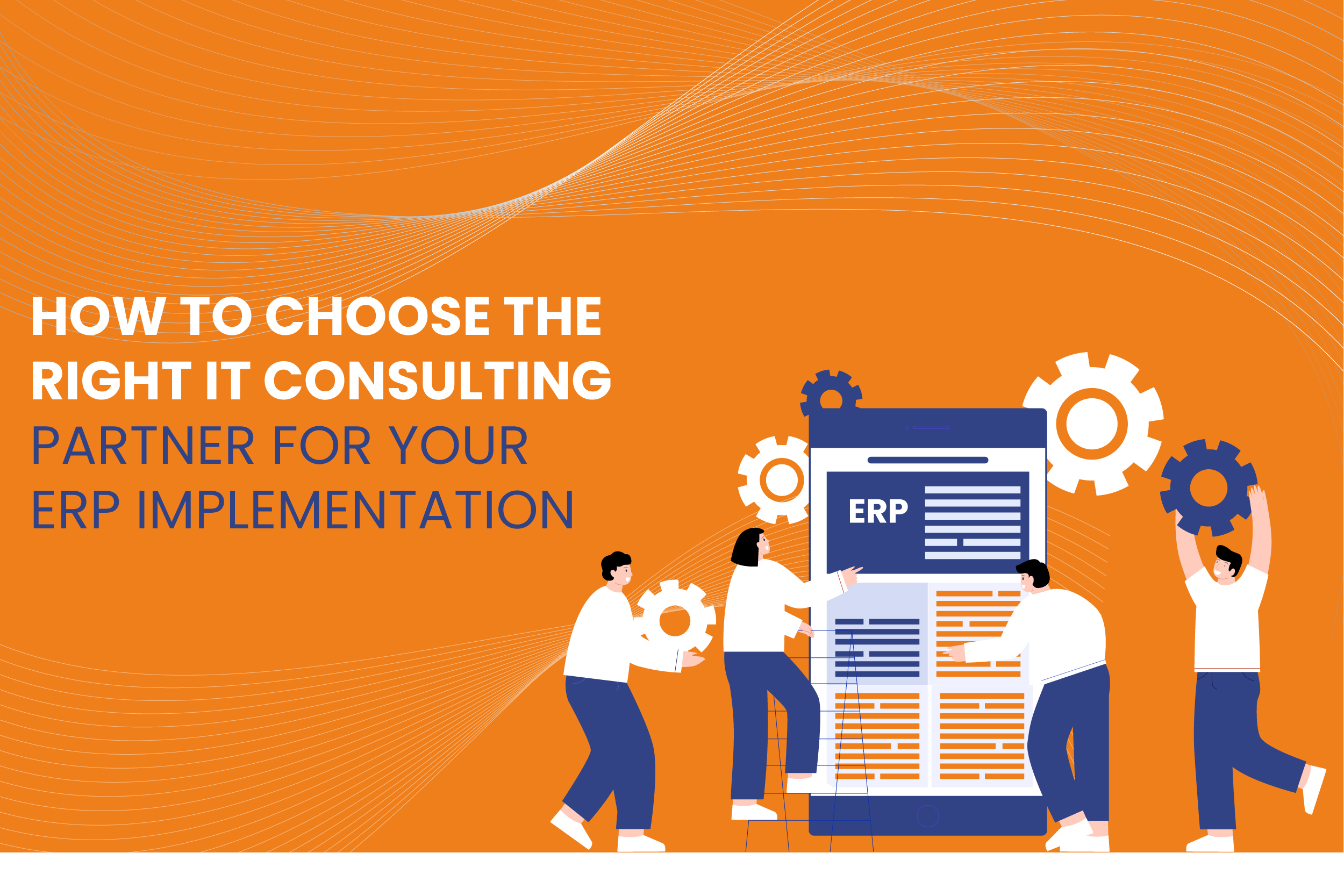
In today’s fast-paced business environment, efficient systems and processes are vital for success. Enterprise Resource Planning (ERP) systems like SAP are central to this, helping organizations streamline their operations, manage resources more effectively, and drive productivity.
However, ERP implementation is a complex and often challenging process that requires a skilled IT consulting partner to ensure success. Selecting the right IT consulting services for your ERP implementation, especially for SAP, can make the difference between seamless integration and costly disruptions.
Read More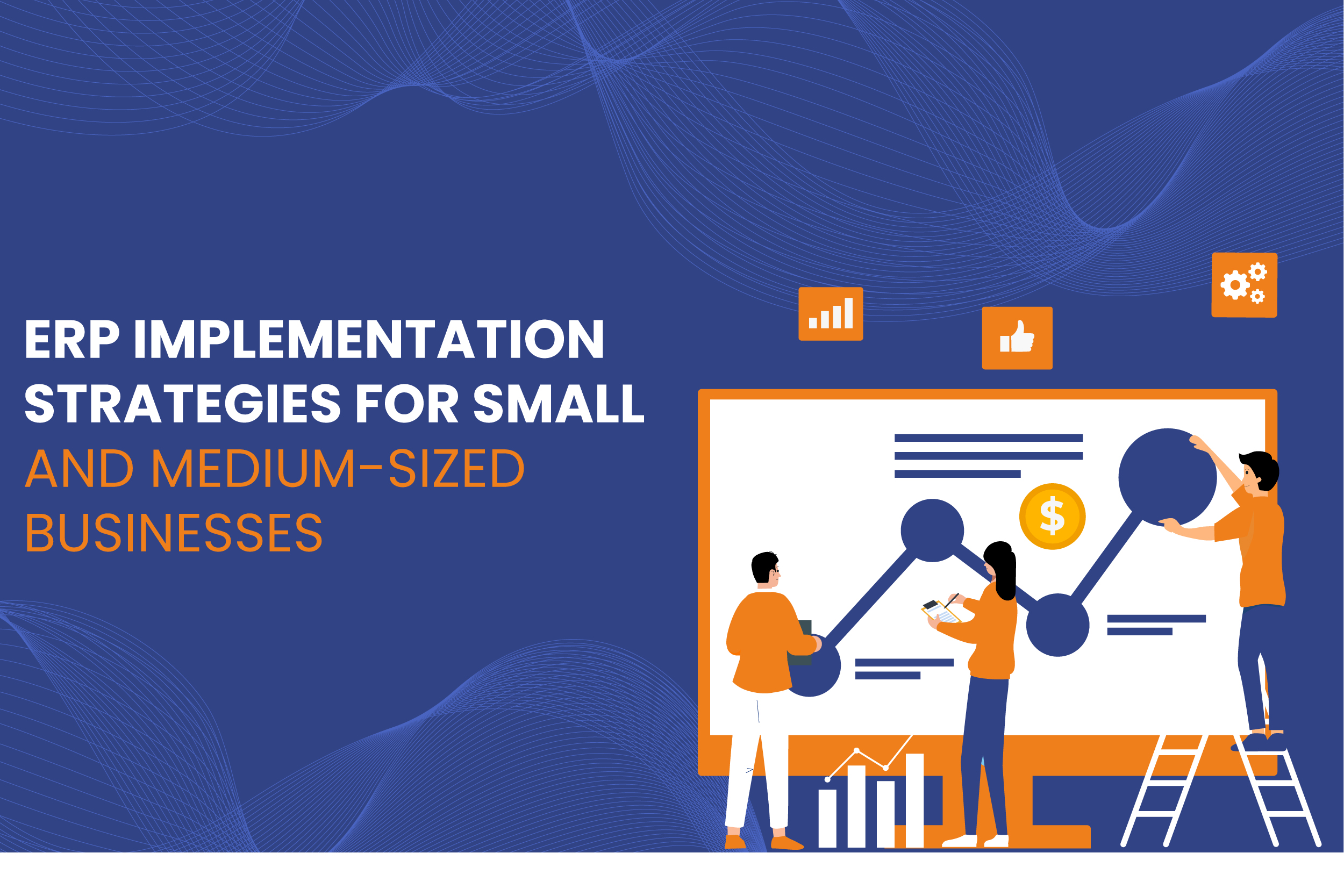
ERP systems have become indispensable tools for businesses looking to streamline operations, improve efficiency, and maintain a competitive edge. However, implementing ERP solutions can be daunting, especially for small and medium-sized businesses (SMBs) with limited resources.
The complexity of the process, cost concerns, and the need for seamless integration across departments pose significant challenges. To overcome these, SMBs must adopt tailored ERP implementation strategies that align with their unique requirements.
Read More
Leave a Reply