
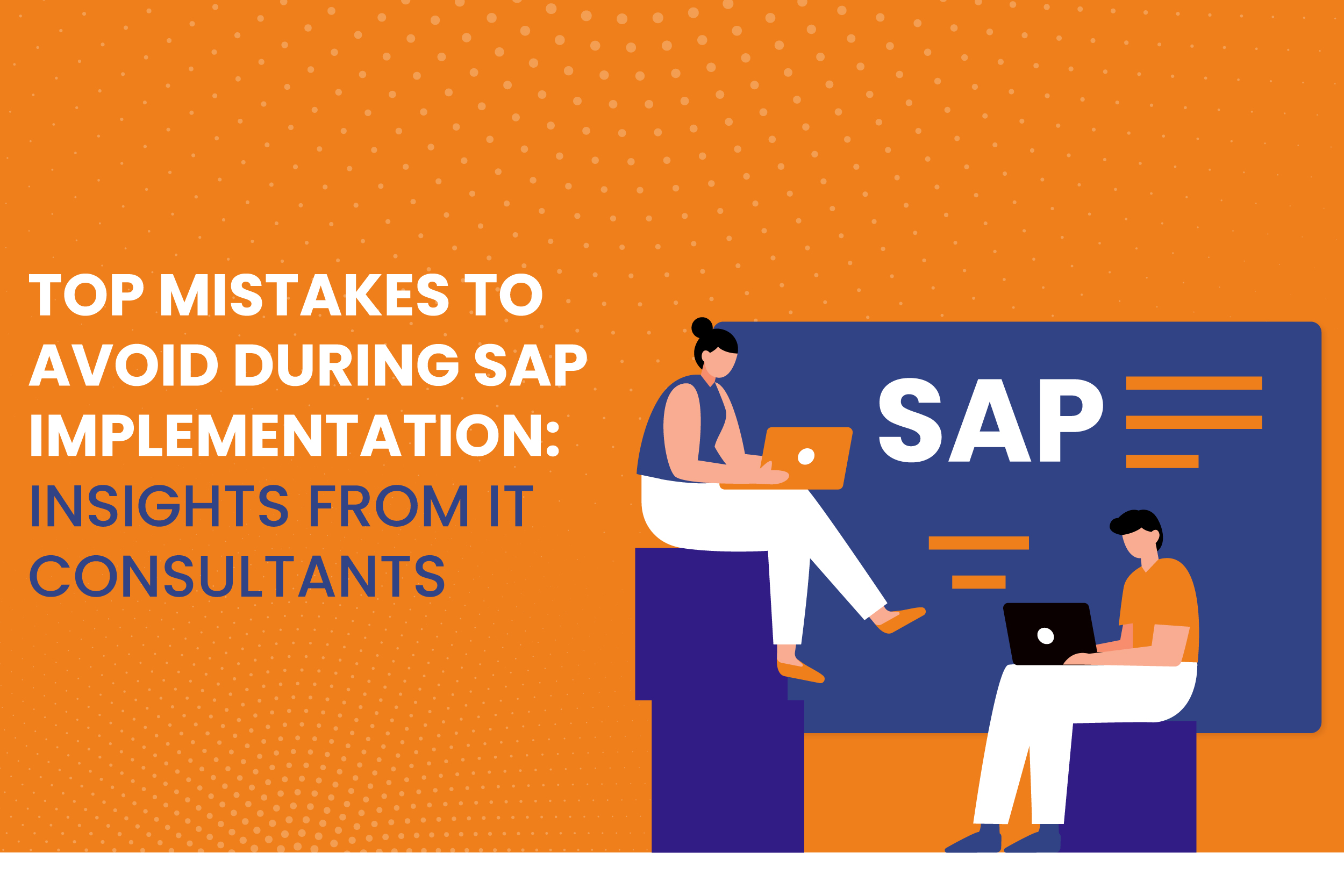
Implementing an Enterprise Resource Planning (ERP) system like SAP can significantly transform an organization’s operations, boosting efficiency and data accuracy. However, an SAP implementation is a complex process that requires meticulous planning and execution. Many companies fail to realize the depth of such projects and commit avoidable mistakes that lead to delays, cost overruns, and frustration.
The success of any ERP implementation, including SAP, starts with comprehensive project planning. A lack of detailed planning is one of the most common mistakes organizations make. SAP implementation requires mapping out each phase of the project, assigning clear roles and responsibilities, and setting realistic timelines.
Start with a project blueprint that aligns the implementation process with your company’s business goals. This should include clear objectives, budget estimations, milestones, and contingency plans. IT consultants recommend engaging all relevant departments in the planning process to ensure that every critical business function is considered and accounted for.
Data migration is one of the trickiest parts of SAP implementation. Many businesses underestimate the complexities involved in transferring data from legacy systems to the new SAP environment. Issues such as data inaccuracies, duplication, and incompatibility can arise, leading to delays and additional costs.
Data migration should be meticulously planned and tested before the full implementation. Start by auditing your current data, cleaning it up, and ensuring it’s formatted correctly for SAP. IT consulting services recommend conducting several trial migrations to identify and fix issues early on.
Even the best-planned SAP implementation can fail if employees are not properly prepared for the change. One of the most frequent errors companies make is overlooking the importance of change management and user training. Employees may resist the new system if they don’t fully understand how to use it or how it will benefit them.
Develop a comprehensive change management strategy to communicate the benefits of the new system to employees. Provide ongoing training and support, ensuring that every user understands how to navigate and leverage SAP for their daily tasks. Engaging IT consultants with expertise in change management can be extremely beneficial during this phase.
A phased rollout is often more effective than trying to implement the entire SAP system in one go. Many companies make the mistake of pushing for a full-scale implementation all at once, only to find themselves overwhelmed by the sheer volume of changes, configurations, and customizations required.
Break down the implementation into manageable phases, starting with the core functionalities that deliver the most business value. IT consultants often recommend an agile approach, where you can implement, test, and improve specific modules before moving to the next phase. This reduces risks and allows for smoother transitions.
SAP is a highly customizable ERP system, but this also presents a potential pitfall. Many companies either neglect customization entirely or go to the other extreme of over-customizing the system. Over-customization can result in bloated processes, increased costs, and more difficult system updates in the future.
Focus on balancing standard SAP functionality with only the necessary customizations tailored to your business processes. IT consultants can help you identify which areas of your system truly require customization and which ones can rely on SAP’s out-of-the-box capabilities.
An ERP implementation is a significant investment, and without strong executive backing, it can easily lose direction. Many SAP implementations fail because top-level leadership is not adequately involved, leading to poor decision-making and lack of accountability.
Ensure that the SAP implementation project has executive sponsorship from the very beginning. Regular communication between project teams and senior leadership is crucial for maintaining momentum and ensuring the project aligns with the company’s overall vision. Executives should actively participate in progress reviews and major decision points.
SAP doesn’t exist in isolation—it needs to integrate seamlessly with other existing systems such as CRM, payroll, and third-party applications. Many companies fail to consider integration challenges early in the implementation process, leading to compatibility issues down the line.
Assess your current IT landscape and identify all systems that need to integrate with SAP. Work with IT consultants who specialize in integration to ensure that all necessary interfaces are set up and functioning properly. Perform end-to-end testing before going live to identify potential integration failures.
SAP implementation is a major investment, and it’s easy for costs to spiral out of control if not managed properly. Common budgeting mistakes include underestimating the cost of customizations, third-party services, and ongoing maintenance.
Start with a detailed budget that includes not just the cost of software and hardware, but also consulting services, training, data migration, and ongoing support. Keep a buffer in the budget for unexpected expenses, and continuously monitor spending throughout the project. Bringing in IT consulting services can help you control costs and make more accurate budget forecasts.
Testing is crucial to ensuring the success of an SAP and ERP implementation. Some companies rush through or neglect testing phases, only to encounter serious issues once the system is live. Incomplete or insufficient testing can result in system breakdowns, poor performance, and user dissatisfaction.
Allocate ample time for thorough testing, including unit testing, integration testing, and user acceptance testing (UAT). IT consultants emphasize that testing should not just focus on whether the system works, but also whether it works according to your specific business requirements. Identify and fix issues early to avoid costly problems post-launch.
Finally, many organizations make the mistake of thinking the job is done once SAP is live. In reality, the post-implementation phase is just as critical. Without a plan for ongoing support and maintenance, your system can quickly become outdated or inefficient.
Establish a support structure for post-implementation that includes regular system updates, performance monitoring, and user support. IT consulting services often provide managed services that can help you maintain the system and address any issues that arise. Plan for continuous optimization to ensure the system grows with your business needs.
An SAP implementation is a transformative yet complex process that requires careful planning and execution. Avoiding common mistakes such as inadequate planning, poor data migration, lack of user training, and insufficient testing can make the difference between a successful ERP rollout and a failed one.
Leveraging IT consulting services throughout the project can provide invaluable expertise and guidance, helping you navigate challenges and achieve a seamless implementation. By avoiding these pitfalls, your business can fully harness the power of SAP, driving long-term efficiency and competitive advantage.
Artificial intelligence is transforming how modern businesses operate. From automating workflows to generating insights from massive datasets, AI offers organizations unprecedented opportunities to innovate and scale. However, as AI capabilities grow, so do concerns around ethics, accountability, and transparency. This is why responsible AI has become a critical priority for large organizations.
Read More
Digital transformation has become a strategic priority for organizations across industries. Businesses are investing in advanced technologies, data platforms, and automation tools to improve efficiency and remain competitive in an increasingly digital world. However, transformation initiatives are rarely simple. Many organizations underestimate the complexity of change, leading to delays, wasted investments, or stalled projects.
Read More
For many organizations, legacy systems are both a foundation and a barrier. These older technologies once powered growth, managed operations, and supported critical business functions. Over time, however, they often become difficult to maintain, expensive to update, and incompatible with modern tools. As markets evolve and customer expectations rise, businesses increasingly recognize the need for legacy modernization.
Read More
Digital transformation promises speed, innovation, and competitive advantage. Yet, despite heavy investments in new technologies, many organizations struggle to achieve meaningful results. In fact, digital transformation failure is more common than most companies expect. Businesses launch ambitious initiatives to modernize systems, adopt AI, or improve customer experiences, but somewhere along the way, momentum fades.
Understanding why digital transformations fail requires looking beyond technology. The real problems often lie in strategy, culture, leadership, and execution. When these elements are misaligned, even the most advanced tools cannot deliver transformation.
Below are some of the most common enterprise transformation challenges that cause digital initiatives to stall or collapse.
Read More
Artificial intelligence is quickly moving from experimentation to enterprise-wide implementation. Many organizations have already tested AI through pilot projects, automation tools, or analytics platforms. The next step—scaling AI across the organization—promises greater efficiency, smarter decision-making, and new business opportunities.
However, expanding AI initiatives without the right structure can create confusion rather than progress. Disconnected tools, unclear governance, and untrained teams often turn promising projects into operational headaches. For companies pursuing enterprise AI adoption, the real challenge is learning how to scale AI safely while maintaining control, consistency, and trust.
Successfully scaling AI requires thoughtful planning, strong governance, and a focus on people as much as technology.
Read More
Businesses evolve constantly. Markets change, customer expectations rise, and new technologies reshape how companies operate. To keep up, organizations often need more than new tools or strategies—they need to rethink how the entire business functions. This is where operating model transformation comes in.
While the phrase may sound complex, the concept is actually quite simple. It is about redesigning how a company works so that it can deliver value more efficiently, adapt faster, and support long-term growth.
Understanding what is an operating model transformation helps leaders make better decisions about people, processes, and technology.
Read More
Enterprise transformations are complex, high-stakes initiatives that often promise operational efficiency, digital modernization, and competitive advantage. Yet, despite meticulous planning and substantial investments, many transformation programs stumble—not because of technology, but because of people.
This is where change management becomes critical. Understanding why people resist change and applying effective strategies in transformation leadership can make the difference between a stalled project and a successful enterprise-wide transformation.
Read More
Artificial Intelligence (AI) is no longer a futuristic concept; it has become a cornerstone of modern business strategy. From automating routine tasks to generating insights from vast datasets, AI promises efficiency, innovation, and competitive advantage.
Yet, the rapid pace of AI adoption also brings uncertainty. Many executives struggle with defining their role in AI strategy, leading to stalled projects or missed opportunities. Understanding how leaders should think about Artificial Intelligence is essential for turning technology into tangible business outcomes.
Read More
Digital transformation is no longer just a buzzword—it’s a necessity for businesses aiming to stay competitive in today’s fast-paced market. Organizations invest in cloud technologies, automation, AI, and customer-centric platforms to modernize operations and create value. But with so many initiatives underway, one pressing question arises: how to measure transformation success? Without clear metrics, companies risk investing heavily without knowing whether their efforts are truly paying off.
Measuring success in digital transformation goes beyond counting deployed tools or completed projects. It requires tracking meaningful indicators that reflect actual business outcomes, employee adoption, and customer impact. Defining transformation KPIs early in the journey ensures that initiatives stay aligned with strategic goals and deliver measurable value.
Read More
Enterprise transformation is no longer a niche service—it has become a critical driver for organizations seeking growth, agility, and resilience. Businesses today face unprecedented challenges: rapidly evolving technologies, shifting customer expectations, and complex global markets. In response, transformation consulting has evolved from offering generic recommendations to delivering highly specialized, strategic guidance that helps enterprises navigate this dynamic landscape.
Understanding how consulting is changing provides insights into what the future of enterprise transformation consulting looks like, and why companies are increasingly relying on experts to guide their transformational journeys.
Read More

Leave a Reply