
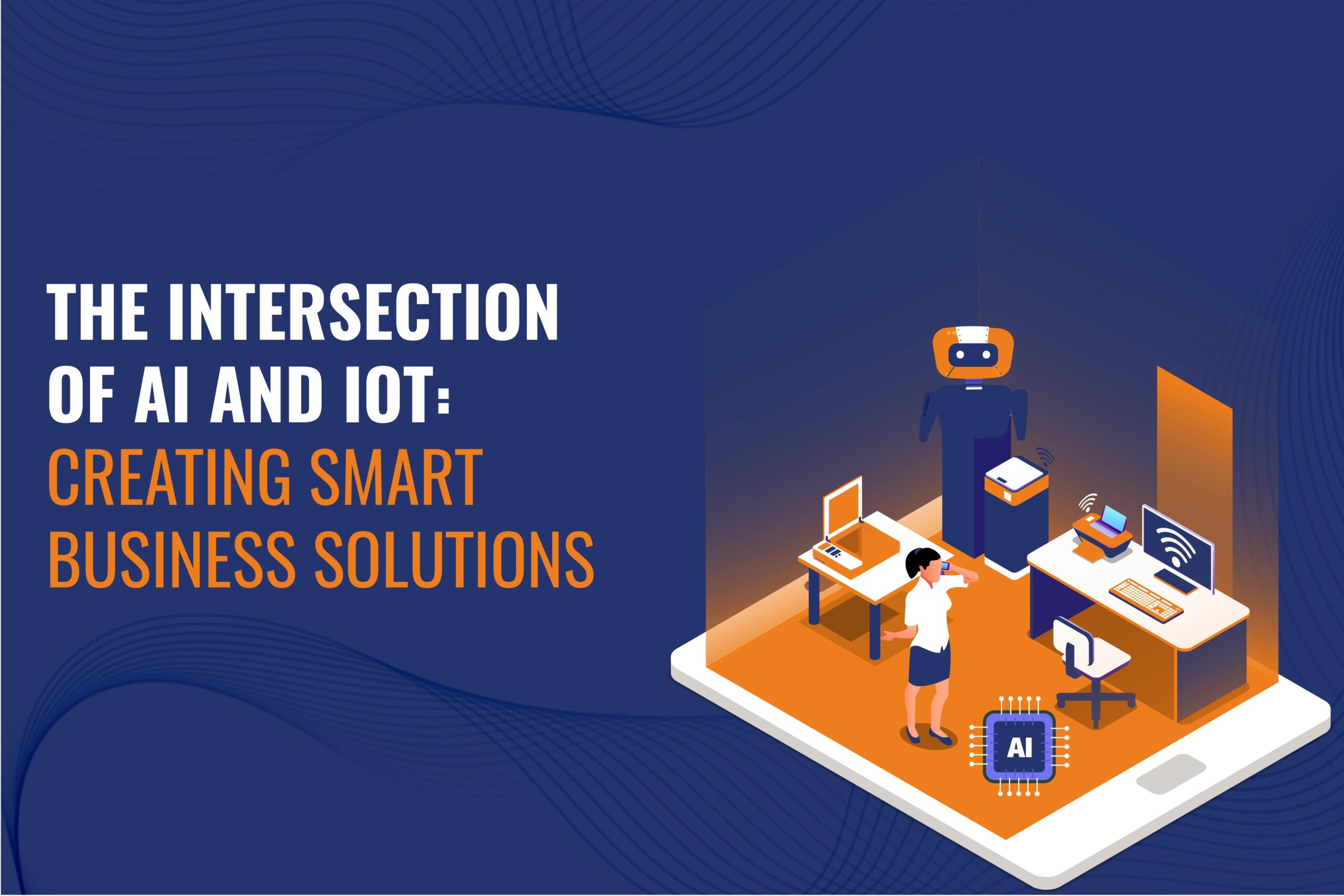
The intersection of artificial intelligence (AI) and the Internet of Things (IoT) represents a dynamic synergy poised to revolutionize business operations across various industries. By integrating AI-powered algorithms and IoT-connected devices, businesses can harness vast amounts of data to drive intelligent decision-making, enhance efficiency, and unlock new opportunities for innovation.
AI technologies like machine learning and the natural language processing enable IoT devices to analyze and interpret complex data streams in real time. This synergy empowers businesses to automate processes, optimize resource utilization, and deliver personalized customer experiences. For example, in retail environments, AI-driven analytics can analyze customer behavior patterns captured by IoT sensors. It helps to optimize product placement, streamline inventory management, and enhance the shopping experience.
Moreover, integrating AI and IoT enhances predictive maintenance, enabling businesses to anticipate equipment failures, minimize downtime, and reduce costs. In the manufacturing settings, IoT sensors embedded in machinery can collect performance data, which AI algorithms analyze to detect anomalies indicative of potential failures. This proactive approach to maintenance improves asset reliability and prolongs equipment lifespan.
Furthermore, AI-enhanced IoT solutions facilitate the development of smart cities by enabling efficient infrastructure management, traffic optimization, and environmental monitoring. For instance, intelligent traffic management systems utilize AI algorithms to analyze real-time data from IoT sensors. To ease traffic and shorten travel times, it is rerouting cars and modifying traffic signals dynamically.
In healthcare, the convergence of AI and IoT enables the development of innovative medical devices and remote patient monitoring solutions. IoT-connected wearables with AI algorithms monitor vital signs, detect abnormalities, and alert healthcare providers in real time.
Overall, the intersection of AI and IoT represents a transformative force in the business landscape. It offers unparalleled opportunities for organizations to create smart, data-driven solutions that enhance operational efficiency, drive innovation, and deliver exceptional value to customers.
In the rapidly evolving technology landscape, two powerful forces have been reshaping industries and driving innovation. While Artificial Intelligence and IoT individually have significant impacts on businesses, the convergence of these technologies opens up a new realm of possibilities, allowing companies to develop smarter solutions, optimize processes, and create value in unprecedented ways. In this blog post, we’ll explore how the intersection of AI and IoT is revolutionizing businesses across various sectors. Moreover, this will also discuss from manufacturing and healthcare to retail and transportation.
Before delving into their intersection, let’s briefly define AI and IoT:
The creation of computer systems that are capable of carrying out activities that normally require human intelligence is known as artificial intelligence (AI). These comprise cognitive functions including language comprehension, learning, thinking, and problem-solving. Among the main AI technologies fostering innovation are computer vision, natural language processing, machine learning, and deep learning.
The network of linked devices that are equipped with software, sensors, and other technologies that allow them to gather and share data via the Internet is referred to as the Internet of Things (IoT). These devices can range from smartphones and wearable gadgets to industrial machines and smart home appliances. IoT facilitates the seamless integration of the physical and digital worlds, enabling real-time monitoring, control, and automation.
The convergence of AI and IoT is a natural progression, as they complement each other in several ways:
The intersection of AI and IoT has far-reaching implications across various industries:
Successfully navigating SAP implementation requires addressing many challenges and considerations to ensure stakeholder satisfaction and project success. Let’s delve deeper into these challenges and the corresponding considerations:
Complexity of SAP: SAP implementation is inherently complex due to its comprehensive nature, impacting various aspects of an organization’s operations. SAP systems’ sheer scale and intricacies require careful planning, skilled resources, and robust project management practices.
Consideration: So, prioritize comprehensive planning, resource allocation, and project management methodologies to manage the complexity of SAP implementation effectively.
Scope Management: One of the most significant challenges in SAP implementation is managing the project scope. IT consulting services conduct regular scope reviews and stakeholder validation meetings to evaluate the status of projects. As stakeholders identify additional requirements there’s a risk of scope creep, leading to delays and cost overruns. Balancing stakeholder demands while adhering to the defined scope is essential.
Consideration: So, establish a robust change management process to evaluate and prioritize scope changes, ensuring alignment with project objectives and constraints.
Data Migration and Integration: Migrating existing data into the SAP system and integrating it with other applications pose significant technical challenges. So, it helps to ensure a seamless transition, data quality issues, compatibility issues, and data security concerns must be addressed.
Consideration: Conduct thorough data analysis, cleansing, and validation processes before migration. So, develop integration strategies and leverage middleware solutions to facilitate data exchange between SAP and other systems.
The intersection of AI and IoT holds immense promise for creating intelligent business solutions that drive innovation industries. As an IT solution consultant, your expertise in integrating AI and IoT technologies, designing customized solutions, and driving digital transformation By harnessing the power of AI-driven analytics and IoT-enabled devices, businesses can gain deeper insights, make smarter decisions, and deliver personalized experiences to customers. However, addressing security, interoperability, ethics, and scalability challenges is essential to unlock this transformative convergence’s full potential. As technology continues to evolve, businesses that embrace the synergy between AI and IoT will be better positioned to thrive in the digital era.
Artificial intelligence is transforming how modern businesses operate. From automating workflows to generating insights from massive datasets, AI offers organizations unprecedented opportunities to innovate and scale. However, as AI capabilities grow, so do concerns around ethics, accountability, and transparency. This is why responsible AI has become a critical priority for large organizations.
Read More
Digital transformation has become a strategic priority for organizations across industries. Businesses are investing in advanced technologies, data platforms, and automation tools to improve efficiency and remain competitive in an increasingly digital world. However, transformation initiatives are rarely simple. Many organizations underestimate the complexity of change, leading to delays, wasted investments, or stalled projects.
Read More
For many organizations, legacy systems are both a foundation and a barrier. These older technologies once powered growth, managed operations, and supported critical business functions. Over time, however, they often become difficult to maintain, expensive to update, and incompatible with modern tools. As markets evolve and customer expectations rise, businesses increasingly recognize the need for legacy modernization.
Read More
Digital transformation promises speed, innovation, and competitive advantage. Yet, despite heavy investments in new technologies, many organizations struggle to achieve meaningful results. In fact, digital transformation failure is more common than most companies expect. Businesses launch ambitious initiatives to modernize systems, adopt AI, or improve customer experiences, but somewhere along the way, momentum fades.
Understanding why digital transformations fail requires looking beyond technology. The real problems often lie in strategy, culture, leadership, and execution. When these elements are misaligned, even the most advanced tools cannot deliver transformation.
Below are some of the most common enterprise transformation challenges that cause digital initiatives to stall or collapse.
Read More
Artificial intelligence is quickly moving from experimentation to enterprise-wide implementation. Many organizations have already tested AI through pilot projects, automation tools, or analytics platforms. The next step—scaling AI across the organization—promises greater efficiency, smarter decision-making, and new business opportunities.
However, expanding AI initiatives without the right structure can create confusion rather than progress. Disconnected tools, unclear governance, and untrained teams often turn promising projects into operational headaches. For companies pursuing enterprise AI adoption, the real challenge is learning how to scale AI safely while maintaining control, consistency, and trust.
Successfully scaling AI requires thoughtful planning, strong governance, and a focus on people as much as technology.
Read More
Businesses evolve constantly. Markets change, customer expectations rise, and new technologies reshape how companies operate. To keep up, organizations often need more than new tools or strategies—they need to rethink how the entire business functions. This is where operating model transformation comes in.
While the phrase may sound complex, the concept is actually quite simple. It is about redesigning how a company works so that it can deliver value more efficiently, adapt faster, and support long-term growth.
Understanding what is an operating model transformation helps leaders make better decisions about people, processes, and technology.
Read More
Enterprise transformations are complex, high-stakes initiatives that often promise operational efficiency, digital modernization, and competitive advantage. Yet, despite meticulous planning and substantial investments, many transformation programs stumble—not because of technology, but because of people.
This is where change management becomes critical. Understanding why people resist change and applying effective strategies in transformation leadership can make the difference between a stalled project and a successful enterprise-wide transformation.
Read More
Artificial Intelligence (AI) is no longer a futuristic concept; it has become a cornerstone of modern business strategy. From automating routine tasks to generating insights from vast datasets, AI promises efficiency, innovation, and competitive advantage.
Yet, the rapid pace of AI adoption also brings uncertainty. Many executives struggle with defining their role in AI strategy, leading to stalled projects or missed opportunities. Understanding how leaders should think about Artificial Intelligence is essential for turning technology into tangible business outcomes.
Read More
Digital transformation is no longer just a buzzword—it’s a necessity for businesses aiming to stay competitive in today’s fast-paced market. Organizations invest in cloud technologies, automation, AI, and customer-centric platforms to modernize operations and create value. But with so many initiatives underway, one pressing question arises: how to measure transformation success? Without clear metrics, companies risk investing heavily without knowing whether their efforts are truly paying off.
Measuring success in digital transformation goes beyond counting deployed tools or completed projects. It requires tracking meaningful indicators that reflect actual business outcomes, employee adoption, and customer impact. Defining transformation KPIs early in the journey ensures that initiatives stay aligned with strategic goals and deliver measurable value.
Read More
Enterprise transformation is no longer a niche service—it has become a critical driver for organizations seeking growth, agility, and resilience. Businesses today face unprecedented challenges: rapidly evolving technologies, shifting customer expectations, and complex global markets. In response, transformation consulting has evolved from offering generic recommendations to delivering highly specialized, strategic guidance that helps enterprises navigate this dynamic landscape.
Understanding how consulting is changing provides insights into what the future of enterprise transformation consulting looks like, and why companies are increasingly relying on experts to guide their transformational journeys.
Read More

Leave a Reply