
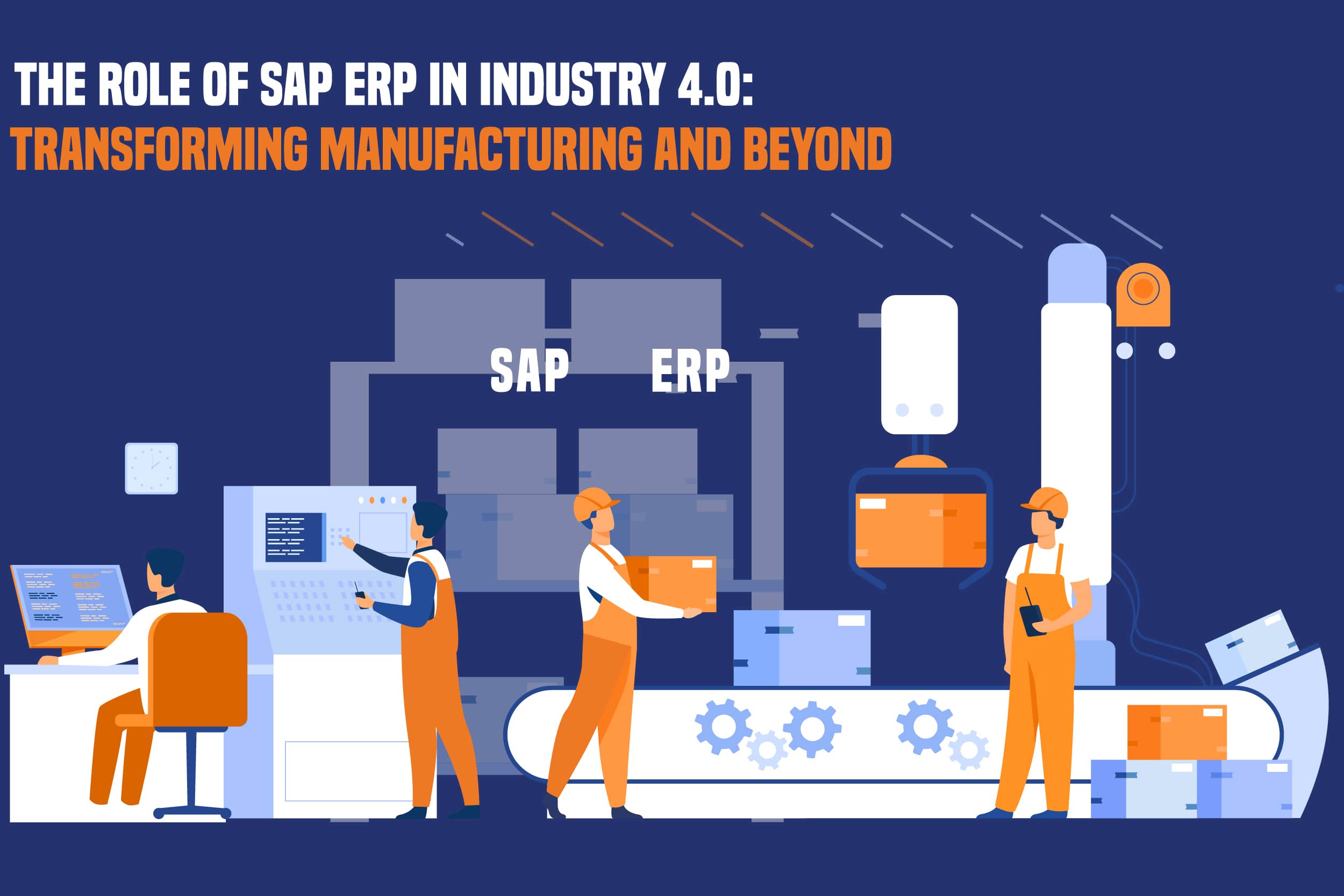
In the dynamic landscape of Industry 4.0, where digitalization and connectivity redefine the way businesses operate, the role of SAP ERP stands out as a transformative force, reshaping the manufacturing sector and extending its impact far beyond.
At the heart of this revolution is the strategic implementation of ERP systems, specifically SAP ERP, which acts as a linchpin for businesses navigating the complexities of Industry 4.0. ERP, or Enterprise Resource Planning, streamlines and integrates core business processes, providing a centralized data management, collaboration, and decision-making platform.
SAP ERP, a frontrunner in the ERP domain, is pivotal in aligning manufacturing processes with the tenets of Industry 4.0. This intelligent software leverages advanced technologies such as the Internet of Things (IoT), artificial intelligence (AI), and machine learning (ML), fostering a connected ecosystem where machines, systems, and people communicate seamlessly.
So, the implementation of SAP ERP brings forth a myriad of benefits for manufacturing entities. Real-time data visibility ensures decision-makers can access up-to-the-minute insights, enabling agile responses to market fluctuations and changing customer demands. With a unified data repository, redundant tasks are minimized, promoting operational efficiency and reducing the risk of errors.
Moreover, SAP ERP facilitates a holistic approach to resource management, optimizing the utilization of materials, workforce, and machinery. This enhances productivity and contributes to cost savings and sustainability, aligning with the overarching goals of Industry 4.0.
So, collaboration is a cornerstone of SAP ERP’s impact, breaking down silos and fostering cross-functional communication. As businesses evolve beyond traditional manufacturing paradigms, SAP ERP becomes a catalyst for digital transformation. It provides the foundation for intelligent factories where automation, data analytics, and predictive maintenance converge. So, it can help to create a more responsive and adaptive production environment.
So, Through strategic ERP implementation, businesses optimize their operational processes and position themselves at the forefront. The digital revolution, ready to capitalize on the opportunities of a connected and intelligent future.
In the ever-evolving landscape of Industry 4.0, implementing Enterprise Resource Planning (ERP) systems has emerged as a linchpin, catalyzing transformative shifts in manufacturing and beyond. ERP implementation plays a pivotal role in aligning businesses with the tenets of Industry 4.0, fostering heightened connectivity, real-time data insights, and streamlined processes. As organizations embark on the digital transformation journey, the role of SAP ERP stands as a beacon, orchestrating operational excellence, enhancing agility, and fortifying enterprises to thrive in the era of intelligent manufacturing and interconnected ecosystems.
Industry 4.0 represents the fourth industrial revolution integrating intelligent technologies. Such as the Internet of Things (IoT), artificial intelligence (AI), big data analytics, and cloud computing into traditional manufacturing processes. So, this convergence of the physical and digital realms aims to create intelligent, interconnected, and autonomous systems. That can revolutionize how products are designed, produced, and delivered.
SAP ERP acts as a central nervous system, connecting and integrating various facets of a manufacturing enterprise. So, it seamlessly links production planning, supply chain management, finance, human resources, and other critical functions. This interconnectedness is fundamental for achieving the real-time data exchange required in Industry 4.0.
Integrating SAP ERP with advanced analytics tools enables manufacturers to harness real-time data for informed decision-making. Manufacturers can anticipate maintenance needs. Additionally, it optimizes production schedules, and enhances overall operational efficiency by leveraging predictive analytics. The significance of real-time data analytics lies in its ability to empower decision-makers with timely information, fostering agile responses to changing scenarios. So, SAP ERP Modules Empowering Industry 4.0 that are discussed below:
SAP S/4HANA, the next-generation ERP suite, is a digital core for businesses transitioning to Industry 4.0. So, professionals harness these capabilities to optimize ERP implementations in the realm of SAP consulting services, ensuring businesses operate with unparalleled agility and efficiency. The suite integrates machine learning and AI, providing intelligent automation in various business processes.
SAP ME optimizes shop floor operations by providing real-time visibility into production processes. So, it enables manufacturers to monitor equipment performance, track production orders, and control quality. This module facilitates the seamless integration of shop floor activities with the broader ERP system.
In the context of Industry 4.0, efficient supply chain management is paramount. SAP EWM empowers organizations to enhance warehouse operations, optimize inventory levels, and improve order fulfillment. So, it leverages technologies like RFID and IoT for real-time tracking and monitoring of goods throughout the supply chain.
SAP ERP, combined with IoT sensors and automation, transforms traditional factories into smart factories. Real-time monitoring of equipment, predictive maintenance, and automated production processes contribute to increased efficiency and reduced downtime.
With SAP ERP, organizations gain end-to-end visibility into their supply chains. This visibility enables better demand forecasting, inventory optimization, and streamlined logistics, ensuring products reach customers in a timely and cost-effective manner.
So, IT consulting services are the guiding force in navigating the intricacies of integrated SAP solutions for a more efficient and agile product development process. From design and development to manufacturing and maintenance of the products in the organization. So, SAP PLM ensures seamless collaboration and data sharing, facilitating innovation and faster time-to-market. PLM plays a crucial role in helping organizations manage the complexity of modern product development, improve collaboration, and enhance the overall efficiency of the product life cycle. So, It is a crucial enabler for innovation, quality improvement, and competitiveness in the marketplace.
As organizations embrace Industry 4.0, the volume of data generated and exchanged increases significantly. SAP ERP incorporates robust security measures, including encryption and access controls. Moreover, it helps to safeguard sensitive information and mitigate cyber threats.
Achieving seamless integration across diverse systems and technologies can be challenging. SAP provides comprehensive integration solutions, and organizations must carefully plan and execute their ERP implementation. So it can help to build strategies to address potential challenges effectively.
Integrating diverse systems demands expertise and SAP consulting services excel in navigating complexities, ensuring seamless integration across architectures, languages, and technologies. So, ensuring compatibility and data exchange between diverse systems poses a significant challenge.
So, SAP continues to invest in research and development to enhance its ERP offerings. Future iterations are likely to incorporate advancements in AI, machine learning, and other emerging technologies to further elevate the capabilities of SAP ERP in the Industry 4.0 landscape.
As Industry 4.0 gains momentum globally, the adoption of SAP ERP is expected to grow. Organizations seeking digital transformation and operational excellence will increasingly turn to SAP to drive efficiency, agility, and innovation. So, the adoption of digital technologies, such as smartphones, the Internet, and social media, has seen global acceptance. However, there are still variations in technology adoption rates among different regions and demographics.
IT consulting services companies drive this evolution, leveraging SAP ERP to propel businesses into the forefront of Industry. Additionally, 4.0, orchestrating smarter, connected, and efficient operations in the organization. Its ability to seamlessly integrate various business processes, provide real-time data insights, and support intelligent decision-making positions SAP ERP as a critical enabler for organizations navigating the complexities of the modern industrial landscape. So, the journey of SAP ERP in Industry 4.0 continues to unfold, promising new horizons of innovation and efficiency. For more information, visit our website.
Artificial intelligence is transforming how modern businesses operate. From automating workflows to generating insights from massive datasets, AI offers organizations unprecedented opportunities to innovate and scale. However, as AI capabilities grow, so do concerns around ethics, accountability, and transparency. This is why responsible AI has become a critical priority for large organizations.
Read More
Digital transformation has become a strategic priority for organizations across industries. Businesses are investing in advanced technologies, data platforms, and automation tools to improve efficiency and remain competitive in an increasingly digital world. However, transformation initiatives are rarely simple. Many organizations underestimate the complexity of change, leading to delays, wasted investments, or stalled projects.
Read More
For many organizations, legacy systems are both a foundation and a barrier. These older technologies once powered growth, managed operations, and supported critical business functions. Over time, however, they often become difficult to maintain, expensive to update, and incompatible with modern tools. As markets evolve and customer expectations rise, businesses increasingly recognize the need for legacy modernization.
Read More
Digital transformation promises speed, innovation, and competitive advantage. Yet, despite heavy investments in new technologies, many organizations struggle to achieve meaningful results. In fact, digital transformation failure is more common than most companies expect. Businesses launch ambitious initiatives to modernize systems, adopt AI, or improve customer experiences, but somewhere along the way, momentum fades.
Understanding why digital transformations fail requires looking beyond technology. The real problems often lie in strategy, culture, leadership, and execution. When these elements are misaligned, even the most advanced tools cannot deliver transformation.
Below are some of the most common enterprise transformation challenges that cause digital initiatives to stall or collapse.
Read More
Artificial intelligence is quickly moving from experimentation to enterprise-wide implementation. Many organizations have already tested AI through pilot projects, automation tools, or analytics platforms. The next step—scaling AI across the organization—promises greater efficiency, smarter decision-making, and new business opportunities.
However, expanding AI initiatives without the right structure can create confusion rather than progress. Disconnected tools, unclear governance, and untrained teams often turn promising projects into operational headaches. For companies pursuing enterprise AI adoption, the real challenge is learning how to scale AI safely while maintaining control, consistency, and trust.
Successfully scaling AI requires thoughtful planning, strong governance, and a focus on people as much as technology.
Read More
Businesses evolve constantly. Markets change, customer expectations rise, and new technologies reshape how companies operate. To keep up, organizations often need more than new tools or strategies—they need to rethink how the entire business functions. This is where operating model transformation comes in.
While the phrase may sound complex, the concept is actually quite simple. It is about redesigning how a company works so that it can deliver value more efficiently, adapt faster, and support long-term growth.
Understanding what is an operating model transformation helps leaders make better decisions about people, processes, and technology.
Read More
Enterprise transformations are complex, high-stakes initiatives that often promise operational efficiency, digital modernization, and competitive advantage. Yet, despite meticulous planning and substantial investments, many transformation programs stumble—not because of technology, but because of people.
This is where change management becomes critical. Understanding why people resist change and applying effective strategies in transformation leadership can make the difference between a stalled project and a successful enterprise-wide transformation.
Read More
Artificial Intelligence (AI) is no longer a futuristic concept; it has become a cornerstone of modern business strategy. From automating routine tasks to generating insights from vast datasets, AI promises efficiency, innovation, and competitive advantage.
Yet, the rapid pace of AI adoption also brings uncertainty. Many executives struggle with defining their role in AI strategy, leading to stalled projects or missed opportunities. Understanding how leaders should think about Artificial Intelligence is essential for turning technology into tangible business outcomes.
Read More
Digital transformation is no longer just a buzzword—it’s a necessity for businesses aiming to stay competitive in today’s fast-paced market. Organizations invest in cloud technologies, automation, AI, and customer-centric platforms to modernize operations and create value. But with so many initiatives underway, one pressing question arises: how to measure transformation success? Without clear metrics, companies risk investing heavily without knowing whether their efforts are truly paying off.
Measuring success in digital transformation goes beyond counting deployed tools or completed projects. It requires tracking meaningful indicators that reflect actual business outcomes, employee adoption, and customer impact. Defining transformation KPIs early in the journey ensures that initiatives stay aligned with strategic goals and deliver measurable value.
Read More
Enterprise transformation is no longer a niche service—it has become a critical driver for organizations seeking growth, agility, and resilience. Businesses today face unprecedented challenges: rapidly evolving technologies, shifting customer expectations, and complex global markets. In response, transformation consulting has evolved from offering generic recommendations to delivering highly specialized, strategic guidance that helps enterprises navigate this dynamic landscape.
Understanding how consulting is changing provides insights into what the future of enterprise transformation consulting looks like, and why companies are increasingly relying on experts to guide their transformational journeys.
Read More

Leave a Reply